Your med spa chair doesn't fill itself. Between a packed treatment schedule, staff management, medical director compliance calls, and device lease payments, marketing can feel like the last thing you have time to think about. But here's the uncomfortable truth: the practices growing fastest right now are not spending more on ads. They're building content that answers questions before a prospect ever picks up the phone, and that content is doing the selling for them around the clock.
Content marketing for med spas is not about posting filler before-and-after shots and hoping the algorithm rewards you. It's about building a system where every video, blog post, and email nurtures a specific type of prospect toward a specific treatment and a specific booking action. That system starts with understanding which content formats actually convert in aesthetics, and then building a repeatable production process that doesn't require a full film crew or a dedicated marketing hire. The ideas below are ones you can execute this week with a phone, a ring light, and a clear plan.
What Is a Content Pillar Strategy and Why Does It Matter for Med Spas?
A content pillar is a broad topic your practice has genuine authority on, such as skin rejuvenation or medical weight loss. Topic clusters are shorter pieces, videos, and social posts that branch off that pillar. Together, they signal to search engines that your site is a trustworthy, in-depth resource, which improves your rankings across multiple related searches.
Most med spas create content randomly: a Botox tip one week, a body contouring reel the next, a weight loss FAQ three weeks later. That approach produces scattered signals that neither search engines nor prospective patients can follow. A pillar-cluster model organizes your content so that every piece connects back to a core topic page on your website. If your highest-margin service is laser hair removal, for example, your pillar page covers everything a patient needs to know about the treatment. Your clusters then cover sub-topics: skin tone and laser compatibility, how many sessions are needed for different body areas, what to expect during recovery, and how memberships can offset the cost of a full package.
This structure matters for two reasons. First, it supports med spa content marketing in a way that compounds over time. A blog post answering "how long does laser hair removal last" can rank on Google and drive organic traffic for years without additional ad spend. Second, it feeds answer-engine visibility. Platforms like Google's AI Overviews, Bing Copilot, and voice assistants pull direct answers from structured, authoritative content. If your site has a clear, well-organized answer to a common patient question, you have a real shot at being cited in those AI-generated responses.
For a mid-size med spa with three to five core service categories, a realistic pillar strategy includes one pillar page per major service category (injectables, laser services, body contouring, skin health, medical weight loss) and four to eight cluster pieces per pillar. That's roughly 20 to 40 pieces of foundational content. You don't need to publish them all at once. A pace of two to four cluster posts per month, supported by video content, builds real authority within six to twelve months.
Which Video Formats Convert Best for Aesthetic Practices?
Treatment explainer videos, FAQ-format short clips, real-results reels with patient consent, and warm provider introduction videos consistently outperform generic promotional content in aesthetic marketing. Each format serves a different stage of the decision journey, from awareness to trust to booking intent.
Video is not optional in aesthetics. Patients are making decisions about treatments that affect how they look and feel, often spending anywhere from $300 to $3,000 or more per visit. They need to trust your team and understand what they're agreeing to before they book. Video accelerates that trust in a way that text alone cannot. Here are the four formats worth your time:
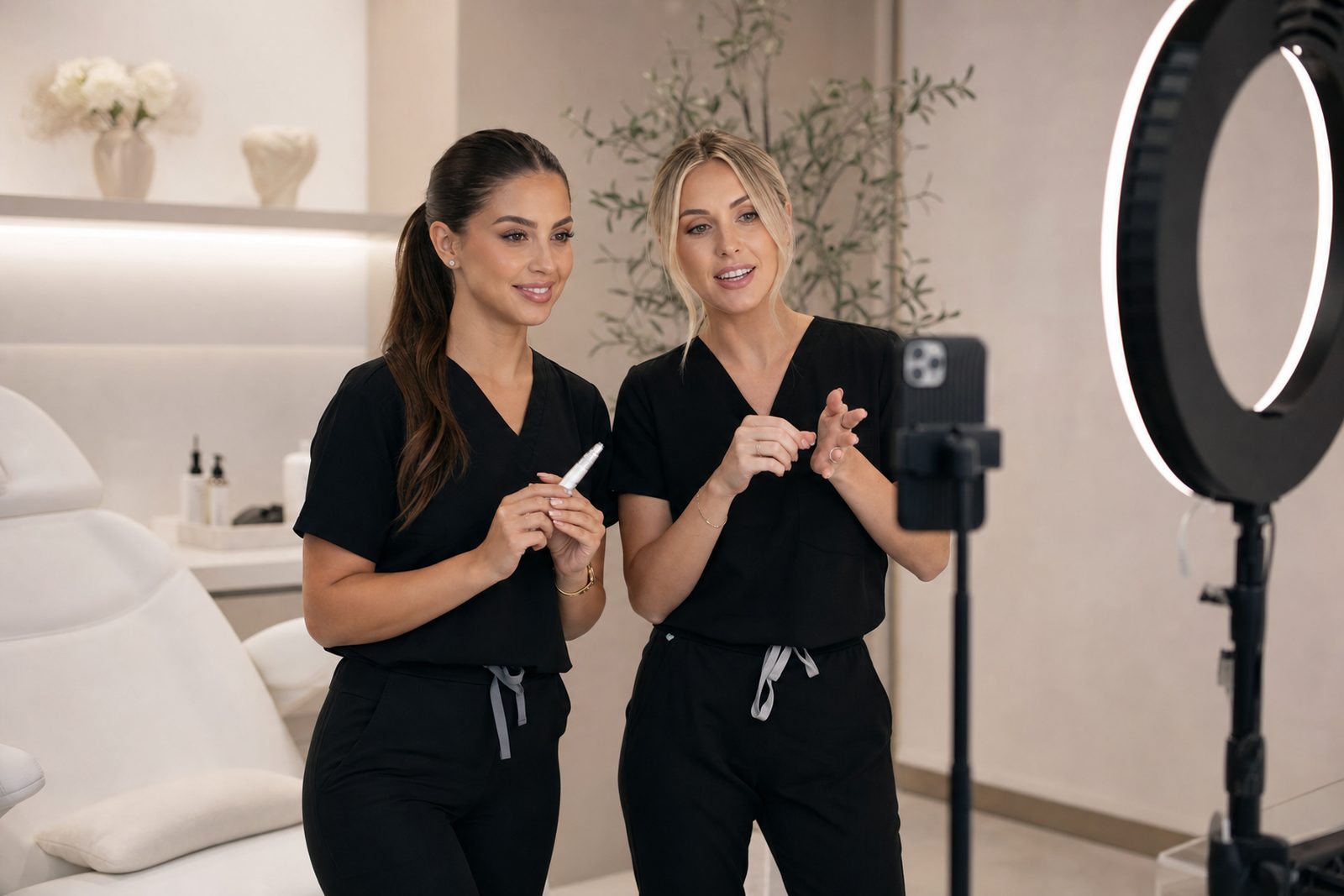
Treatment explainer videos walk a viewer through exactly what happens during a procedure: the numbing process for filler, the sensation of a CoolSculpting applicator, what a Morpheus8 session looks like. These videos reduce cancellation rates because patients show up informed. Aim for 60 to 90 seconds for social cuts and three to five minutes for your website and YouTube page. Film your injector or aesthetician narrating the steps in the treatment room with a patient (or a team member acting as the model) so the setting feels real.
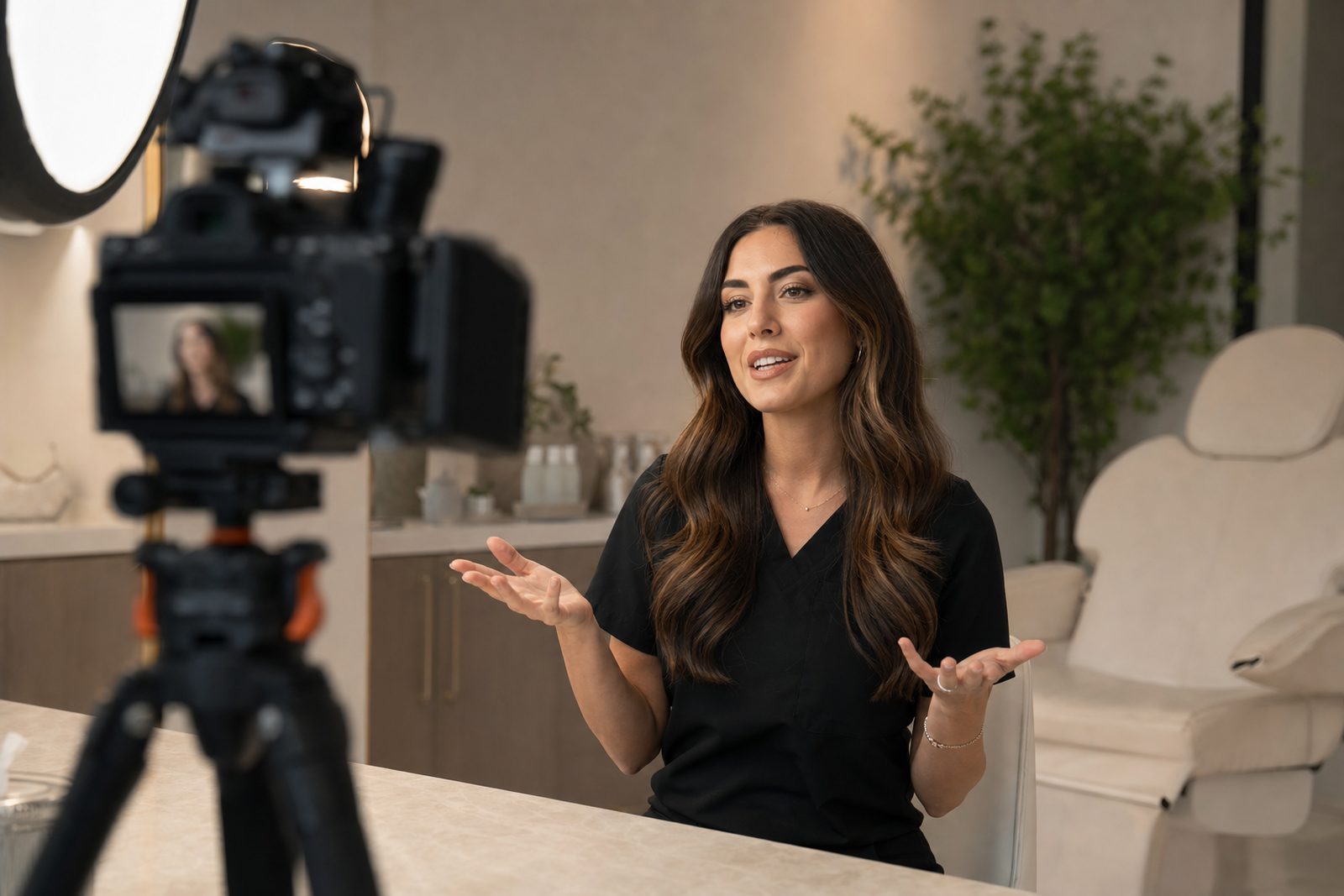
FAQ-format short clips are among the most discoverable video content you can create. Record your medical director or lead provider answering one question per clip: "Can I get Botox while pregnant?" "How long does swelling last after lip filler?" "Is Ozempic safe to use long-term?" Each clip is 30 to 60 seconds and can be published as a Reel, a TikTok, a YouTube Short, and embedded in a corresponding blog post. The American Med Spa Association (AmSpa) consistently notes that patient education is one of the top drivers of treatment adoption, and short-form FAQ video is the most scalable way to deliver it.
Real-results reels remain the highest-intent content in aesthetics when done correctly. Always collect written consent before filming or photographing a patient, and review the the FTC endorsement guides to ensure your before-and-after presentations and any patient testimonials meet disclosure requirements. Show the treatment area, the timeline, and the provider who performed the service. Authenticity consistently outperforms heavily edited content in this space.
Provider introduction videos are often overlooked but critically important. Patients choose providers as much as they choose treatments. A 60-second video where your nurse practitioner or PA introduces themselves, shares their aesthetic philosophy, and shows their workspace can meaningfully increase consultation bookings. Film one per provider and keep them updated annually.
7 Specific Med Spa Content Ideas You Can Film This Week
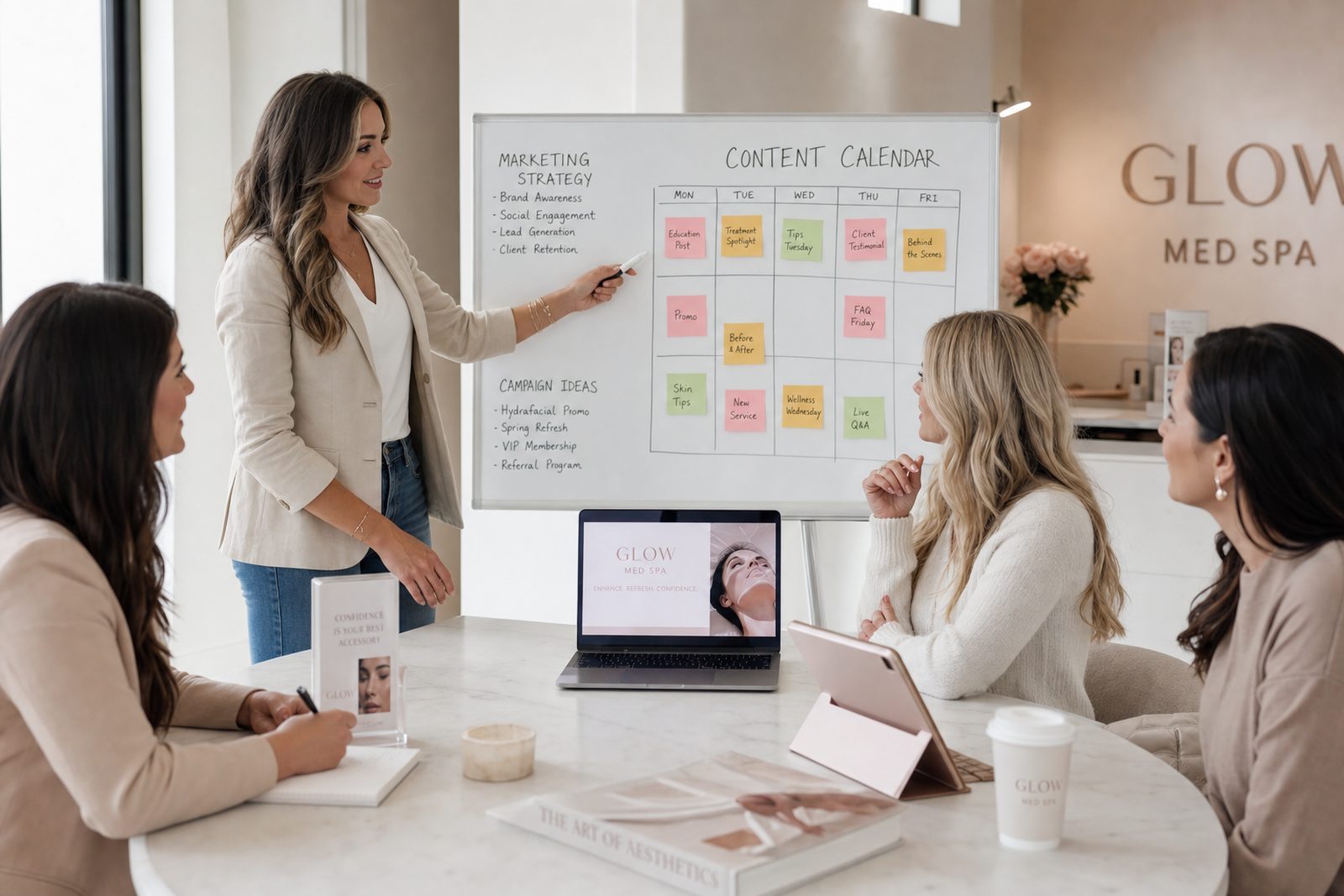
You don't need a six-week content calendar to get started. These are concrete, filmable ideas that require nothing more than a clean treatment room, a provider willing to speak on camera, and a smartphone with good lighting. Each one maps to a real patient question and a real search query.
- "Day in the life" of your lead injector. Follow your injector through a typical treatment day, from consultation through post-procedure care. This humanizes your practice and shows the care and precision behind every appointment. Keep it to 60 to 90 seconds for Reels or a longer cut for YouTube.
- "What happens at your first consult" walkthrough. Film your front desk greeting a new patient (with consent), the intake process, and a provider explaining a personalized treatment plan. This removes the anxiety many first-time patients feel and directly reduces no-shows from cold leads.
- Treatment comparison explainer: Botox vs. filler. One of the most searched questions in aesthetics. Your injector speaks to camera for two to three minutes explaining the difference, who each is right for, and what results look like. Repurpose this as a blog post, an email, and three or four short social clips.
- Membership plan breakdown video. If your spa offers a monthly membership, explain the math on camera. "For $X per month, you get Y units of Botox and one facial per quarter, which is a savings of approximately Z percent off retail." Membership content drives recurring revenue and is almost never created by competing practices.
- "Myth vs. fact" series on a specific treatment. Pick one treatment per episode, such as laser hair removal or microneedling, and bust three common misconceptions. These perform well as carousels on Instagram and as short video clips with text overlays.
- Medical weight loss patient journey overview. If you offer semaglutide, tirzepatide, or supervised weight loss programs, a straightforward video explaining how the program works, what monitoring looks like, and what outcomes are realistic helps qualify patients before they book. Medical weight loss is a high-value, high-volume service where educational content converts extremely well.
- Staff spotlight with a personal skincare story. Ask a team member to share their own aesthetic journey on camera. Not a testimonial in the FTC sense, but a candid conversation about why they work in aesthetics and what treatments they personally care about. This builds practice culture and brand trust simultaneously.
How Do You Turn One Video Shoot into Blog, Social, and Email Assets?
A single 30-minute video shoot can generate a blog post, two to four short social clips, an email newsletter segment, and a YouTube video. The key is planning the shoot around a content brief rather than filming first and figuring out repurposing later. This approach multiplies your output without multiplying your production time or budget.
Repurposing is where most med spas leave serious value on the table. They film a great treatment explainer, post it once, and move on. Instead, map each piece of content to its downstream assets before you hit record. Here's a practical workflow: write a brief one-page content brief that includes the core question the video answers, three to five sub-questions or supporting points, the call-to-action you want viewers to take, and the target keyword for the blog version.
After filming, have the full video transcribed (tools in the $10 to $30 per month range can do this automatically). The transcript becomes the rough draft of your blog post. Edit it to read naturally in text form, add internal links and structured headers, and publish it on your website. That blog post now supports both the SEO pillar strategy described earlier and provides a text-based answer that AI tools can surface. Your med spa social media marketing team or VA then clips the full video into three to four short segments for Reels and TikTok, pulls one to two key quotes for static graphics, and drafts a 150 to 200-word email segment that links back to the full video or blog post.
Run this process for one treatment category per month and you'll build a content library that genuinely supports both organic search and social reach. A well-executed med spa social media marketing playbook should integrate this repurposing model so that every piece of video content serves multiple channels simultaneously rather than being created and consumed in isolation.
How SCALZ.AI Approaches Content Systems for Aesthetic Practices
Our team builds content strategies for med spas that are anchored in search data, answer-engine structure, and the economic realities of running an aesthetic practice. We work backward from your highest-margin services and your average cost-per-consult to determine which content investments will move the needle fastest.
When we audit a new med spa's content, one of the first things we examine is whether there's any alignment between what their patients search for and what they're actually publishing. In most cases, the gap is significant. A practice with $80,000 worth of body contouring equipment has three social posts about the device and no blog content, no FAQ page, and no video explaining how it works or what the device payback period looks like for the business (which matters to prospects evaluating the investment in their own body). That misalignment is where we start.
Our team audits existing content, maps it against the service menu, identifies keyword opportunities at each stage of the funnel (awareness, consideration, decision), and builds a 90-day content production schedule that a practice owner can actually execute, either with internal staff, a part-time content coordinator, or our team supporting production and publishing. We work closely with providers on FAQ video scripting so the content is medically accurate and compliant with state advertising regulations, which vary significantly across markets. A practice in California faces different regulatory considerations than one in Texas or Florida, and ignoring those distinctions creates risk.
One honest caveat: content marketing does not replace paid acquisition in the short term. If you're opening a new practice or launching a new service category, organic content typically takes four to eight months to generate meaningful search traffic. During that window, a combination of paid search and social ads alongside content builds the fastest path to a full schedule. We tell every practice we work with that the strongest med spa marketing agency strategy uses content to reduce your long-term cost-per-consult, not to replace paid media overnight. The two channels compound each other when done well.
Building content that converts is not about producing more, it's about producing strategically. When your treatment explainers answer real patient questions, your blog clusters signal genuine expertise to search engines, your videos get repurposed across every channel, and your educational content positions your providers as trusted authorities, your practice becomes the obvious choice in your market. Start with one video shoot, one repurposing workflow, and one pillar topic this month. The compounding effect of that kind of consistent, structured content effort is what separates practices that fight for every booking from those that have a waitlist.