Your med spa's front desk fills slowly in the first two hours, but your Instagram feed was busy at midnight. Prospective patients scroll through Botox results, compare filler technique videos, and decide whether your injectors look trustworthy, all before they ever call. For aesthetic practices competing in markets where three or four similar clinics might sit within five miles, that scroll session is often the first and most decisive moment of the patient journey. Social media is not a soft branding exercise for your practice. It is a direct driver of consultation bookings, and Instagram remains the dominant platform for high-intent aesthetics consumers.
Most med spa owners know they should be posting consistently but struggle to decide what to post, how often, and how to stay compliant with patient privacy and endorsement rules at the same time. This playbook cuts through the noise. It covers which content formats actually move people from follower to booked consult, how to build a cadence your team can sustain without burning out, and how to protect your practice while showing real results. These are the mechanics of med spa social media marketing done in a way that compounds over time.
Which Content Formats Actually Drive Med Spa Consultations?
Before/after photos with proper consent, short treatment education Reels, and authentic staff or founder trust content consistently outperform generic promotional posts for generating consult requests. These three formats address the three questions every prospective patient is asking: Does it work? How does it work? And can I trust who does it?
Before/after imagery is the most powerful format in aesthetics social, but it carries the highest compliance burden. Every patient whose image you use needs a signed photo and media release that specifies Instagram use, and many state medical boards have additional rules about advertising patient outcomes. The American Med Spa Association (AmSpa) maintains updated state-by-state guidance on before/after advertising rules that is worth bookmarking for your practice. When you share a before/after, pair it with educational caption copy explaining the treatment, the number of sessions or units used (where appropriate), and a realistic recovery or timeline note. This framing transforms a single result image into a credible treatment explainer rather than a promotional claim.
Treatment education Reels in the 30-to-60-second range perform especially well for services with a common misconception attached. Microneedling downtime, the difference between Sculptra and traditional filler, how semaglutide-based medical weight loss is managed under physician oversight, and what body contouring device sessions actually feel like are all topics that generate saves, shares, and comment questions. Saves and shares signal to the algorithm that your content has lasting value, which extends organic reach more effectively than simple likes. A realistic target for a growing med spa account (under 10,000 followers) is 50 to 150 saves on a high-performing Reel, though this varies significantly by niche, caption quality, and local audience size.
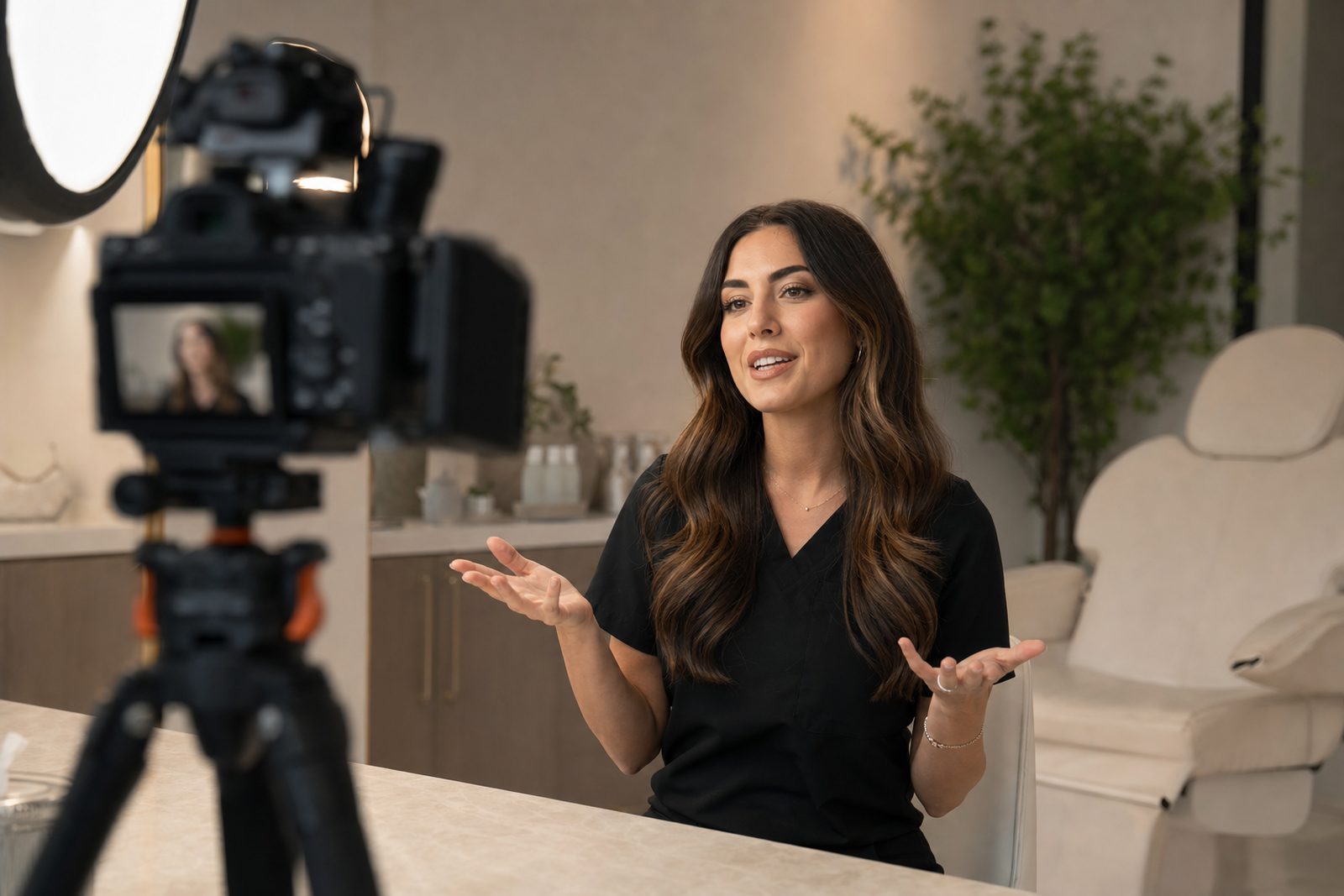
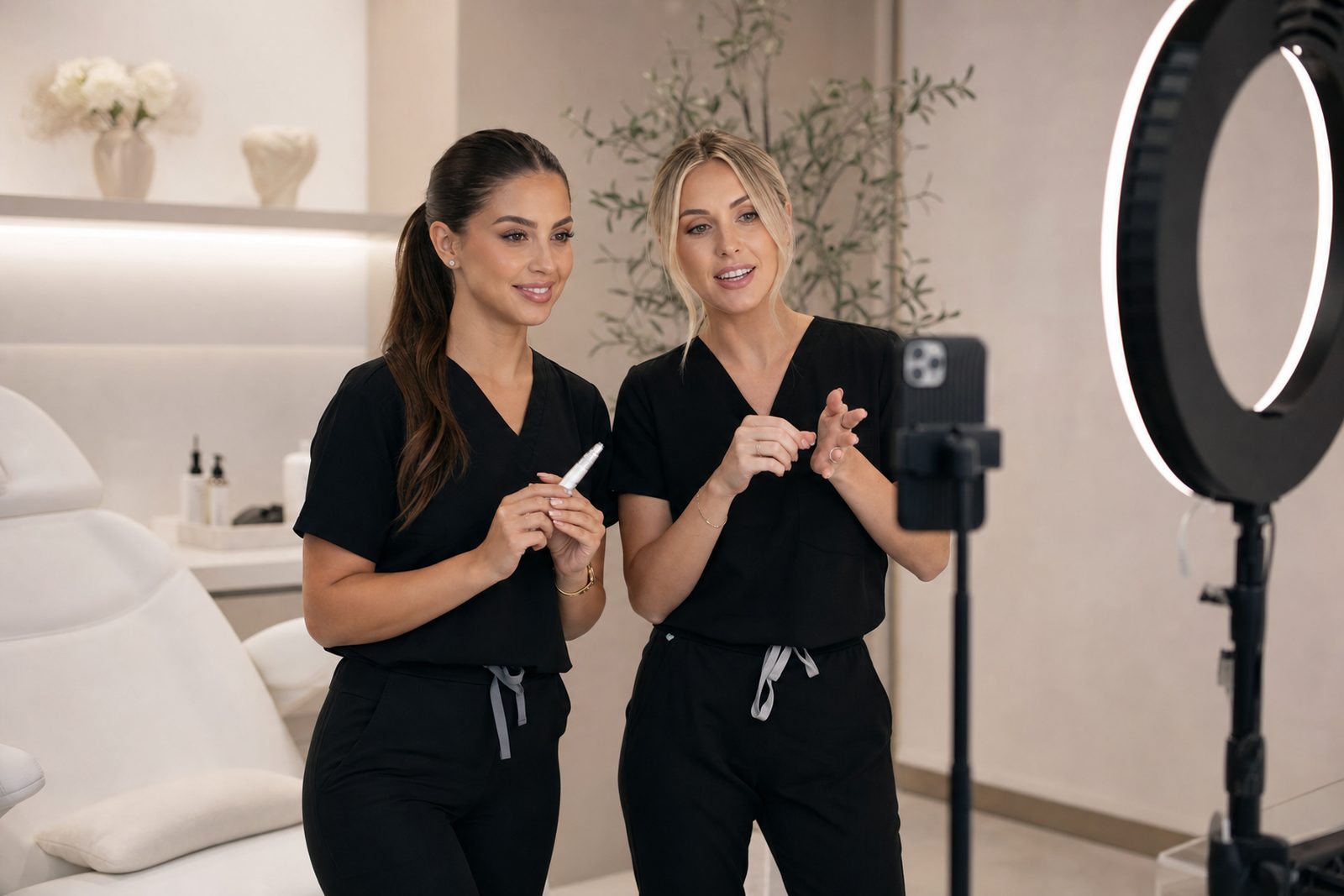
Staff and founder trust content is underused in aesthetics. Short videos of your medical director explaining the practice's clinical standards, your lead injector walking through their assessment process, or your patient coordinator describing what the first consult looks like all reduce the anxiety that keeps people from booking. This content does not need professional production. A well-lit, steady smartphone clip filmed in your treatment room is often more credible than a polished commercial.
How Should Med Spas Handle Before/After Disclosure and Privacy Compliance on Instagram?
Med spas must secure signed photo and media releases before posting any patient image, comply with their state's specific medical advertising rules, and follow FTC guidelines on endorsements. Any testimonial or patient result shared must reflect a genuine, typical outcome and include disclosures if any compensation was offered.
HIPAA applies broadly to protected health information, and a patient's appearance, their treatment type, and their results can all qualify. Posting a before/after photo without a signed release is not just an Instagram policy violation. It is a potential HIPAA breach and a medical board complaint waiting to happen. Your release form should name the specific platforms where the image may be used, the duration of use, and whether the patient's name or identity will be disclosed. Have your medical director and legal counsel review your release template. This is not optional overhead. It is a basic operating standard.
Beyond privacy, the FTC's rules on endorsements govern how you share patient testimonials and results. Under the FTC endorsement guides, you cannot present an atypical result as representative, and you must disclose any material relationship (such as a complimentary treatment given in exchange for a post). If you run a referral or loyalty program that rewards patients for posting about their results, those posts require a disclosure like "#gifted" or "received complimentary treatment." Your own branded posts are not endorsements in the FTC sense, but if you repost a patient's organic review or result, the same disclosure standards apply if there is any material connection.
Practically, the safest workflow is a consent checklist embedded in your intake or check-out process. Flag patients at checkout who had photogenic results and ask if they would like to be part of your educational content. This makes consent collection a natural conversation rather than an afterthought. Track which releases are on file in your practice management software so your social media manager can pull approved images without guesswork.
6 Instagram Content Ideas That Keep Med Spa Feeds Active and Compliant
Not every post needs to be a dramatic transformation. A diversified content mix keeps your account from feeling like an advertisement reel while steadily building the trust that converts followers to patients. Here are six content pillars that work specifically for aesthetic practices.
- Consent-compliant before/after posts with educational captions. Pair each result with honest context: the treatment, approximate number of sessions, realistic timeline, and a reminder that individual results vary. This turns a single patient outcome into a credible educational asset that prospective patients save and return to.
- Treatment education Reels under 60 seconds. Pick one service per week and answer the top question you hear at consultations. Topics like "What does Botox actually feel like?" or "How many units do most first-time patients need?" perform well because they address real decision-making friction and attract high-intent viewers searching those questions on Instagram.
- Staff and injector introduction content. Short clips or carousel posts introducing your clinical team by name, credential, and specialty reduce the trust barrier for new patients. Showcasing your medical director's oversight role also reassures patients about the clinical standard of your practice, which matters especially in competitive markets.
- Day-in-the-life or behind-the-scenes Stories. Instagram Stories showing your treatment rooms, device setups, or your team prepping for a busy day humanize your brand without requiring patient consent. They also feed your Story highlights, which act as a permanent FAQ section on your profile.
- Membership and recurring-revenue feature posts. If you offer a monthly membership that includes one neurotoxin treatment or a set dollar amount toward services, post about it explicitly. Membership economics benefit the practice (predictable monthly revenue, higher retention) and the patient (cost savings, priority scheduling). A single post explaining the value of your membership tier can generate direct message inquiries from existing followers who did not know the option existed.
- Local SEO-aligned posts with geo-targeted hashtags. Use a mix of treatment-specific hashtags (#botoxresults, #dermalfillers) and local hashtags (#[yourcity]medspa, #[yourcity]aesthetics). Geo-tagging your practice location in every post and Story reinforces your local presence in Instagram's discovery algorithm and complements your broader med spa content marketing strategy.
What Posting Cadence Is Sustainable for a Med Spa Team?
For most med spas with a small internal team, three to five feed posts per week combined with daily Stories is a sustainable cadence that maintains algorithmic visibility without requiring a dedicated full-time social media manager. Consistency matters more than volume.
The single biggest mistake med spa owners make on Instagram is posting intensely for two weeks after a campaign push, then going silent for three weeks. Irregular posting trains the algorithm to deprioritize your content and trains your audience to stop expecting value from your account. A realistic, sustainable schedule looks like this: two to three Reels per week, one to two static posts or carousels per week, and five to seven Stories per day. Stories can include simple polls ("Which treatment are you curious about this month?"), countdown timers for promotions, or quick behind-the-scenes clips that take minutes to film.
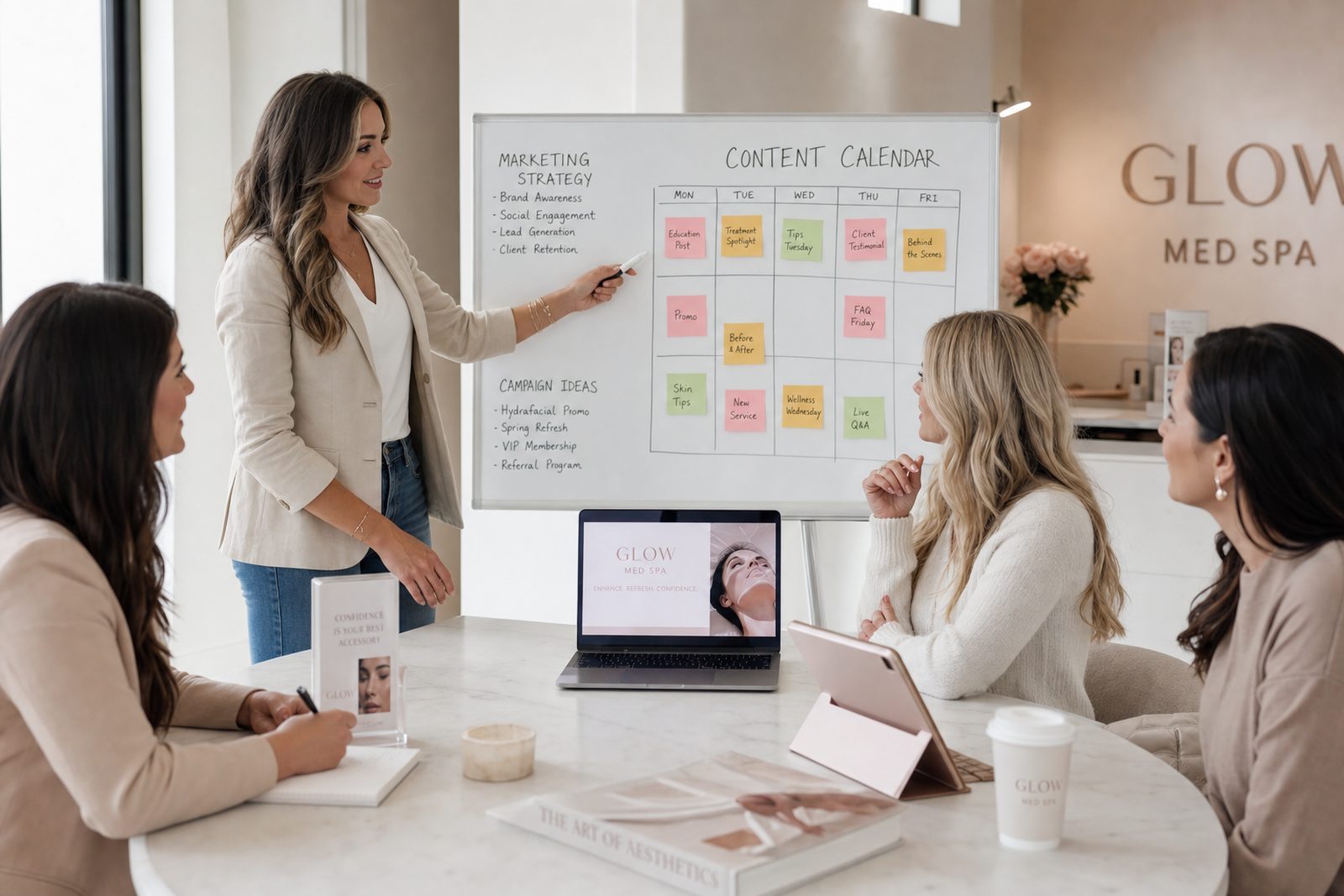
Batching content in half-day sessions once or twice a month helps small teams stay consistent. In a single four-hour session, your team can film four to six Reels, photograph three to five before/after sets (with releases already on file), and write captions for the coming two weeks. Scheduling tools like Meta Business Suite, Later, or Planoly let you queue posts in advance so your front desk team is not scrambling to post between patients. The goal is to treat social media production like any other clinical supply order: scheduled, predictable, and restocked on a regular cycle. For a broader look at building this kind of repeatable system, the med spa marketing ideas blog post covers additional channel strategies that pair well with Instagram.
How We Approach Instagram Strategy for Med Spa Clients at SCALZ.AI
Our team builds Instagram strategies around the specific service mix and competitive market of each practice, not a generic template. We start by auditing which existing content formats are already generating saves or profile visits, then build a posting calendar that aligns content timing with the practice's consultation-booking capacity.
One operational detail that consistently surprises practice owners: the highest-performing content in aesthetics almost never comes from the most produced posts. When our team reviews account analytics across aesthetic practices, short educational Reels filmed on an injector's personal device, in natural light, with genuine conversational delivery, regularly outperform studio-produced clips on reach and saves. We build the content calendar around that finding. We use professional photography for static posts and brand identity content, but Reels are almost always shot in-clinic by a staff member following a simple script we develop together. This keeps production costs manageable while the content feels credible and human.
One honest limitation: Instagram alone is rarely enough to fill a consultation calendar in a saturated urban market or for a new practice without an existing patient base. When a practice is in its first six to twelve months, or operating in a dense metro area with heavy paid-ad competition, organic Instagram growth on its own is a slow channel. In those cases, we pair organic content strategy with targeted paid campaigns on Meta to accelerate reach while the organic audience builds. If you are looking at social media as your only growth channel during an early-stage launch, it is worth having a candid conversation with a med spa marketing agency about realistic timelines before committing to that approach exclusively. Building an engaged local following typically takes six to twelve months of consistent posting before organic traffic meaningfully moves consultation volume.
Hashtag and local targeting are also worth treating as an ongoing experiment rather than a one-time setup. Local hashtags shift in relevance over time, and what drives discovery in one city may not work in another. Our team reviews hashtag performance data quarterly for each practice account and adjusts sets based on reach-per-post data, not assumptions about which tags seem popular. This kind of iterative approach is less glamorous than a viral post strategy, but it produces more durable, compounding results for practices that stay the course.
Turning Instagram followers into booked consultations requires a deliberate link in bio strategy. A single link leading to a booking page or a Linktree with options for specific treatments reduces the friction between interest and action. Add a direct call to action in your caption and at least one Story per week specifically prompting followers to book through the link. Social media's job is to create the intent. Your booking page's job is to capture it before the prospect moves on to a competitor's feed.