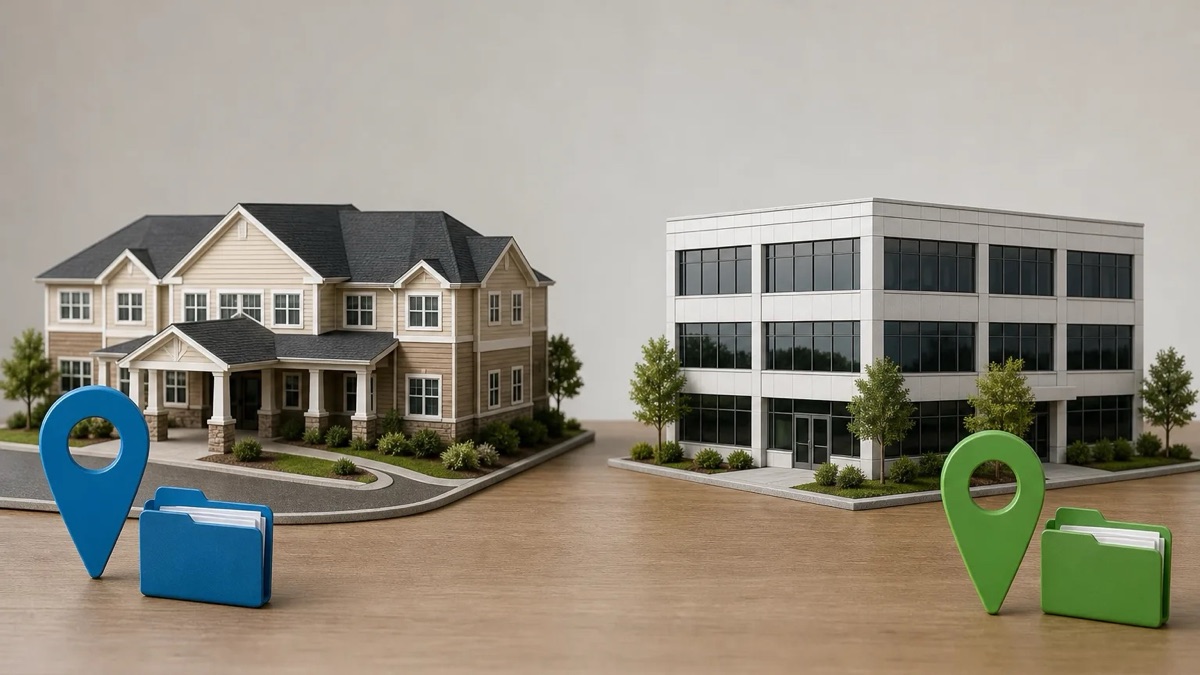



Treatment campus naming search and maps requires clear rules, not a branding exercise. The names can affect search results, map listings, and calls to the right building. If a campus uses different names on its website, Google Business Profiles, and structured data, search systems may see unclear links. Patients and families may also get confused. Admissions staff may receive calls meant for another building. A clear naming policy can reduce these risks. Teams should apply it before they open a building or launch a program.
Many campus naming problems start when teams make separate choices. Marketing may choose one name for a residential program. Operations may sign a lease under a legal entity name. Admissions may create a GBP listing with a short name that other teams do not use. Clinical staff may use yet another title in website copy. Soon, one physical site has several public names. Teams need shared rules for brands, facilities, departments, homes, clinical programs, and shared addresses. These rules help admissions, marketing, web, and compliance staff use the same verified names.
What Does Treatment Campus Naming Search and Maps Govern?
It sets the official public name for each brand, facility, department, home, program, and shared address. It also records the owner and approved uses. Use the addiction treatment SEO services with the addiction treatment marketing library to link page ownership with fact checks.
A naming policy separates four entity types that teams often mix together. The first is the brand. This is the parent name used in the logo, domain, and legal records. The second is the licensed facility. Its name is tied to a street address and the records sent to the state licensing body. The third is an operating unit. It may be a residential building, detox wing, or clinical department inside a licensed facility. It may not hold a separate license. The fourth is a clinical program. This is a named service, such as an intensive outpatient program or a medication-assisted treatment track. Each type can have a different owner and approval path. Each may also need different rules for public search use.
These rules matter more on a campus with several buildings. Each Google Business Profile must stand for a real place that meets Google's rules. A listing may face removal if its building name does not match a licensed or public entity. A program may be a duplicate or may not qualify for its own listing. That risk rises when it lacks a separate entrance, phone number, or hours. A naming policy can stop these errors before publication. It should require a decision record for each proposed public name. Teams should complete that record before adding the name to a listing, page, or directory.
How Should a Campus Name Buildings and Programs for Search?
Use a parent, qualifier, and descriptor pattern. Start with the brand, then add the site or building, and then the program if needed. Use the facility entity governance for treatment centers with the Google Business Profile categories for treatment facilities to link page ownership with fact checks.
This pattern makes names easier to match and check. For a residential building, a team might use Clearview Recovery Center, East Campus, Residential Unit. For a program in that building, website copy might say Clearview Recovery Center East Campus Outpatient Program. This example does not identify a real or verified facility. The program should not get its own GBP listing unless it meets current platform rules. Relevant facts may include a separate entrance, phone number, and operating hours. Google's business rules say a listing name should match the real-world business name. It should not be a keyword-filled name or an internal department title.
The policy should include a decision tree for every proposed GBP listing or website name. First, does the entity have its own street address or separate entrance? Second, does it have a phone line answered with that entity's name? Third, are its hours different from the parent facility's hours? Fourth, does a state or accrediting body list or license it under that name? Three or more yes answers may support a separate GBP listing under the policy. They do not prove eligibility. Current Google rules still control that decision. With fewer than three yes answers, describe the entity on the parent listing or website. Do not treat the test as a legal, clinical, licensing, or platform ruling.
Why Do Shared Addresses Cause Campus Search Problems?
Several listings at one address may look like duplicates to Google. Each listing must represent a distinct business that customers would know as separate. Use the treatment facility vs administrative office Google listing with the duplicate Google Business Profiles treatment centers to link page ownership with fact checks.
Some campuses use one mailing address for office mail, even when care buildings are separate. A web team may then give every GBP listing that shared address. Google sees several listings with the same address text. Google's business rules allow some distinct businesses at a shared address to have separate listings. Eligibility depends on the current rules and the facts for each site. Teams should check whether each facility has its own verified physical address. They should not copy a shared mailing address into every listing without review. Licensing, legal, privacy, and platform staff may need to check different parts of the record.
The risk grows when teams create a listing for every program in one building. A detox program, residential program, and outpatient program may use one entrance and reception desk. Three profiles at that address may look like duplicate listings. The policy should block new program profiles when they share the parent's address, entrance, phone number, and hours. Teams can describe those programs in the parent's services section and facility webpage. Structured data may also describe services or departments on the site. Google's guidance explains how teams can use schema.org markup. That markup does not prove GBP eligibility or replace accurate public facts.
What Fields Belong in a Campus Naming Decision Record?
The record needs eight fields: official name, entity type, street address, GBP decision, owner, date, structured data label, and review trigger. Use the treatment center address change local SEO with the practitioner profiles for treatment center SEO to link page ownership with fact checks.
The official name field holds the exact public name. Teams use it for the GBP listing, page title, structured data, and printed directory. Do not use a short form or keyword version unless the same record approves it. The entity type field marks the name as a brand, licensed facility, operating unit, or clinical program. These labels should follow the policy's set meanings. The address field holds the verified street address for the site, rather than a mailing address used by default. The GBP decision field states whether the entity passed the internal test. It also states whether a profile was made. If one exists, include its URL.
The owner field names the person and role that approved the name. Use a clear role, such as marketing director or compliance reviewer, rather than a broad team label. The date field creates a record for later checks. The structured data field records the schema.org type used on the page. A team might consider MedicalBusiness, MedicalClinic, or another related type. The right type depends on verified facts and current guidance. The review trigger states when staff must check the record again. Triggers may include a license renewal, address change, program closure, or merger. Keep the records in a shared file that approved teams can reach. The policy may set a five-business-day update goal after a public name or address changes.
How Should Map Listings Handle Program Rebrands?
Use updates in a set order. Change required license or accreditation records first, then GBP, the website, structured data, and directories. Use the local citations for treatment facilities with the review response governance addiction treatment to link page ownership with fact checks.
Teams often update the website and social pages first because those edits are easy. That choice can leave the old name on GBP while search results show the new one. Google's rules call for accurate business details. The profile name should match the real-world name shown on signs and the website. A mismatch may lead users to suggest edits. It may also make the entity less clear to people and search systems. The policy should place the GBP and website changes in the same planned release window. Before that release, the right team must confirm licensing, legal, privacy, clinical, and platform facts as needed.
A rebrand also needs a directory check. Health system finders, insurance directories, and state treatment locators may keep old names. Updates can take time. The policy may assign admissions staff or a named data owner to send change requests. It may set a goal of ten business days for the three highest-traffic directories. Staff must verify which directories matter and who can change them. After the rebrand, the old name should not remain as a separate active profile for the same place. Staff may need to merge or replace an old listing under Google's current process. Two active profiles with different names can create a duplicate conflict.
These answers state the working limits for campus names and map listings. Current records and named reviewers must confirm facility, clinical, privacy, and platform facts. Use the local landing pages for treatment facilities with the treatment center facts register to link page ownership with fact checks.
Editorial limitation: This article reflects publicly available Google Business Profile and structured data guidance as of the writing date. SCALZ.AI cannot certify that any specific facility, program, or department meets GBP eligibility criteria, licensing requirements, or structured data specifications. Teams should consult current official Google documentation and their own legal and compliance advisors before making changes to public listings or naming records.