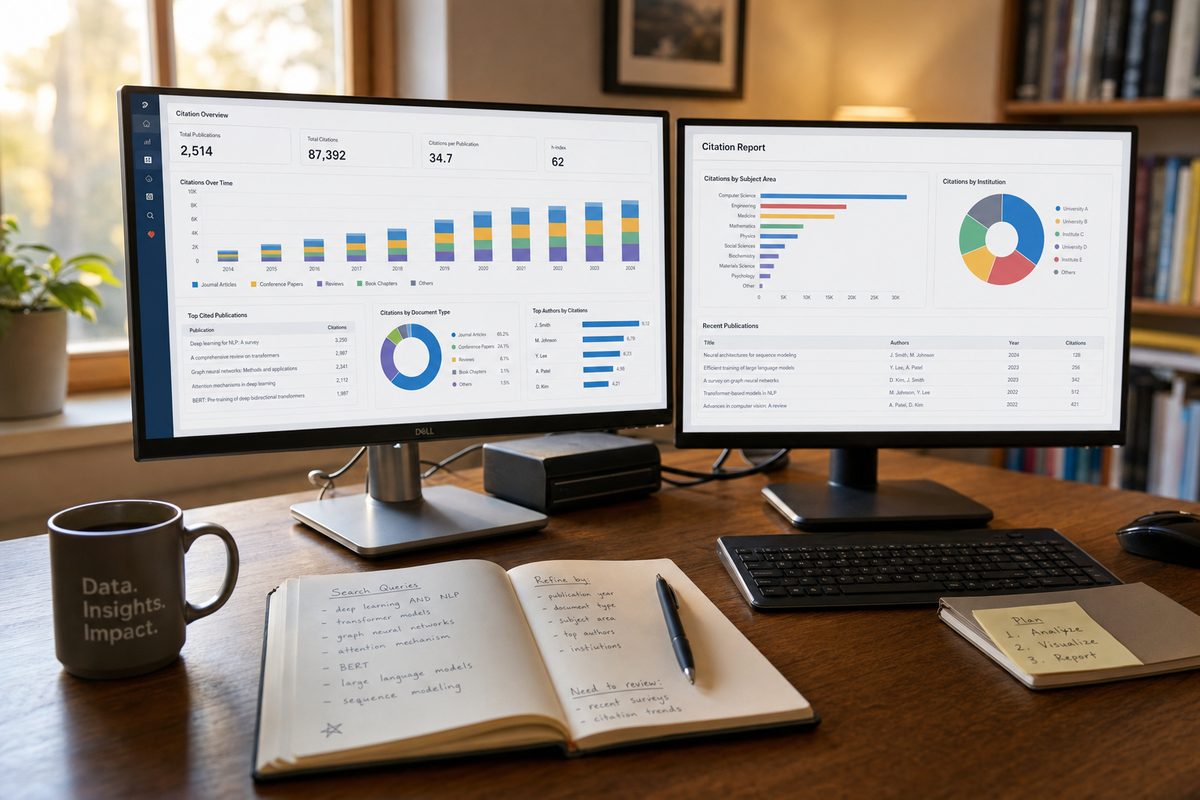



Most clients have never seen a rank-tracking report for AI answers. They've seen the classic green-bar SEO dashboard, the keyword position spreadsheet, and the organic traffic graph. But when you tell them their business is being cited by ChatGPT or Perplexity, their first response is usually a reasonable one: prove it, and show me it's happening consistently. Without a structured method to capture and document that presence, you're making a promise you can't back up with evidence. That's the core problem an AEO case study framework solves, and it's exactly why our answer engine optimization services are built around measurable, repeatable documentation rather than vague visibility claims.
This post walks through five components of a framework you can apply to any client or internal project. It also addresses an honest limitation every practitioner needs to communicate: AI answer composition varies between runs, models, and even time of day. You're tracking presence over time, not a static rank position. That distinction matters both ethically and strategically.
Why Do Vague AEO Promises Break Client Trust?
Promising AI visibility without a measurement method is the fastest way to lose a client. Stakeholders have been burned by unmeasurable digital marketing claims before. If you can't show a repeatable process for capturing, logging, and trending AI citations, your pitch sounds identical to every other agency promising the future.
The credibility gap in AEO right now is wide. Agencies correctly identify that AI answer surfaces, including Google AI Overviews, ChatGPT, Perplexity, and Gemini, are shifting how people find local services. That identification is accurate. The problem is that measurement infrastructure hasn't kept pace with the sales narrative. Clients are being told they need AI visibility, but they're not being shown how that visibility will be defined, captured, or reported.
Classic SEO has decades of tooling behind it. Rank trackers, crawl reports, traffic attribution, and conversion dashboards give clients something they can point to in a board meeting. AEO has none of that out of the box, at least not yet. Until commercial tooling matures, practitioners need a manual or semi-manual framework that documents AI citations in a structured, reproducible way. Without that structure, a single screenshot of a ChatGPT response is anecdote, not evidence.
There's also a category of harm worth naming directly. Some agencies charge significant monthly retainers for AEO work and deliver nothing more than a promise that the client is now optimized for AI. No prompt log, no citation record, no trend data. That approach will erode trust across the entire category. A proper AEO case study framework protects both the client and the agency by anchoring the relationship to documented outcomes rather than theoretical benefits.
5 Components of a Repeatable AEO Case Study Framework
A solid framework doesn't require proprietary software. It requires discipline, a defined process, and consistent execution across five specific components. Here's how each one works in practice.
- A Fixed Prompt Set (15-25 queries per client) Define the specific questions you'll run in each AI engine every reporting period. For a local HVAC company, this includes queries like "best AC repair company in [city]", "who do you recommend for air conditioning repair near [city]", and "highly rated HVAC contractors in [city] Florida". Fix these prompts before you start. Changing them mid-campaign breaks trend comparability. Aim for 15 to 25 prompts per client, covering transactional, comparison, and recommendation intent.
- A Citation Log (timestamped, per engine) For each prompt run, record whether the client was cited, which engine cited them, the exact language used, and the URL or page attributed. A simple spreadsheet with columns for date, engine, prompt, cited (yes/no), citation text excerpt, and source URL is sufficient. Timestamps matter because AI responses shift. A citation logged on July 8, 2026 in Perplexity is a verifiable data point. A vague memory that the client was mentioned last month is not.
- Share-of-Voice Measurement (percentage of prompts cited) Across your fixed prompt set, calculate what percentage of prompts returned a citation for your client in a given engine. If 10 of 20 prompts produced a citation in Perplexity, that client holds a 50 percent share of voice in Perplexity for that prompt set. Track this monthly. A rising share of voice, even if individual citations vary between runs, is a meaningful trend signal. Our post on tracking AI citations and share of voice goes deeper on the calculation methodology.
- Source Attribution (what page earned the citation) When a citation occurs, record which specific page on the client's site was referenced. Was it the homepage, a service page, a blog post, or a review aggregator? This tells you what content is actually doing the citation work and informs where to focus future content investment. You'll often find that one or two high-authority, well-structured pages drive most citations.
- A Monthly Trend Chart (visual, stakeholder-ready) Compile the share-of-voice percentages for each engine across months into a simple line chart. Show the client their citation trajectory in ChatGPT, Perplexity, and Google AI Overviews separately, since each engine draws from different sources and rewards different content signals. A trend chart converts raw log data into a story that non-technical stakeholders can interpret in under 30 seconds.
What Have We Seen Running This Framework With Service Businesses?
Running this framework across local service clients has shown us consistent patterns: a small number of well-optimized pages drive the majority of citations, share of voice in Perplexity and ChatGPT often moves independently of Google rankings, and the citation log itself becomes the most credible deliverable in a client relationship.
Our team runs the prompt set manually and through a mix of API sampling on a monthly cadence. For local service businesses, the prompt set typically centers on recommendation and comparison intent queries. Those are the query types where AI engines tend to return named local businesses rather than generic how-to content. The prompt set is client-specific, but the logging structure, share-of-voice calculation method, and trend chart template are standardized across clients so reporting stays consistent and efficient.
One operational detail that's proven high-value: we log the exact citation text, not just a yes/no flag. The language an AI engine uses to describe a business, whether it says "highly rated", "best in the area", or simply "one option to consider", reflects the strength and framing of the citation. Over time, citation language quality is as informative as citation frequency. A business moving from "one option" to "best" framing across multiple runs is a meaningful signal worth reporting to the client.
The honest limitation is this: for clients with fewer than 10 to 15 pieces of substantive, well-structured web content, the framework will likely show minimal citation activity for the first three to four months. AI engines need source material. If the client's site has thin pages, no FAQ content, and limited third-party mentions, the citation log will mostly record absences. In that situation, the AEO framework is diagnostic. It reveals the content gaps, but it's not yet a vehicle for demonstrating positive results. We tell clients this upfront. Rushing to report AI visibility before the underlying content foundation exists produces misleading trend data and sets false expectations.
Structured data also plays a meaningful role. Implementing schema.org FAQPage structured data on relevant pages increases the likelihood that AI engines extract and attribute specific answers to your client's content. It's not a guarantee, but it's a consistent signal that improves citation rates over time when paired with well-written, question-answering content.
How Do You Communicate AI Uncertainty to Clients Without Losing Confidence?
The most effective way to manage AI uncertainty with clients is to address it proactively in your reporting structure rather than waiting for them to notice inconsistencies. Frame the framework as trend measurement from the start, and clients will evaluate results correctly rather than expecting static rank positions that AI answer engines don't produce.
AI answer composition varies between runs. This isn't a flaw in your methodology. It's a property of how large language models work. Response temperature, model updates, index refreshes, and personalization signals all affect what a given AI engine returns for the same query on different days. If you promise a client that ChatGPT will always name their business as the top provider, you'll eventually be wrong. You'll have created a credibility problem that the framework itself could have prevented.
The right framing for client communication is statistical presence, not guaranteed placement. A client who appears in 65 to 75 percent of relevant Perplexity prompts over a quarter has strong, consistent AI visibility by any reasonable standard. That framing is honest, defensible, and still compelling. It also aligns with how Google's own guidance on AI Overviews treats visibility, as an emergent property of content quality and relevance rather than a deterministic outcome. Reviewing Google AI Overviews and Search Central guidance with your client during onboarding sets accurate expectations from the beginning.
Monthly reporting cadences work better than weekly ones for AI citation tracking. Weekly snapshots amplify noise from model variability and produce anxiety without actionable insight. Monthly data smooths the variance and makes trend lines meaningful. Quarterly summaries, which aggregate monthly share-of-voice figures, are the right format for board-level or C-suite reporting. Our findings align with what the broader practitioner community has observed, as documented in the AI search citation study we published this year. Consistent presence over 90 days is a far stronger signal than a single high-visibility citation that can't be reproduced.
Proving AI search results to clients is not about showing a screenshot. It is about running a documented process, logging citations consistently, and translating the data into a story that trends over time. The five-component AEO case study framework gives you that process. It anchors your work in evidence, protects you from inflated claims, and gives clients something genuinely meaningful to evaluate. Start with the prompt set, build the log, and let the trend chart do the convincing.