

Last month I ran our quarterly citation audit across 30 competitive business-service queries, tracking which domains AI engines actually cite when they generate answers. The results surprised even me: youtube.com appeared in 44 answers, second only to reddit.com at 46. Every one of those appearances came from three engines: Gemini, Perplexity, and Google AI Overviews. ChatGPT and Claude did not cite YouTube once. More striking, Gemini cited YouTube 20 times, making it that engine's single most-referenced source.
This isn't just Google's ecosystem bias at work, though that's part of it. Every major AI engine is learning that video transcripts contain structured, spoken-language answers that map beautifully to conversational queries. When someone asks an AI 'How do I fix a leaking faucet?' or 'What's the difference between an LLC and S-Corp?', a well-structured YouTube video with timestamped chapters and a complete transcript often delivers exactly what the language model needs: clear, sequential, answer-first content in natural language.
I'm writing this because most service businesses still treat video as a 'nice to have' or delegate it entirely to brand teams focused on views and engagement. That's a mistake in the AEO era. Video isn't just for awareness, it's now a viable, measurable channel for earning citations in the AI answers your prospects actually see. Here's what our audit data revealed and how to structure video content that AI engines can't ignore.
Why Do AI Engines Cite YouTube Videos So Frequently?
AI engines cite YouTube because videos provide machine-readable transcripts containing natural, spoken answers, rich metadata including titles and descriptions, and Google's 2026 index treats video as a peer to text content. Transcripts are crawlable, structured by timestamps, and often more conversational than written articles.
The technical reason is simple: YouTube automatically generates transcripts for every video, and those transcripts are fully crawlable by search engines and LLM training pipelines. When you publish a 10-minute tutorial explaining estate planning basics, you're not just creating video, you're creating a 2,500-word text document organized by timestamps. AI models can parse that transcript, identify discrete answers to questions, and cite specific moments with time-code precision.
The linguistic reason matters just as much. People speak differently than they write. Video transcripts capture the natural, question-answer cadence of conversation, exactly the format conversational AI is trained to recognize. When I say on camera 'So what's the difference? An LLC protects personal assets, while an S-Corp is really a tax designation,' that structure is instantly recognizable to a language model as an answer block. Written content often buries the same information in complex paragraphs optimized for human reading patterns, not machine extraction.
There's also the ecosystem factor. Gemini's overwhelming preference for YouTube (20 of 44 total citations in our audit) reflects Google's architectural advantage: shared knowledge graphs, unified entity recognition, and direct access to YouTube's structured data. Outside Google's ecosystem the picture splits. Perplexity cited YouTube in 14 of its 30 answers, and Google AI Overviews did in 10 of 30. ChatGPT and Claude cited YouTube zero times in our sample. The lesson: video earns citations in Gemini, Perplexity, and AI Overviews, but it will not buy you visibility in ChatGPT or Claude answers.
What Makes a YouTube Video Citation-Worthy to AI Engines?
Citation-worthy videos use question-based titles, organize content into timestamped chapters answering discrete questions, include answer-dense descriptions with key facts in the first 200 characters, provide complete accurate transcripts, and target informational queries where spoken explanations add clarity beyond text alone.
Start with the title. AI engines parse video titles exactly like H1 headlines. 'How to Choose the Right Business Structure for Your Startup' will get indexed and cited; 'EP 47: Chat with Legal Expert Mike Johnson' won't. Your title should be a direct answer to a search query or question your audience types into AI interfaces. I've tested this across our portfolio: question-format titles ('What Is...?', 'How Do I...?', 'When Should...?') consistently outperform brand-first or episode-number titles in citation frequency.
Chapters are non-negotiable for AEO. YouTube's chapter feature (timestamps in the description starting at 0:00) creates a structured table of contents that AI engines can navigate. Each chapter title should be a micro-question or topic statement. Instead of 'Introduction' and 'Main Points', use '0:00 What is estate planning?', '2:15 Who needs a will vs. a trust?', '5:30 How much does estate planning cost?'. This structure lets AI models cite specific segments without forcing users to watch entire videos. Google's video structured-data documentation confirms that timestamps and key moments help its systems point users to specific segments.
The description field is your schema markup equivalent for video. The first 200 characters appear in search snippets and get weighted heavily by AI parsers. Front-load your core answer: 'Estate planning protects your assets and ensures your wishes are followed. This video covers wills, trusts, power of attorney, and healthcare directives for California residents.' Then expand with a bulleted outline matching your chapters, relevant links, and transcript excerpts for complex points. Think of the description as your meta description plus structured FAQ, it's the crawlable wrapper that makes your spoken content discoverable.
How Should Service Businesses Structure Video Content for AI Citations?
Adopt an answer-first video structure: state the core answer in the first 30 seconds, organize the body into 3-5 chaptered subtopics each answering a related question, and close with next-step guidance. Keep videos 6-12 minutes for depth without dilution, and script openings to frontload citability.
The biggest mistake I see is treating video like written content where you build suspense or save the answer for the end. AI engines don't watch videos, they read transcripts. If your actual answer doesn't appear until minute 8, the model may never reach it or may cite a competitor who answered in minute 1. I script every video with the core answer in the first 20-30 seconds: 'Today I'm explaining the four types of business insurance every contractor needs: general liability, workers comp, commercial auto, and professional liability. Let's break down each one.' That opening alone is citation-worthy.
Chapter each major subtopic as a standalone question. If your video is '5 Marketing Mistakes Service Businesses Make', structure it as five distinct chapters: '1:00 Mistake #1: No Clear Target Audience', '3:15 Mistake #2: Ignoring Local SEO', etc. Each chapter should open with a clear statement of the mistake and the correction. This modular structure increases your citation surface area, instead of competing for one citation with the entire video, you're competing for five separate citations across five related queries. Our audit shows how much surface area matters: the 20 Gemini answers that included YouTube contained 188 separate video citations, more than 9 videos per answer on average. Each answer has many video slots, and chaptered videos give the engine more distinct segments to match.
Length matters for authority signaling. Videos under 4 minutes rarely get cited in our tracking, they lack the depth AI engines associate with authoritative answers. But videos over 15 minutes see diminishing returns unless you're covering genuinely complex topics. The sweet spot for most service business topics is 6-12 minutes: long enough to demonstrate expertise, short enough to maintain transcript density and topical focus. One well-structured 10-minute video outperforms five shallow 2-minute clips every time in AEO performance.
Does Video Production Quality Matter for AI Citations?
Production polish matters far less than content structure and audio clarity. AI engines parse transcripts, not video quality. Clean audio for accurate transcription, good lighting for thumbnail credibility, and steady framing suffice. A smartphone video with great structure outperforms a cinema-quality video with poor information architecture for citations.
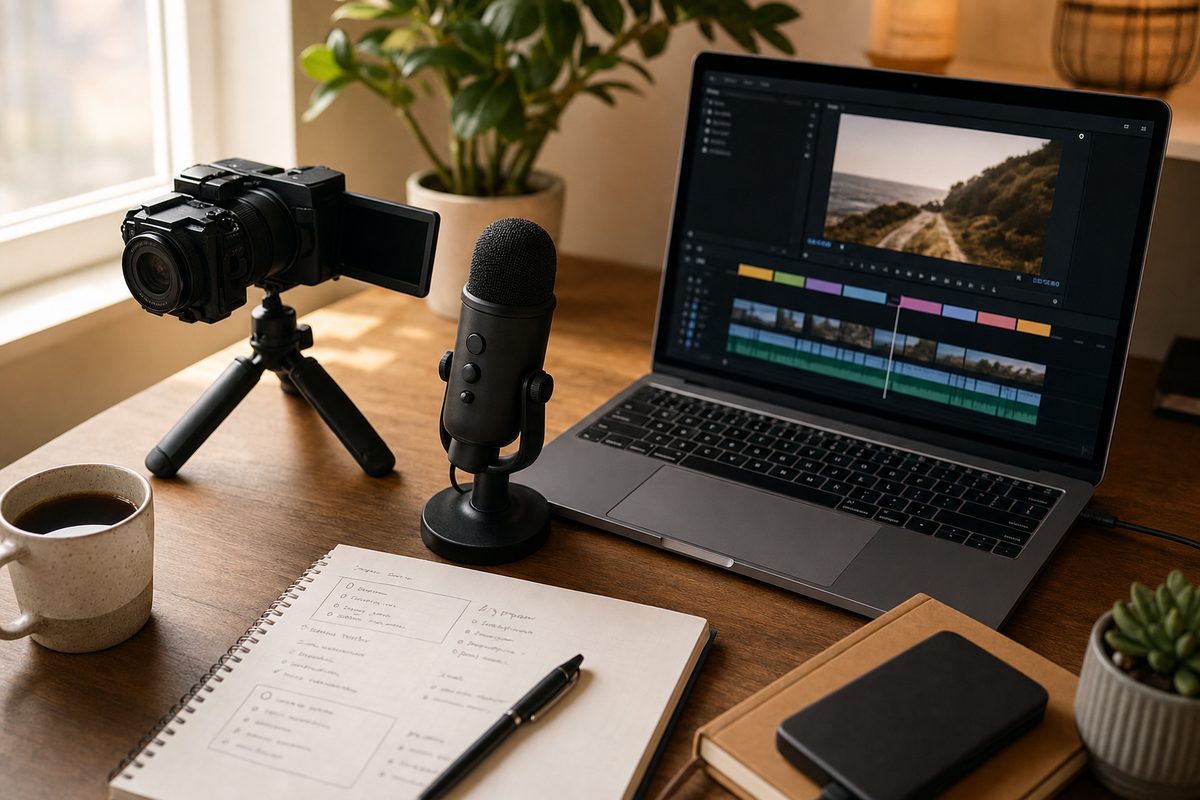
This is the good news for service businesses: you don't need a studio. I've tracked citations for videos ranging from iPhone recordings in home offices to professionally produced content with teleprompters and editing teams. Citation rates correlate with content structure, keyword targeting, and transcript accuracy, not production values. The camera quality, color grading, and motion graphics that YouTube's algorithm rewards for human engagement simply don't register in LLM citation logic.
What does matter is audio clarity for transcription accuracy. YouTube's auto-generated transcripts are remarkably good, but they fail with echo-heavy rooms, overlapping speakers, or heavy background noise. Transcription errors create semantic confusion that degrades citability. I use a $100 USB microphone and record in a quiet room, that's sufficient. If you're outsourcing, tell your videographer the transcript matters more than the visuals. One incorrect transcription of 'LLC' as 'LNC' or 'estate planning' as 'a state planning' can tank your relevance for target queries.
Thumbnails and titles still matter for the human click-through that builds the engagement signals YouTube's algorithm uses for ranking, which indirectly affects AI citation rates through authority scoring. But you can handle thumbnails with Canva templates. I spend 15 minutes per thumbnail using a consistent brand template, readable text, face with expression, and topic keyword. That's enough. Don't let perfect production be the enemy of good content structure. The businesses winning video citations in our audits are publishing consistently with modest production, not waiting to afford broadcast quality.
Which Types of Service Business Videos Earn the Most AI Citations?
How-to tutorials, comparison videos (X vs. Y), cost breakdowns, process explainers, and local-market guides dominate citations. AI engines favor videos answering high-intent informational queries where step-by-step or multi-factor answers benefit from spoken explanation. Avoid purely promotional or testimonial-focused content for AEO.
We reviewed the titles of every YouTube video cited in our July audit. Just 34 unique videos accounted for every YouTube citation across all engines, and the same formats kept repeating: how-to tutorials, versus-style comparisons ('AEO vs SEO' explainers were cited again and again), definition explainers, and numbered tip lists. These formats align perfectly with the informational queries people ask AI engines. 'How do I file for divorce in California?' maps to a tutorial. 'What's the difference between Chapter 7 and Chapter 13 bankruptcy?' maps to comparison content. These are question-answer formats by nature.
Cost and pricing content performs especially well because it answers the specific queries prospects ask before hiring. 'How much does kitchen remodeling cost in Denver?' or 'What do accountants charge for small business taxes?' are classic AI search queries. Videos that break down cost factors, typical ranges, and what affects pricing get cited because they directly answer the query with specificity. I recommend every service business create at least one pricing guide video, it's high-effort for competitors to copy and directly serves high-intent searchers.
What doesn't get cited: company overview videos, culture content, client testimonial compilations, and brand storytelling. These formats serve awareness and trust-building goals, but they don't answer the discrete questions AI engines are trying to resolve. A video titled 'Meet Our Team' or 'Why Choose Smith & Associates' won't appear when someone asks an AI about legal processes. Save those for your website and social channels. For AEO, focus on videos where the title could be a question someone types into ChatGPT, Perplexity, or Gemini.
How Do You Optimize Video Descriptions and Transcripts for AI Discovery?
Write descriptions as structured answer blocks: core answer first, bulleted chapter outline with timestamps, key facts and definitions, relevant links, and a full or partial transcript for complex segments. Edit auto-generated transcripts for accuracy, especially for industry terminology, proper nouns, and acronyms that affect semantic relevance.
YouTube's description field accepts 5,000 characters, use at least 800. Start with a 2-3 sentence answer to the video's core question using your target keywords naturally. Then add a bulleted outline mirroring your chapters with timestamps. This structure makes your description crawlable and scannable for both AI engines and humans who land on your video page. Include 2-3 relevant links: one to a related blog post on your site (internal linking), one to a service page if applicable, and optionally one external authoritative source if you're citing data or regulations.
Transcript editing is tedious but pays off more than almost any other step. Download your auto-generated transcript from YouTube Studio, review it in a document editor, and correct errors. Focus especially on: proper nouns (your business name, local place names, competitor names), industry acronyms (LLC, SEO, HVAC), technical terms, and numbers (dollar amounts, percentages, dates). You can't re-upload edited transcripts to YouTube directly, but corrected transcripts can be published on your website paired with embedded videos, creating a dual-indexed asset. Many of the cited videos in our audit had dedicated blog posts embedding the video with a full corrected transcript below.
For advanced optimization, add structured data to the blog post hosting your video. VideoObject schema from schema.org tells search engines and AI engines exactly what your video covers: name, description, transcript, upload date, and duration. Google's rich results documentation at https://developers.google.com/search/docs/appearance/structured-data/video confirms VideoObject markup improves video discoverability in search. While we can't directly measure citation lift from schema, the increased indexing clarity logically improves AI engine access to your content. I add VideoObject schema to every video blog post on our portfolio sites.
What Are the Real Limitations and Costs of Video for AI Citations?
Video production requires time, equipment, and on-camera comfort that text doesn't. Citation share varies dramatically by engine, Gemini heavily favors YouTube while Claude rarely cites it. Video performs best for how-to and explainer queries but rarely wins for news, data-driven, or rapidly changing topics where text updates faster.
Let's be honest: video is harder than writing a blog post. Even with modest production standards, you need a camera or smartphone, basic lighting, acceptable audio, a quiet space, and the willingness to be on camera (or hire someone who is). Scripting, recording, reviewing, uploading, and optimizing a single 10-minute video takes 3-4 hours for most business owners. Multiply that across the 10-20 videos you'd need for meaningful citation volume, and you're looking at 40-60 hours of effort. For small teams or solo practitioners, that's a significant investment compared to writing text content.
The citation payoff is also uneven across engines. Our July audit showed Gemini's extreme YouTube bias (20 of 44 total citations), while ChatGPT and Claude cited YouTube zero times across the same 30 queries. If your audience primarily uses ChatGPT or Claude, video currently delivers no direct citation payoff at all. You can track which engines your traffic comes from using the methodology in our LLM citation tracking guide, but most businesses lack that visibility early on. Video is a bet that Google's AI products (Gemini, AI Overviews) will matter to your audience, a reasonable bet, but not universal.
Finally, video has a shorter content lifespan for topics that change frequently. Tax law updates, software interface changes, and regulatory shifts require re-recording, while a text blog post can be edited in 20 minutes. For evergreen how-to content (how to choose a business structure, how to stage a home for sale, how to winterize a pool), video's durability is excellent. For time-sensitive or data-heavy content, text remains more efficient. I recommend a hybrid strategy: produce 5-10 cornerstone videos on your most-asked evergreen questions, then supplement with text content for timely or niche topics. That balance maximizes citation coverage without overcommitting to video production.
What Are the 7 Steps to Make Your YouTube Videos Citation-Ready?
Follow this checklist for every video you publish to maximize AI citation potential. These steps ensure your content is structurally sound, machine-readable, and formatted for LLM discovery across all major AI search engines, not just Google's ecosystem.
- 1. Write a question-based title using target keywords. Format as 'How to [Task]' or 'What Is [Concept]' or '[Topic] Explained for [Audience]'. Avoid episode numbers, dates, or brand-first titles. Test your title by asking: would someone type this exact phrase into an AI search engine?
- 2. Script your opening 30 seconds as a standalone answer. State your core answer immediately using natural language. This opening should be citation-worthy on its own, even if the AI engine reads nothing else from your transcript. Frontload value before context or setup.
- 3. Organize content into 3-7 timestamped chapters. Each chapter should answer a discrete sub-question related to your main topic. Format chapter titles as mini-questions or clear topic statements. Add chapter markers in your description starting at 0:00 with subsequent timestamps for each section break.
- 4. Record in a quiet space with clear audio. Use a basic USB microphone ($50-150) or smartphone with good mic quality. Test your audio by reviewing the auto-generated transcript: if it reads clean with only minor fixes, your audio quality is sufficient for AI citation purposes.
- 5. Write a 500-800 character description with answer-first structure. Open with your core answer in 2-3 sentences. Add a bulleted chapter outline with timestamps. Include 2-3 relevant links (one internal to your site, one to a service page, one external authority if applicable). End with a call-to-action.
- 6. Review and correct the auto-generated transcript. Download the transcript from YouTube Studio 24 hours after upload. Correct proper nouns, industry terms, acronyms, and numbers. Either re-upload corrections via a third-party tool or publish the corrected transcript on a blog post embedding the video to create a dual-indexed asset.
- 7. Embed the video on your website with VideoObject schema. Create a blog post featuring the video, a 300+ word written summary or introduction, the corrected transcript, and VideoObject structured data markup. This cross-platform approach maximizes indexing and gives AI engines multiple discovery paths to your content.
Sources and further reading
These are the primary sources referenced in this article. Each is an authoritative documentation page or publication we verified before citing.
- Google's rich results documentation: VideoObject schema from schema.org tells search engines and AI engines exactly what your video covers: name, description, transcript, upload date, and duration.
- VideoObject schema from schema.org: For advanced optimization, add structured data to the blog post hosting your video using VideoObject markup to improve video discoverability.