

Multi-location dental SEO: a practical framework for healthcare marketers
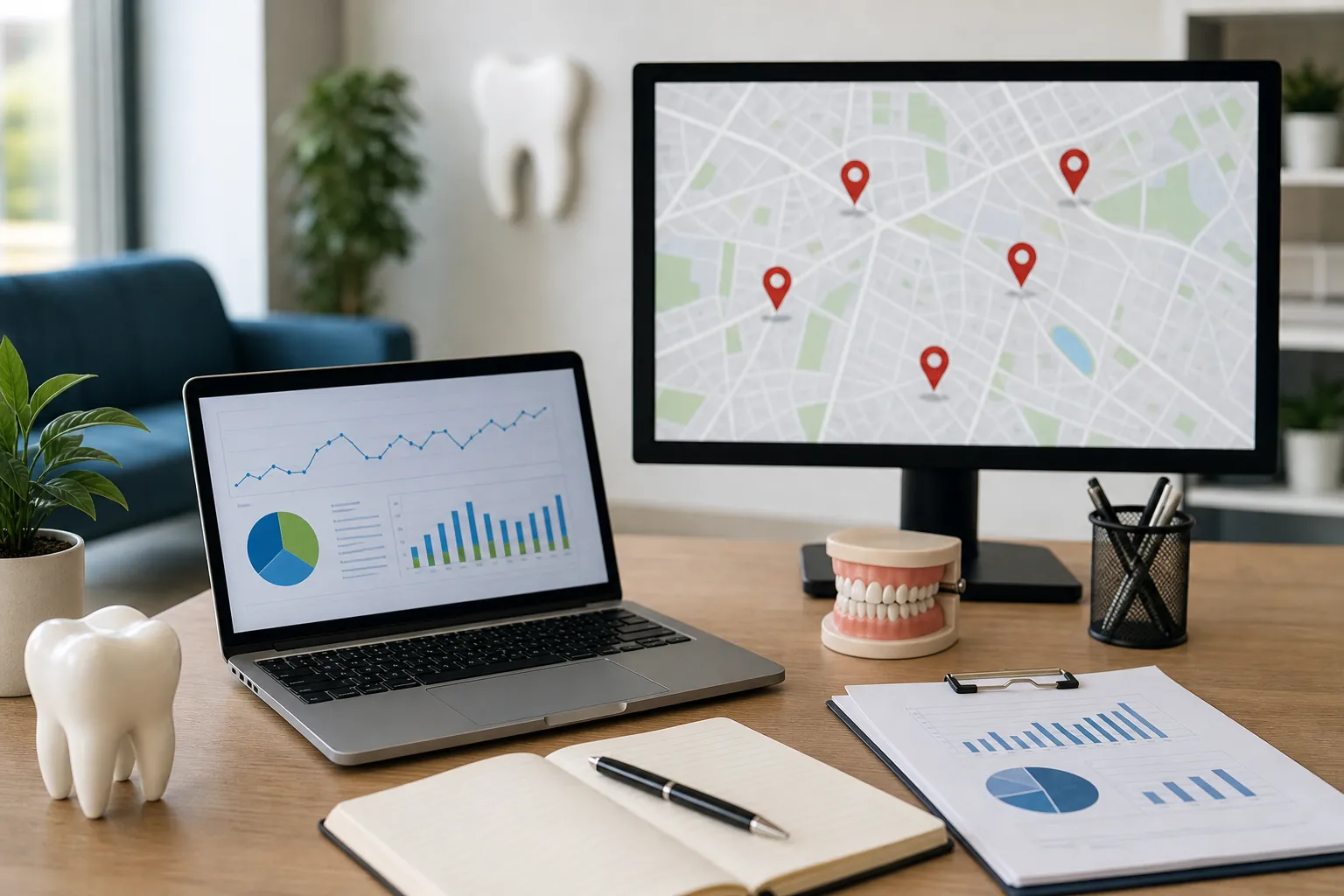
Multi location dental seo helps patients find the right dental office. It joins correct local facts with a clear group website. Each office needs its own address, phone number, services, and contact path. Copying the same page across cities leaves those details unclear.
The goal is a search plan staff can keep current. Local SEO helps people find each office. Answer engine optimization (AEO) makes answers easier to find and understand. Generative engine optimization (GEO) uses that same clear text for AI search. These steps cannot promise rankings, citations, traffic, or inquiries.
What should a multi location dental seo inventory include?
Include checked office facts, who updates them, and when they were checked. A dental SEO plan needs correct facts for each office. For groups with distinct care brands, healthcare SEO planning also requires clear brand and service boundaries.
Build one record for each active location before changing page copy. Ask the office team to check it against the latest booking facts. A third party listing alone may contain an old address or phone number.
- Record the public office name, street address, local phone, and hours.
- List approved services and the providers assigned to that office.
- Save the booking link and matching Google Business Profile URL.
- Name the person who approves changes and tracks unresolved questions.
- Flag moved, closed, duplicate, and newly opened offices for review.
Suppose an example group has offices called Northside and Downtown. Northside offers a service that Downtown does not. The shared record should mark that difference before editors write either page. Patients should not have to call both offices to resolve conflicting claims.
Keep a simple change log with the record. Note the old value, approved replacement, source, and affected pages. When hours change, that list helps staff find every place needing an update.
How should the website separate offices and services?
Give each office a stable page within a linked list of offices. Dental website planning should separate office selection from service research. The wider healthcare SEO structure should keep group, service, and provider links clear.
Use ordinary links so people can reach offices without using a map. Link shared service pages to locations that offer the service. Add breadcrumbs and a route back to the office list on each office page.
Two offices in one city need distinct names and URLs. A neighborhood or street label may help if it matches the actual office. Keep the chosen URL stable when page copy changes.
- Place the address, phone, hours, and booking link near the top.
- Add checked directions, parking details, and entrance instructions.
- Link to current provider pages and approved service descriptions.
- Use actual office photos with permission and correct descriptions.
In a shared building, for example, one office might use a side entrance. That detail gives its page a useful local purpose. A paragraph praising the city would add less value for someone arriving there.
Google's helpful content guidance supports writing for people's needs. Use that principle when deciding whether a new city page belongs. It should help people compare real offices or answer a distinct local question.

How do you align Google Business Profiles with office pages?
Match each profile that meets Google's rules to the real office and its page. Dental local SEO depends on consistent office details. An AEO content plan should use those same checked facts when answering location and contact questions.
Check the business name, map pin, phone number, and hours. Use the public name without adding unrelated city or service keywords. Choose categories that describe the actual office, using current Google guidance.
Send the website link to the matching office page where appropriate. Test the appointment link as well. A correct profile loses practical value when it directs people to the wrong booking page.
- Ask the office contact to confirm holiday hours and planned closures.
- Check that photos show the office named in the profile.
- Review suggested edits for incorrect addresses, services, or contact details.
- Review account access when staff roles or outside vendors change.
Imagine a Downtown profile that links to Northside's booking page. Change the link and check the landing page's office label. Do not assume that a working link reaches the correct office.
Dentist profiles and shared addresses need a check of Google's rules. Check ownership before creating or removing a listing. Send open questions to the account owner rather than making duplicate profiles as a shortcut.
Which searches need a location page or service page?
Use location pages for office selection and service pages for broader service facts. Dental SEO keyword planning should map searches to the right pages. LLM SEO planning benefits from explicit links between services and the offices offering them.
Create a keyword map before expanding the site. Record the search intent, target page, linked offices, and approved facts. Check existing pages first so a new draft does not repeat another page's purpose.
A search for a dentist near Downtown suggests office selection. A question about how to request an appointment suggests a process answer. That answer may belong on an office page when booking steps differ.
- Assign each main search intent to a clear main page.
- Use shared service pages when the approved facts are the same.
- Create local service pages only when distinct facts warrant them.
- Link to offices that offer those services without implying every location offers every service.
Do not create a page for each nearby town by swapping place names. Describe surrounding areas only when they help explain a real office's location. Never imply that the group has an office where none exists.
Review the map when offices open, close, or change services. An outdated keyword plan can send people toward a page whose facts no longer match their search.
What makes office content useful for AEO and AI search?
Give a direct answer first, then add the context people need. Answer engine optimization helps organize office questions into clear sections. LLM SEO uses explicit names and links so readers know which office an answer concerns.
Write headings around real questions about location, hours, and booking. Put the essential facts in visible text. Avoid hiding the only address in an image or placing booking instructions solely inside a download.
Imagine an office that sends all booking requests to one team. Explain where those requests go and how staff will respond. State whether the office must confirm the request before an appointment is set. That distinction answers a practical question without making a promise.
- Name the office when an answer applies to one location.
- State the next contact step using the approved booking process.
- Keep shared answers consistent while preserving real local differences.
- Route clinical topics to qualified review before a page goes live.
Google's AI features guidance says standard SEO steps still apply. It does not require special AI markup. Keep pages easy to reach, useful, and clear. Do not promise that an AI tool will cite them.
Google AI Overviews, ChatGPT, Perplexity, and the Gemini app may show different answers. Clear text helps explain facts, but it cannot secure inclusion. Record observed mentions as dated examples rather than fixed search scores.

Which technical checks protect local discovery and contact paths?
Check page access, indexing settings, links, and booking paths before expanding content. Healthcare technical SEO should keep important office facts easy to reach. Dental SEO checks should also test whether each contact button reaches the right office.
Google's Search Essentials sets out basic search rules and technical needs. Those steps do not guarantee indexing. Use them to find issues the team can fix.
- Confirm that active office pages allow crawling and intended indexing.
- Check canonical URLs against the page each office should retain.
- Include the intended office URLs in the XML sitemap.
- Repair broken office list, service, staff, and booking links.
- Test phone and appointment buttons on mobile screens.
Distinct office pages should not all declare the office list page as their canonical. Check duplicate URL versions and tracking parameters on their own. The aim is a clear preferred URL for each useful page.
Suppose a redesign changes an office URL. Map the old address to the matching new page and test the redirect. Sending every retired URL to the homepage can obscure the office people sought.
Structured data should describe facts people can read on the page. Check office names, addresses, and links to the group against the inventory. Markup does not promise enhanced results or AI citations.
How should teams handle reviews and sensitive marketing drafts?
Assign review owners and hold flagged drafts until the right review is complete. Healthcare content planning needs a documented approval process. For separate behavioral care brands, behavioral health marketing should follow its own content scope and review ownership.
Keep this process focused on marketing governance. Flag pages discussing privacy or care outcomes for the organization's chosen reviewers. Hold those pages until the reviewers approve the wording. An SEO editor should not supply views on legal rules or claims about care results.
Use checked business facts for public directory updates and local references. Check that each listing points to the correct office. Focus on trusted trade and local sources rather than bulk listings.
- Record who approves review requests and public response templates.
- Route flagged response drafts to the chosen reviewer.
- Verify any named partnership or work with local groups before mentioning it.
- Remove unsupported awards, claims of being the best, and promised results from drafts.
Imagine a draft page describing an office's work with a local group. Ask for a clear source and approval from the team in charge. If neither is available, leave the claim out rather than filling the gap.
Maintain a review record with the draft, sources, owner, and decision. This gives future editors context when revising approved material. A fresh date alone does not show that the page's facts were checked.
How do you measure progress and keep the workflow current?
Track how people find and contact each office, then check the group view. Dental SEO reporting should retain office detail. AEO review should check answers and cited sources without treating them as guaranteed results.
Measure search impressions, organic visits, phone clicks, and booking link clicks. Track sent inquiries apart from early clicks. A phone click does not prove that a call connected or an appointment was booked.
- Label events by office and test them after website changes.
- Separate location pages from general educational pages in reports.
- Record AI queries, dates, platforms, and cited sources when available.
- Route proposed call tracking and data flows through review by the team in charge.
Start improvements with wrong facts, broken contact paths, and indexing barriers. Then revise key office pages and align their profiles. Assign recurring checks to named staff and record the last checked date.
Imagine opening a new office. Use a launch checklist: approved record, office page, booking test, profile review, sitemap check, and tracking check. Reuse that checklist without copying another office's local details.
To discuss your group's structure and search priorities, call SCALZ.AI at 407-954-8800. Bring the office inventory and a list of current search or booking problems.
Frequently asked questions
Does every office need its own website?
No. A shared site can give each office a distinct page. Separate sites require a clear business reason and enough staff time to keep each one current.
Should every location have a page for every service?
No. Use shared service pages unless local facts justify separate pages. Link people to offices that actually offer the service.
Can location pages use the same booking instructions?
Yes, when the checked process is shared. Keep office names, contact details, and service lists specific to each location.
Does structured data guarantee an AI citation?
No. It can describe facts on the page and links between them. Search platforms control whether they show or cite a page.
What should happen when an office closes?
Confirm the closure, then review its page, profile, and booking links. Choose a useful next page without implying the office remains open.
What should marketers fix first?
Fix wrong office facts and broken contact paths first. Then review indexing, page structure, profile facts, and content gaps.
Use the healthcare search content review workflow to place this topic in a clear content plan and assign its next review.
AI assisted drafting supports this article. SCALZ.AI is responsible for editorial review. This is marketing workflow guidance, not medical, legal or financial advice.
Call 407-954-8800 to talk through next steps.