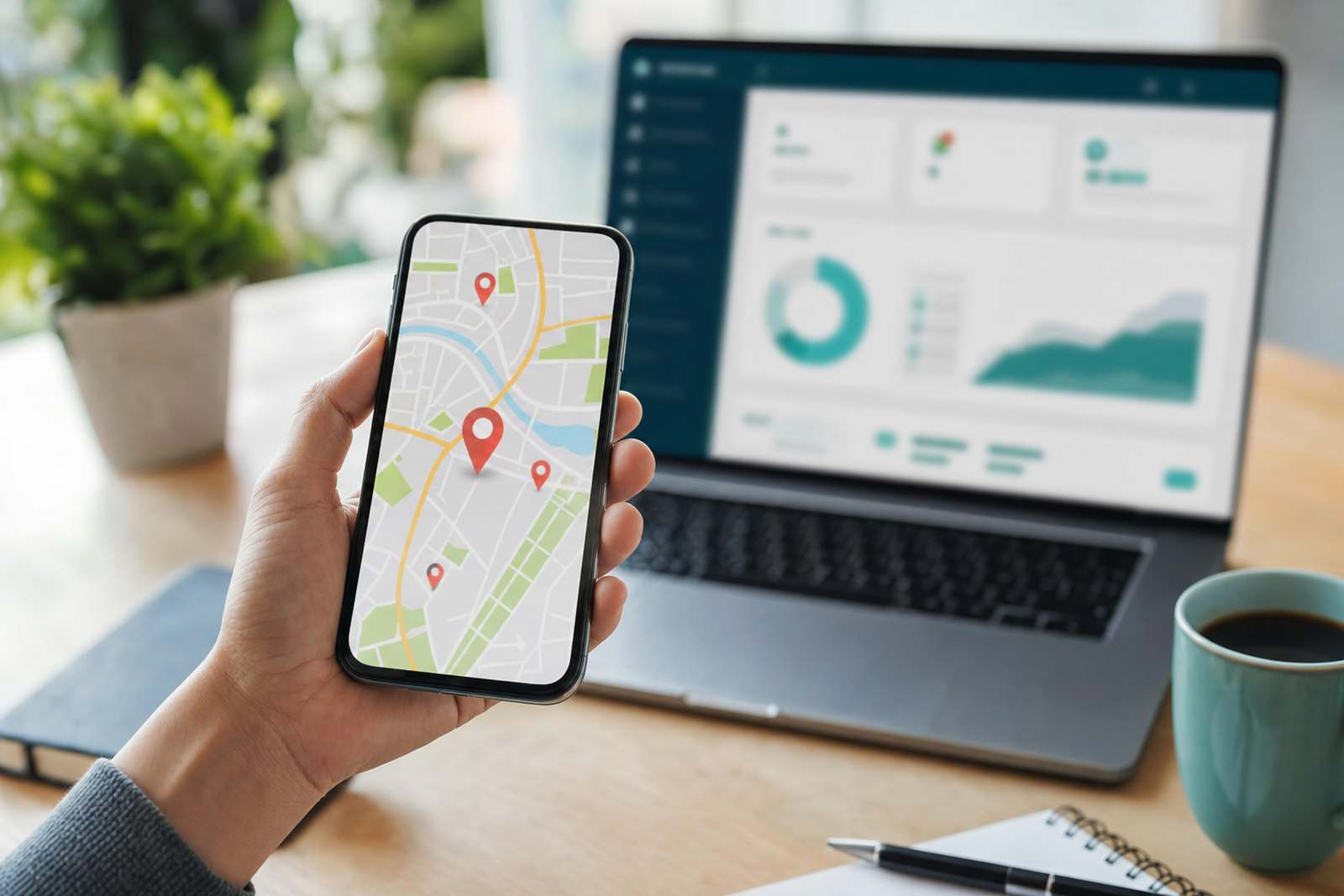
A person searching for "drug rehab near me" at 2 a.m. is not browsing casually. That search carries urgency, and the three listings that appear in Google's local pack capture the overwhelming majority of clicks before any organic result gets a chance. For addiction treatment centers, owning that local pack is not a marketing luxury. It is the difference between an admissions line that rings and one that sits quiet while a competitor in the same zip code answers instead.
Local SEO for treatment centers is more complicated than local SEO for a pizza shop or a plumber. Behavioral health carries HIPAA obligations, LegitScript certification requirements, Google's own healthcare category restrictions, and ethical review solicitation rules that most generic SEO playbooks never mention. This post addresses all of it, giving your team a realistic picture of what it takes to rank, convert, and stay compliant in a highly scrutinized vertical. If you want a broader foundation first, the rehab SEO guide on this site covers the full organic strategy alongside local tactics.
How Does Google Business Profile Verification Work for Rehab Centers?
Google Business Profile verification for treatment centers follows the standard postcard or video process, but rehabs frequently face suspensions tied to category selection, address sensitivity, or shared building issues. Understanding why suspensions happen and how to preempt them saves weeks of ranking time.
Google requires that your listed address be a physical, staffed location. For a residential facility or detox unit, that is straightforward. For an IOP or outpatient program that rents space inside a medical building shared by multiple tenants, Google may flag the address as a duplicate or as a "virtual office," triggering a suspension. The fix is usually a video verification that shows your signage, the interior, and a staff member on-site. Keep a short screen recording of that process so you have documentation if a re-verification request comes up later.
Category selection is the single biggest GBP mistake treatment centers make. Google does not offer a single "drug rehab" category. The closest primary categories as of recent updates include "Addiction Treatment Center," "Mental Health Service," "Rehabilitation Center," and "Counseling Service." Choosing the wrong primary category can push you into irrelevant map results. Pick the category that most closely matches your highest-revenue level of care, then add secondary categories for detox, outpatient programs, or MAT services if they apply. Avoid adding so many secondary categories that Google cannot determine your core offering.
One more verification quirk specific to behavioral health: some facilities use a P.O. box or a non-public address for privacy reasons. Google does not allow P.O. boxes as a business address, and hiding your address entirely removes you from the local pack. If patient privacy is a concern at a residential level of care, you can display your city and service area without showing the street address, but that trade-off costs local pack eligibility. For outpatient settings where the address is not a confidentiality risk, always display the full address and match it exactly to your website and directory listings.
What Local Pack Ranking Factors Matter Most for Treatment Centers?
Google's local pack ranks businesses on three core signals: relevance, distance, and prominence. For treatment centers, prominence, driven by reviews, citations, and on-site authority, is the factor you have the most control over and the one that separates top-three finishers from page-two listings.
Relevance starts with your GBP categories and the keywords woven into your business description. Write a 750-character description (the GBP maximum) that includes your primary level of care, the populations you serve, and your location. Do not keyword-stuff, but do say specifically that you offer "residential addiction treatment in [City, State]" or "medication-assisted treatment for opioid use disorder in [County]." That specificity helps Google match your profile to the searches that carry admissions intent.
Distance is the factor you cannot manipulate. Google will show your listing more prominently to searchers physically closer to your address. That reality is why multi-location treatment organizations build separate verified profiles for each physical site rather than managing everything under one profile. If your organization has a detox unit in one city and an IOP in another, each deserves its own GBP listing, its own citation profile, and its own service-area landing page on your website.
Prominence depends on the volume and quality of your inbound links, your review count and average rating, and how consistently your name, address, and phone number (NAP) appear across the web. A realistic benchmark for a competitive metro market is 50 to 150 citations in healthcare-relevant directories such as SAMHSA's treatment locator, Psychology Today, Rehabs.com, and Healthgrades, plus local chamber of commerce or hospital association listings. Fewer citations in a smaller market can still be enough if competitors have not invested in local SEO at all.
Our local SEO services include a citation audit that identifies conflicting NAP data across directories, because even a suite number written as "Suite 200" in one place and "Ste. 200" in another is enough inconsistency to suppress pack rankings over time.
6 Service-Area Page Mistakes That Cost Treatment Centers Local Rankings
Service-area pages let you rank in cities and counties beyond your physical address. But most treatment centers either skip them entirely or build them in ways that Google actively penalizes. Avoid these six errors.
- Copying one page and swapping the city name. Google identifies thin, duplicated geo-pages quickly. Each service-area page needs unique content: local statistics on substance use, the nearest hospital or crisis center, what the drive time to your facility actually looks like, and why someone from that community specifically benefits from your program.
- Targeting a zip code instead of a named place. People search for "rehab in [City]" not "rehab in 32084." Structure your URLs and H1 tags around city and county names, not postal codes.
- Burying the page three clicks deep in navigation. Service-area pages earn authority through internal links. Link to them from your main treatment pages, your homepage footer, and your admissions content so they accumulate crawl equity.
- Omitting a local phone number or local tracking number. Admissions teams often use a single toll-free number site-wide. For service-area pages, consider a call-tracking number with the local area code. It supports the geo-signal without sacrificing attribution data. Just make sure the tracking number forwards to your main admissions line and that your canonical NAP still uses the primary number everywhere else.
- Ignoring schema markup. LocalBusiness schema with your address, phone, and service type helps Google parse the page correctly. MedicalBusiness or MedicalOrganization schema adds an additional relevance signal specific to healthcare. Both are straightforward to implement and almost no competitors bother.
- Launching pages for areas you do not actually serve. If your center only accepts patients from a three-state region because of licensing, do not build pages targeting states where you cannot legally admit patients. It wastes crawl budget and creates admissions calls you cannot convert, which elevates cost per admit without helping revenue.
Can Treatment Centers Collect Reviews Without Violating HIPAA or Ethics Rules?
Yes, but the process requires care. Treatment centers cannot publicly acknowledge that someone is or was a patient. That means you cannot respond to a review in a way that confirms the person received care, and you should never solicit reviews in a way that pressures patients or exploits their vulnerability during treatment.
The safest review strategy is a passive post-discharge workflow. After a patient completes their program and has had time to stabilize, your alumni coordinator can send an email that thanks them for allowing you to be part of their recovery and mentions that a Google review helps others find the same support. The email should not say "as a former patient" or reference their treatment in any way. It should simply invite feedback if they feel comfortable sharing it. That approach respects the therapeutic relationship without creating HIPAA exposure.
When you respond to reviews, adopt a single-template language that neither confirms nor denies treatment. Something like "We appreciate you taking the time to share your experience and we are glad our team could make a positive difference" works for positive reviews. For negative reviews, a response such as "We take all feedback seriously and invite you to contact our patient advocate at [phone] to discuss your concerns" addresses the post without creating a protected health information problem.
Google's local pack heavily weights review recency and volume. A center with 80 reviews averaging 4.3 stars will almost always outrank a competitor with 15 reviews averaging 4.8 stars, because recency signals that the business is active. Aim for a steady cadence of 3 to 6 new reviews per month rather than bursts of 20 followed by months of silence. Sudden spikes can also trigger Google's review filter.
For a deeper look at how compliance intersects with paid advertising in this space, Google's own Google's healthcare and medicines policy outlines what is and is not permitted for treatment-related ad content, and many of those principles carry over to how you frame your GBP content as well.
How SCALZ.AI Approaches Local SEO for Multi-Location Treatment Organizations
Our team works specifically in addiction treatment and behavioral health, which means we have seen the GBP verification suspensions, the call-tracking NAP conflicts, and the review filtering issues that generic agencies never encounter. We build local SEO infrastructure that anticipates these friction points rather than reacting to them.
When a treatment organization with multiple sites comes to us, the first step is always a local presence audit. We map every GBP profile, every citation, and every inconsistency in NAP data across the network. In organizations that have grown through acquisition or that have rebranded programs, we routinely find 30 to 60 conflicting directory entries per location. Each conflict is a small drag on pack rankings, but 40 conflicts across five locations adds up to a meaningful suppression of local visibility.
One specific operational detail that separates our approach: we use a structured GBP posting calendar for each location, publishing updates on program changes, community events, and alumni resources at least twice per month. Google uses post activity as a freshness signal, and treatment centers almost universally ignore it. It is a low-effort tactic that consistently moves profiles up in prominence scoring over a 60 to 90 day window.
An honest caveat: if your organization is planning a rebrand, a location move, or a change in ownership within the next six months, this is not the right time to invest heavily in citation building. Every citation you build today will need to be updated after the change, and bulk-updating directories is time-consuming and error-prone. In that situation, we recommend a light maintenance approach until the operational changes are finalized, then a full build-out. Rushing local SEO infrastructure before a structural change wastes budget and creates the very NAP inconsistencies you are trying to fix.
You can see the full scope of what this looks like in practice on our dedicated local SEO for treatment centers service page, which outlines our process from audit to ongoing management.
Owning your service area in local search is not a one-time setup task. Google updates its local algorithm regularly, GBP listings get suspended or merged without warning, and competitors are investing in the same tactics you are. Treatment centers that treat local SEO as an ongoing discipline, not a one-time fix, consistently hold their pack positions longer, attract higher-intent admissions calls, and reduce their cost per admit over time. The investment is modest compared to what a single additional admission per month can mean for your program's viability.
This article sits inside SCALZ.AI's addiction treatment SEO hub. The rehab SEO complete guide is the place to start if you are new to the series.