

Local SEO Dental Practices: Build A Search Plan

Local seo dental practices can use starts with clear, consistent practice details across search listings and the website. Then build useful pages for the care and locations the practice serves, and check performance over time. A focused plan can support traditional search, answer engines, and AI search without promising a specific result.
How Does Local SEO Help Dental Practices Get Found?
Local SEO helps dental practices make accurate practice information easier to find in search. It connects core details, useful website pages, and local listings into a clear experience. For dental teams comparing agencies, look for a plan that joins local SEO with broader healthcare content review and rehab SEO planning where relevant to the agency's wider work.
Local search often begins with a practical question. A person may want to confirm a practice’s location, hours, services, or how to contact the office. Search systems need clear information to present useful results, while visitors need enough detail to decide what to do next.
A local plan should start with the practice itself. Confirm the name, address, phone details, and areas served. Check that the website and listings use the same current information. If the practice has more than one location, keep each location’s details distinct.
Local SEO is one part of a wider search plan. It can work alongside content strategy, technical SEO, and answer engine optimization. Dental teams comparing service models can review rehab marketing agency planning as an example of a broader healthcare marketing context, then assess whether an agency can tailor its work to dental practices.
SCALZ.AI lists dental SEO among its configured services. Its service model is described as premium, custom, and done-for-you. Before choosing any agency, ask how its team will learn the practice’s locations, services, audience, website, and review process. Ask what the work includes and how updates will be shared.
What Should a Dental Practice Check First?
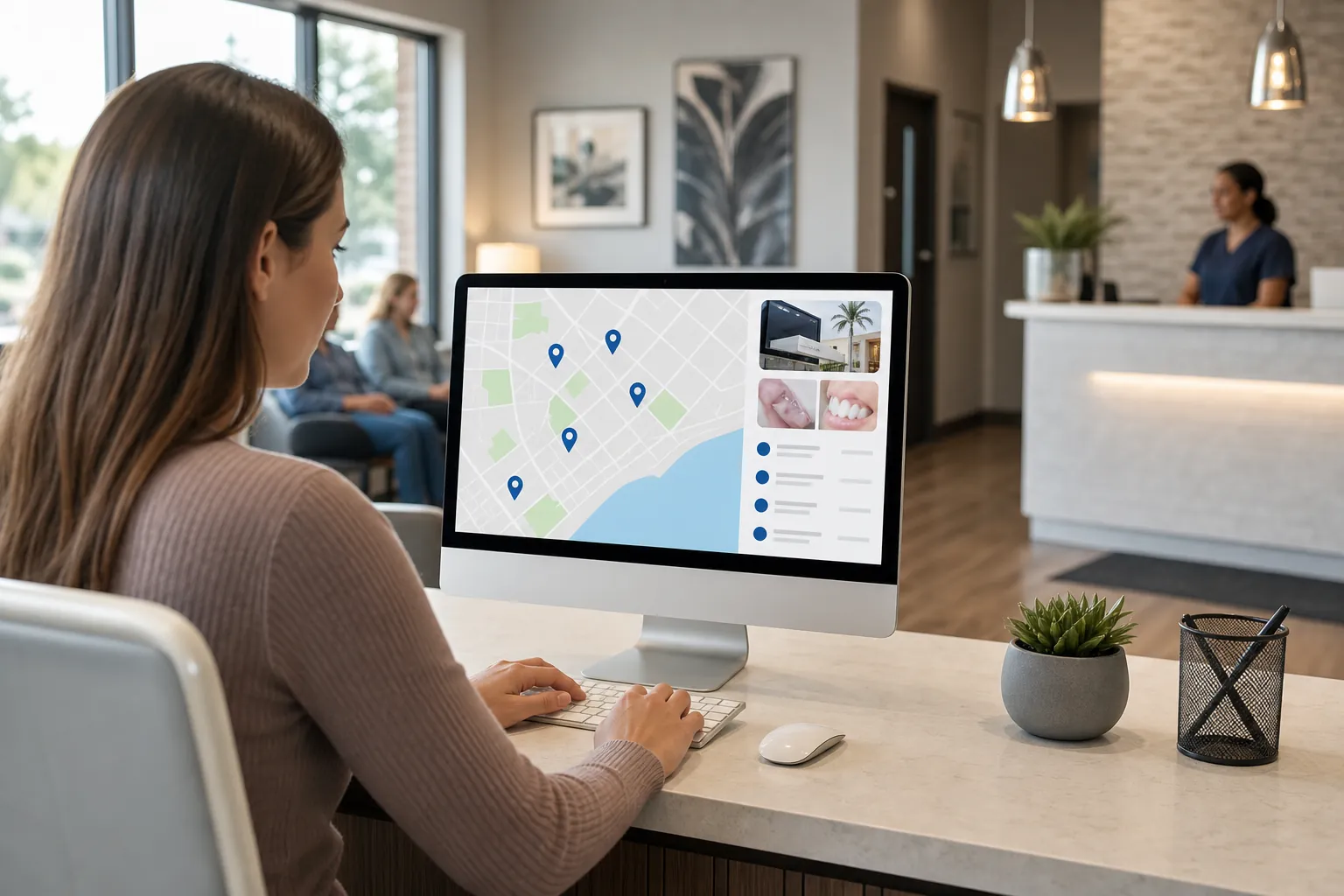
Start with the facts that patients and search systems need most. Check each location’s public details, website pages, and listing access before changing anything. A short baseline review can show what is current, what conflicts, and which questions need input from the practice team or a qualified compliance contact.
Collect the current information before an agency begins edits. Include the official practice name, each address, phone details, hours, and the services the practice actually offers. Mark any item that needs approval rather than guessing.
Then review the website and business listings side by side. Look for old contact details, duplicate pages, outdated hours, and location names that do not match. Confirm who controls each listing and who can approve changes.
A good baseline also includes the site's technical state. Note whether location pages work on phones, whether key pages can be reached through the site's navigation, and whether forms function as expected. Avoid making broad changes before the team understands the current setup.
For a content review model, see healthcare search content review and compare its workflow with the practice’s approval needs. Broader marketing planning can also be considered alongside rehab marketing strategy, though a dental plan must reflect dental services and locations.
- Record the approved name, address, phone details, and hours for every office.
- List the services each location offers, and confirm each item with practice leadership.
- Check website pages and listings for mismatched details or duplicate entries.
- Note who owns each account and who can approve public changes.
- Save a baseline of current pages, listings, and reporting access.

How Should You Organize Locations and Service Pages?
Give each real office a clear page with accurate location details and useful service information. Avoid making pages for places the practice does not serve or for offerings it does not provide. A clean structure helps people move from a local search to relevant practice information without confusion.
A location page should make the office easy to understand. Include its approved address, contact details, hours, and services. Add useful directions or access details only when the practice confirms them. Keep the page distinct from other locations rather than copying one template with only a city name changed.
Service pages should explain the practice’s actual offerings in plain language. Make sure the content matches how the practice describes its services and what its team can support. Avoid claims about clinical results, treatment outcomes, or care benefits that the practice has not approved.
A simple site structure can help visitors and search systems find related information. Link a location page to relevant service pages and make the path back to the main practice page clear. Ask the web team to check for broken links and pages that are hard to reach.
Agencies may also bring experience in behavioral or broader healthcare search, but those skills do not replace dental-specific review. The supplied cluster includes SEO for therapists and behavioral health marketing as other topics. Treat them as separate service areas, not as substitutes for accurate dental content.
When Are Separate Location Pages Useful?
Separate pages can help when a practice has more than one real office and each needs distinct details. They should not imply a local office where none exists. Before publishing, confirm that each page reflects a location the practice actually serves and that the details are current.
What Belongs in a Dental Practice's Local Listings?
Local listings should reflect verified practice details and remain consistent with the website. Complete the fields the practice can confirm, and avoid adding services, hours, or locations that are not accurate. A careful review also helps teams spot outdated access, duplicate records, and listing changes that need approval.
A listing is a public source of basic practice information. Check its name, address, phone details, hours, website destination, and service descriptions. Keep the same approved facts across profiles where the practice has a legitimate presence.
Do not assume every platform uses the same process or field names. Review the available options and follow each platform’s current rules. If ownership or access is unclear, resolve that before making edits. Keep a record of who submitted changes and who approved them.
Reviews and reputation management can shape how people assess a practice. Set a clear internal process for monitoring feedback and routing concerns to the right staff. Do not disclose private details in public responses. For questions about legal duties or sensitive information, seek guidance from the practice’s qualified compliance or legal adviser.
Search visibility also includes how people find and understand answers. A dental practice can review AEO for rehab searches as a separate example of answer-focused content, while keeping the facts and audience specific to dentistry. A broader healthcare marketing plan should not blur those differences.
How Can Dental Content Support Local Search and AI Search?
Useful content answers real questions in clear, careful language. Dental practice pages can explain what the office offers, where it operates, and how visitors can contact the team. For answer engines and AI search, keep facts easy to verify and review content before publishing or updating it.
Start with questions the practice can answer accurately. People may need basic details about office hours, accepted appointment steps, location access, or services. Ask staff which questions come up often, then confirm who can approve each answer.
Use direct headings and short sections. Keep each page focused on one purpose, and avoid claims that go beyond the approved facts. Clear writing can help both readers and search systems understand the page, but no content format can ensure that a search engine or AI tool will display it.
Review pages when practice details change. Set an owner for each page and note when it was checked. A content review should cover facts, links, contact details, and any statements that require compliance input. Content about care should receive appropriate review from the practice.
A wider search approach may include healthcare content review steps and answer engine optimization basics. For dental teams, the agency should adapt those ideas to verified practice information rather than reuse unrelated examples.
What Should an Agency Explain About AI Search?
Ask which work is intended for traditional search, answer engines, or AI search. Ask how the team checks facts and updates pages. The agency should describe its methods plainly and avoid claiming that any particular tool will cite, feature, or recommend the practice.
How Do You Compare Local SEO Agencies for Dentistry?
Compare agencies by their process, scope, communication, and fit with the practice’s needs. Ask who will handle research, content, technical work, listing updates, and reporting. A proposal should explain what the agency will do, what the practice must provide, and how the team will review progress.
A strong agency discussion should begin with questions, not a fixed package. The team needs to understand the practice’s locations, services, current site, access, internal review process, and goals. It should also explain where the work depends on practice staff or outside vendors.
Ask how the agency will handle local pages and listings. Clarify whether it will audit existing information, suggest edits, prepare content, or manage approved changes. Confirm who has final say over public statements and who will review sensitive content.
Reporting should help the practice understand work completed and issues found. Ask which measures the agency tracks, how often it reports, and what the numbers can and cannot show. Search visibility can shift, and no agency should frame a report as proof of a clinical or business outcome.
SCALZ.AI describes its work as premium, custom, and done-for-you. Dental practices can assess the fit by asking about SEO planning methods and healthcare marketing strategy, while requesting a clear scope tied to the services and locations the practice has confirmed.
- Ask who will do the work and who will review it with your team.
- Request a clear scope for listings, location pages, technical checks, and content.
- Ask how approvals, corrections, and access to accounts will be handled.
- Review what reports include and how the agency explains limits.
- Confirm that proposed pages describe only real locations and approved services.
How Can a Practice Keep Its Local SEO Plan Current?
Keep the plan current by assigning owners, setting review points, and recording changes. Check location details when hours, services, or contact information change. Review the site and listings on a regular schedule that fits the practice, and involve qualified advisers when compliance questions arise.
Local SEO is ongoing work, not a one-time listing edit. A change in office hours or contact details can make older information inaccurate. Decide who tells the marketing team about changes and who approves updates before they go live.
Use a simple change log. Record what changed, where it changed, who approved it, and when the update was made. This helps the practice find mismatches later and reduces reliance on informal messages or memory.
Review reports with context. Check whether key pages and listings are current, whether technical issues remain open, and whether planned work was completed. If a metric changes, ask what else changed before drawing a conclusion. Avoid treating a single measure as proof of success or failure.
An agency should make handoffs and open tasks clear. The practice still needs to approve facts and provide access as needed. For a broader planning lens, see behavioral health marketing planning and rehab marketing agency services, while keeping the dental plan grounded in the practice’s own facts.
- Assign a staff owner for practice details, listings, and approvals.
- Record changes to hours, contact details, services, and locations.
- Review key pages and listings after approved changes go live.
- Discuss open technical issues and content needs with the agency.
- Seek qualified compliance or legal guidance when a question requires it.
Questions about next steps? Call SCALZ.AI at 407-954-8800 or review aeo.
Frequently Asked Questions
How long does local SEO take for a dental practice?
Timing varies with the site's current state, the number of locations, the amount of work, and the pace of review and approvals. An agency can outline its planned tasks and reporting schedule, but it cannot promise a fixed date for a search change. Ask what must happen first and which steps depend on the practice.
Should every dental office have its own website?
Not always. A practice with several offices may use one website with distinct, useful pages for each real location. The right structure depends on the practice's needs and site setup. Ask an SEO or web professional to review the current site before creating separate sites or moving pages.
Can a dental practice use one page for every location?
A single page may not give each office enough room for its own accurate details. If locations differ in hours, contact information, services, or access, separate pages can make those facts easier to find. Do not create pages that suggest the practice has offices or services it does not have.
What should a dental team provide to an SEO agency?
Share approved location details, service information, website access needs, brand guidance, and the names of staff who review content. Tell the agency which statements need clinical or compliance review. Do not send access credentials through an unsafe channel, and follow the practice's own access rules.
How should a practice judge local SEO reports?
Check whether the report shows work completed, issues found, and changes in relevant search or site measures. Ask how each measure is defined and what factors may affect it. Use the report to guide questions and next steps, not as proof of a specific business or care outcome.
Sources
- Creating Helpful, Reliable, People-First Content, Google Search Central
- SEO Starter Guide, Google Search Central
Call 407-954-8800 to talk through next steps.