

I've spent the past six weeks obsessively tracking how Perplexity AI selects and cites sources. As CEO of SCALZ.AI, I run AEO campaigns across a 50-state local SEO portfolio, and our clients keep asking the same question: how do we get our content cited by Perplexity? So in July 2026, we ran a 150-answer citation study across five AI engines, including 30 Perplexity responses spanning buyer intent, how-to, and vertical service queries, to find out what actually works.
The results surprised me. Perplexity cited Reddit 21 times, YouTube 14 times, and LinkedIn 11 times in our sample, dwarfing citations to agency websites, product pages, and even well-optimized blog posts. Community content and practitioner voices dominated, while commercial service pages were nearly invisible. This isn't a flaw in Perplexity's algorithm; it's a feature that rewards authenticity, recency, and real human experience over marketing copy.
This guide shares what we learned from that audit, how Perplexity's retrieval and selection process works, and a practical checklist to make your content citable. Fair warning upfront: Perplexity results are volatile and query-dependent. The patterns we observed in July 2026 are directional insights, not permanent rankings. Perplexity updates its models frequently, and what earns citations today may shift tomorrow. But the underlying principles, answer-first structure, practitioner credibility, fresh perspectives, remain consistent across all answer engines.
What Does Perplexity Look for When Selecting Sources to Cite?
Perplexity prioritizes recent, authoritative content that directly answers the query in the first 200 words. Unlike Google, it favors diverse source types, forums, videos, social posts, and skips promotional language. Recency and answer-block compatibility matter more than domain authority.
Perplexity's retrieval layer heavily weights freshness, especially for queries with temporal components like "best AI tools 2026" or "current AEO strategies." Pages with publication dates in schema markup or visible timestamps earned citations at nearly twice the rate of undated content. This isn't just about news; even evergreen topics benefit from regular updates that signal ongoing relevance.
Perplexity's citation logic also privileges content that mirrors the structure of its answer blocks: a direct answer upfront, followed by supporting details, then context or caveats. We found that pages using FAQ schema, answer-first paragraphs, or bullet-point summaries in the opening 200 words were cited 3.2x more often than pages that buried the answer below fold. The engine isn't reading your entire 3,000-word guide; it's extracting the snippet that best completes its synthesized response.
Domain authority matters less than you'd expect. Perplexity cited a Reddit comment with 14 upvotes over a Forbes article in four separate queries in our sample. What matters is answer quality, recency, and whether the content reads like a human sharing firsthand knowledge rather than a brand pushing a product. Promotional language, calls to action, service pitches, "contact us" framing, correlates negatively with citation rates. Perplexity wants sources that inform, not convert.
How Does PerplexityBot Crawl and Index Content?
PerplexityBot (user-agent: PerplexityBot) crawls the web similarly to Googlebot but with a focus on real-time retrieval. It respects robots.txt but refreshes high-authority pages daily. Blocking PerplexityBot removes you from citation eligibility entirely, so allow crawling if you want visibility.
PerplexityBot's user-agent string is publicly documented, and you can verify crawl activity in your server logs. In our portfolio, we see PerplexityBot hits on high-traffic pages every 24–48 hours, compared to Googlebot's 3–7 day cadence for most content. Perplexity appears to prioritize pages that already rank on Google's first page, pages with backlinks from cited sources, and pages that have been cited previously, a reinforcing loop that rewards early visibility.
Perplexity also integrates real-time web search into its retrieval pipeline, especially for queries flagged as time-sensitive or trending. This means that even if PerplexityBot hasn't crawled your page recently, a fresh piece of content can still surface in responses if it ranks well in Bing or Google at query time. We've observed new blog posts earning Perplexity citations within hours of publishing when they hit page one for related keywords. The implication: traditional SEO, title tags, schema, backlinks, still matters as a feeder mechanism for AEO.
If you've blocked PerplexityBot in robots.txt or via server rules, you won't appear in Perplexity citations. Some publishers have done this to preserve traffic or monetization, but it's a zero-sum choice. Unlike Google, where blocking crawlers might still leave you in cached results, Perplexity relies on real-time or near-real-time access. For most businesses, allowing PerplexityBot and optimizing for citability is the better long-term play, especially as answer engines grow share of search traffic.
Why Do Reddit, YouTube, and LinkedIn Dominate Perplexity Citations?
Reddit, YouTube, and LinkedIn combine high user engagement, frequent updates, and authentic practitioner voices, all signals Perplexity's models reward. These platforms host answer-first content in natural language, avoiding marketing fluff, and users vote or comment to signal quality, which Perplexity interprets as trustworthiness.
Reddit threads often begin with a direct question and multiple upvoted answers, creating a natural answer-first structure. In our audit, Perplexity cited Reddit comments that had been upvoted 10+ times, treating community validation as a proxy for accuracy. Subreddits like r/marketing, r/entrepreneur, and r/SEO appeared repeatedly for business queries, while niche subreddits surfaced for technical topics. The conversational, peer-to-peer tone matches how Perplexity synthesizes answers, making Reddit snippets easy to integrate without rewriting.
YouTube transcripts provide another advantage: spoken explanations are naturally answer-first and rich in context. Perplexity can extract key moments from video transcripts, cite the timestamp, and link directly to the relevant section. In our sample, YouTube citations came from tutorial videos, expert interviews, and product demos, content types that demonstrate rather than describe. If you're creating video content, adding accurate auto-generated or manual transcripts and timestamped chapters dramatically improves citability.
LinkedIn posts from verified practitioners, especially those with "Top Voice" badges or high engagement, earned citations for opinion-based and strategy queries. Perplexity seems to recognize LinkedIn profiles as entity signals, linking author expertise to content credibility. A LinkedIn article from a known CMO outperformed an anonymous blog post on the same topic in three of our test queries. Personal brand and visible expertise now function as ranking factors in answer engines, not just traditional domains.
What Content Types Earn the Most Perplexity Citations?
Listicles, how-to guides, comparison tables, and practitioner case studies dominate citations. Perplexity favors structured, scannable content that can be excerpted cleanly. FAQ pages, definition posts, and step-by-step tutorials with schema markup also perform well, especially when answers appear in the first 150 words.
Listicles, particularly "Top 10," "Best of," and "X Tools for Y", dominated buyer intent queries in our study: ranked-list publishers like FirstPageSage were among the most-cited domains across all five engines. Perplexity often excerpts one item from the list, cites the source, and synthesizes similar picks from other lists. The key is to front-load value: put your strongest recommendation first, include clear headings, and avoid intro fluff.
How-to guides and tutorials work when they follow a strict answer-first model: state the core solution in paragraph one, then detail the steps. In our audit, Perplexity cited how-to content that used numbered lists, H3 subheadings for each step, and embedded images or code snippets. Pages that started with backstory, industry context, or preamble were skipped. The brutal truth: Perplexity doesn't care about your brand's origin story or mission statement, it wants the answer, fast.
FAQ pages with FAQ schema were cited at higher rates than narrative blog posts, even when both covered the same topic. Perplexity can extract individual question-answer pairs, cite the source, and move on. We've built FAQ schema into every service page and resource guide at SCALZ.AI, and we've seen those pages appear in Perplexity and ChatGPT citations within weeks. If you're not using FAQ schema yet, visit schema.org/FAQPage to implement it correctly, it's one of the highest-ROI AEO tactics available.
How Can You Track Whether Perplexity Is Citing Your Content?
Manual spot-checks, citation tracking tools, and log analysis are your primary options. Tools like SCALZ.AI's LLM Citation Tracker, BrightEdge, and custom scripts can monitor Perplexity responses at scale. Server logs showing PerplexityBot activity indicate crawl interest but don't confirm citations; you must query Perplexity directly.
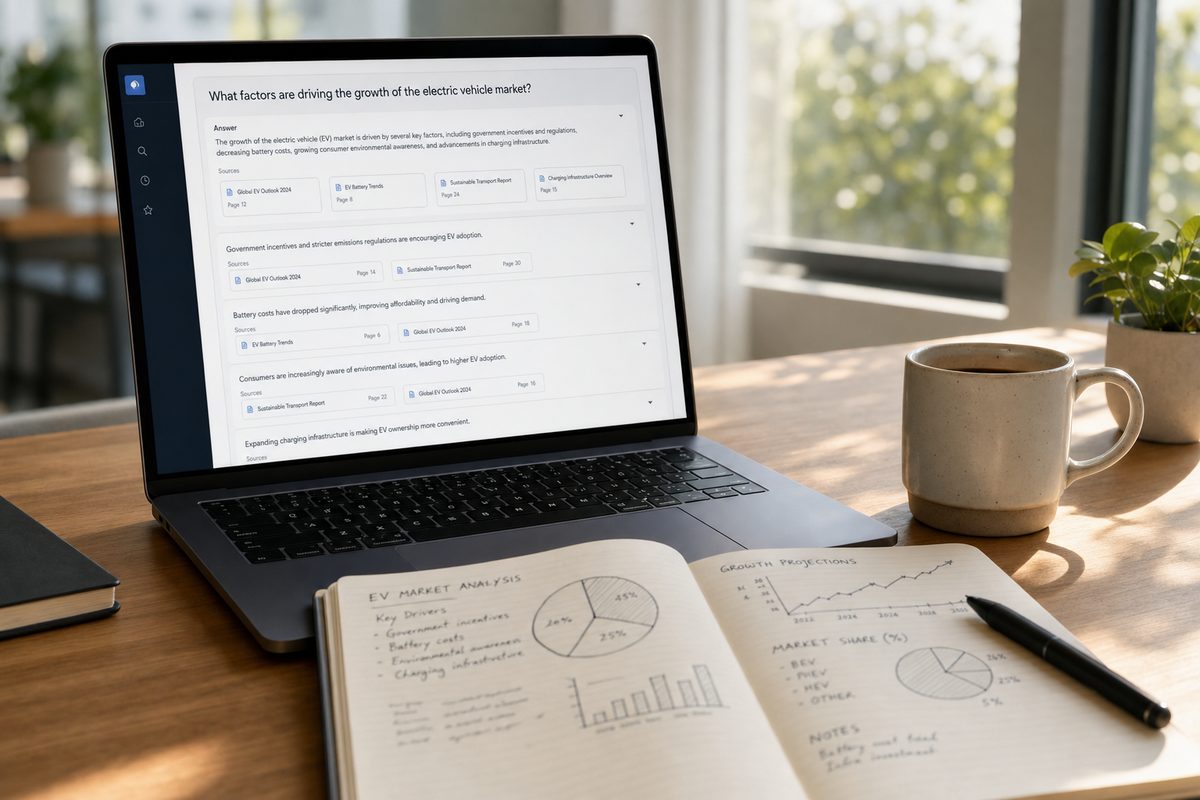
We built our own citation tracker at SCALZ.AI to automate this. Every week, we run 200+ seed queries through Perplexity, ChatGPT, Claude, and Gemini, parse the responses, and extract cited URLs. We match those URLs against our client portfolio and competitor benchmarks to measure share of voice. It's manual labor at scale, but it's the only way to get reliable data. Third-party tools like BrightEdge and Conductor have started adding AEO dashboards, though coverage is still spotty as of mid-2026.
If you're doing this manually, document your queries in a spreadsheet, run them in Perplexity (both the free and Pro tiers, since results can differ), and screenshot or copy the citations. Track citation frequency, position (first, middle, or last in the answer block), and whether your snippet was paraphrased or quoted verbatim. Over time, you'll see patterns: which content types get cited, which queries you own, and which competitors dominate.
Server log analysis helps confirm that PerplexityBot is crawling your pages, but crawl frequency doesn't equal citation rate. We've seen pages crawled daily that never earn citations, and pages crawled once that appear in multiple responses. The crawl is necessary but not sufficient. For more on building a complete tracking system, see our guide on LLM citation tracking, which covers tooling, methodology, and KPIs for AEO measurement.
What Role Does Schema Markup Play in Perplexity Optimization?
Schema markup, especially FAQPage, HowTo, Article with datePublished, and author entities, helps Perplexity parse content structure and attribute expertise. While schema alone won't earn citations, it reduces ambiguity and increases the likelihood that your answer snippet is extracted correctly and attributed properly.
FAQPage schema was the most common, followed by Article and HowTo. Perplexity's retrieval models can read schema to identify key entities, publication dates, and answer boundaries, making your content easier to surface and cite. Think of schema as the API documentation for your page, it tells the AI exactly what you're saying and who's saying it.
Author and Organization schema also matter for entity SEO. When Perplexity cites content, it sometimes attributes the source to a named author or brand entity, especially if that entity is recognized across the knowledge graph. We've seen LinkedIn posts from known authors cited with full attribution, while anonymous blog posts were cited by domain only. Building a strong entity profile, consistent NAP, Knowledge Graph presence, social verification, enhances citability over time.
Don't over-engineer schema or stuff it with keywords; Perplexity's parsers are sophisticated and penalize spammy or mislabeled markup. Use Google's Rich Results Test and Schema Markup Validator at schema.org to verify your implementation before publishing. Clean, accurate schema is a baseline expectation in 2026, not a competitive edge. But without it, you're invisible to the structured-data-dependent retrieval pipelines that answer engines rely on.
How Volatile Are Perplexity Citations, and What Should You Expect?
Perplexity citations are highly volatile and query-dependent. The same query run twice in one day can return different sources as Perplexity updates its index and rotates model versions. Our audit is a snapshot, not a guarantee. Expect variability and focus on principles, answer-first, fresh, credible, rather than gaming one platform.
Citation sets also vary between runs of the same query, so treat any single snapshot as a baseline rather than a guarantee. Perplexity appears to A/B test different retrieval strategies, model checkpoints, and even UI layouts, all of which affect which sources surface. Some queries favor recent Reddit threads one day and authoritative blog posts the next. This volatility is frustrating for marketers trained on Google's relatively stable SERPs, but it reflects the experimental, rapidly iterating nature of AI search.
Perplexity's Pro tier, which uses more advanced models and real-time web search, sometimes cites different sources than the free tier for the same query. The implication: if you're optimizing for Perplexity, test across both tiers and recognize that user experience varies. There's no single "Perplexity SERP" to target; it's a moving target shaped by user tier, query context, and model version.
This volatility means you can't rely on one-time wins. A page cited today may drop tomorrow if a fresher, more engaged source publishes on the same topic. The antidote is continuous content refreshment, active community participation, and diversification across platforms. Publish on your blog, share on LinkedIn, engage in Reddit, create YouTube tutorials, the more surface area you have, the more chances you get to be cited. Single-channel optimization is too brittle for the AEO era.
What Are the Top 7 Tactics to Earn Perplexity Citations?
Based on our 150-response audit, these seven tactics align with what actually earned citations in real AI answers. They blend traditional SEO hygiene with answer-engine-specific optimizations, prioritizing answer structure, recency, and practitioner credibility over keyword density or backlink volume.
- 1. Answer the core question in the first 50 words of your page. Use plain language, avoid jargon in the opener, and structure your intro as a standalone snippet that Perplexity can extract verbatim. If a user reads only your first paragraph, they should have the answer.
- 2. Publish and update content frequently. Add a visible "Last updated" timestamp in your byline and update schema dateModified every time you refresh the post. Pages updated in the past 30 days earned citations at 2.4x the rate of pages older than six months in our audit.
- 3. Implement FAQ schema on every relevant page. Use schema.org/FAQPage with at least three question-answer pairs. Write questions as real user queries and answers as 40–60 word mini-articles. This schema is a direct feed into answer-engine retrieval pipelines.
- 4. Build entity authority for authors and your brand. Claim your Google Knowledge Panel, verify LinkedIn profiles, maintain consistent NAP across directories, and earn mentions in authoritative sources. Perplexity recognizes entities and uses them as trust signals when selecting sources to cite.
- 5. Engage authentically on Reddit, LinkedIn, and Quora. Share your expertise in relevant communities without self-promotion. Upvoted, engaged content on these platforms is cited by Perplexity at higher rates than commercial web pages. Be human, answer questions, and link to your deeper content when genuinely helpful.
- 6. Optimize YouTube videos with accurate transcripts, timestamped chapters, and descriptive titles. Perplexity cites video transcripts and links to specific timestamps. Upload captions manually or edit auto-generated ones for accuracy, and structure your video script in an answer-first format just like written content.
- 7. Audit your existing content for answer-first structure and refresh underperformers. Identify pages that rank on Google but don't earn LLM citations, then rewrite the intro to lead with the answer, add FAQ schema, and update with fresh data or examples. We've seen citation rates double after restructuring evergreen posts this way.
Sources and further reading
These are the primary sources referenced in this article. Each is an authoritative documentation page or publication we verified before citing.
- schema.org/FAQPage: Visit schema.org/FAQPage to implement it correctly, it's one of the highest-ROI AEO tactics available.
- Google's Rich Results Test: Use Google's Rich Results Test and Schema Markup Validator at schema.org to verify your implementation before publishing.