

How should tree service owners compare agency scopes?
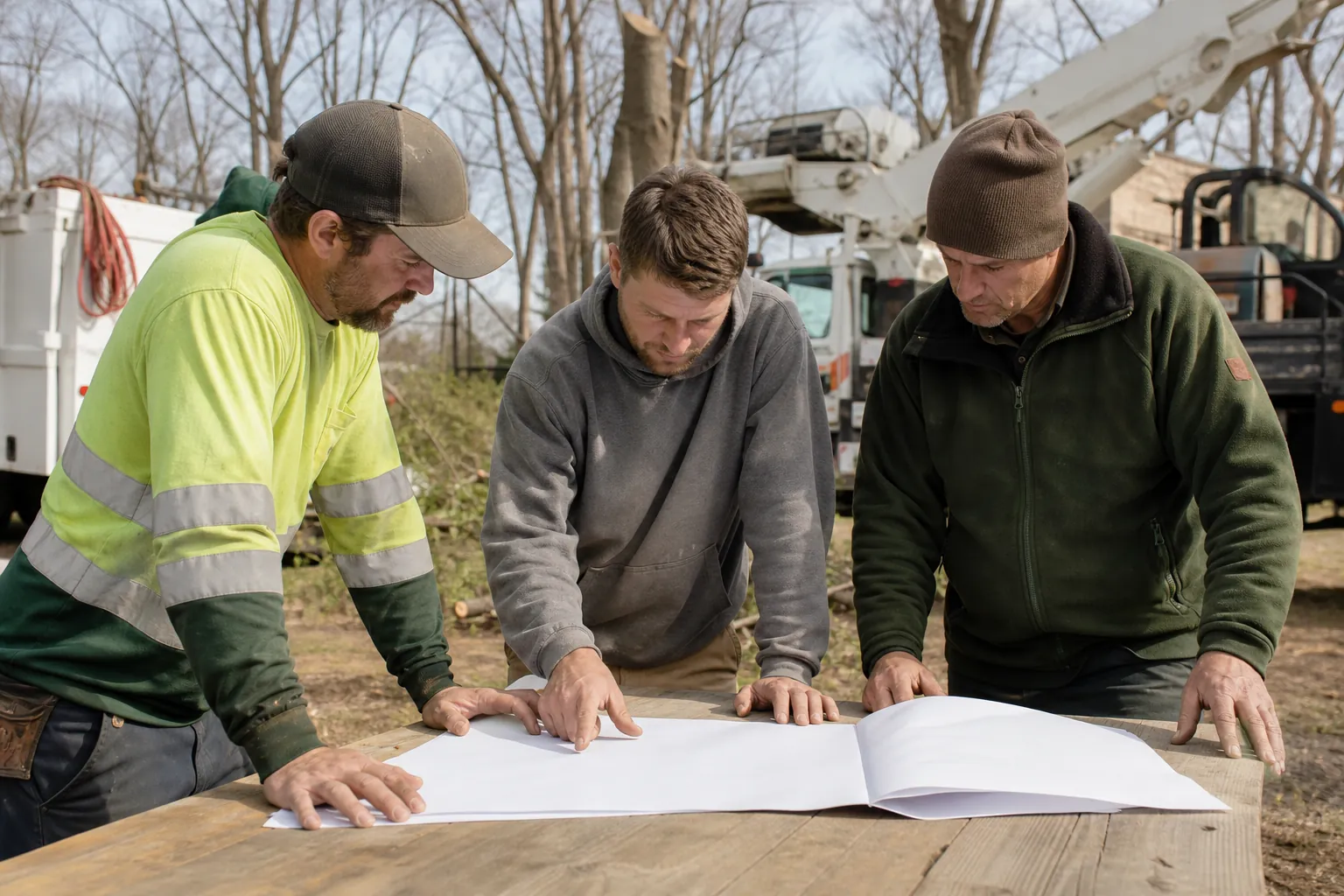
How should tree service owners compare agency scopes? Start with the work each agency will do. Check what your team must supply and how you'll judge progress. A proposal needs more than labels like SEO, content and reporting. You need clear tasks and outputs before you can choose.
Tree service owners should compare agency proposals against their actual services, verified service areas and estimate request process. Broad service labels can hide different amounts of research, implementation and reporting.
This guide gives tree service firms a clear way to compare scopes. It covers SEO, answer engine optimization (AEO) and AI search work. Ask for clear tasks, not vague claims about where you'll appear. This applies to Google AI Overviews, ChatGPT, Perplexity and the Gemini app.
How should you compare tree service agency scopes before prices?
Start with a one-page list of what your business needs. Each agency needs the same facts to propose a fair scope. One may assume you have a single site and location. Another may plan for several sites, old content and major site repairs. Define tree service SEO needs before pricing SEO audits.
For a tree service company, the starting inputs should include real operating locations, verified service areas, services actually offered and how estimate requests reach the team.
Your tree service firm should choose which services need their own pages. This choice shapes the site layout and content plan. It does not let an agency invent services you don't offer. The agency must use true facts about how your business works.
A company offering pruning and removal may need distinct pages for each service. A company serving several towns needs verified local context rather than repeated city names. Those requirements should influence the scope before an agency estimates a monthly fee.
- List the websites, locations and Google Business Profiles included in the engagement.
- Identify the services and geographic areas that the agency may accurately describe.
- Specify which systems the agency will need to access and who can approve that access.
- Describe your internal content approval process and expected review timing.
- Separate immediate website problems from ongoing marketing responsibilities.
Give every candidate the same baseline. Otherwise, the lowest price may simply reflect the smallest assumed workload.

How should SEO service labels become defined deliverables with clear owners?
SEO is a category, not a complete scope. Ask agencies to break it into technical SEO, local SEO, content strategy, link building, analytics and reporting, and any other included services. Each category needs a defined output and a clear owner.
For technical SEO, ask who will find and fix site problems. Some agencies will list issues but leave the fixes to you. An SEO audit may only suggest changes. A broader scope includes those changes and checks how search engines crawl and index the site.
For content work, ask which steps the scope covers. These may include research, briefs, writing, edits, posting and later updates. Check tree service content against approved facts about your business. The contract should cover late approvals and edits that go beyond the planned amount of work.
For local SEO, separate site work from Google Business Profile work. A local page doesn't replace correct facts in your profile. Profile updates won't fix a weak site layout, either. Ask which parts of each task the agency will handle.
- Require each deliverable to have a format, such as an implemented fix, published page or documented recommendation.
- Ask whether content quantities refer to briefs, drafts, approved pages or published pages.
- Confirm whether technical implementation requires a separate developer budget.
- Clarify whether link building includes prospecting and outreach rather than an unspecified link count.
- Identify which recurring tasks are included and which are billed separately.
A good scope lets the team choose which tasks matter most. It should still set clear bounds for who does the work. Ask to see a sample work plan. Check how the agency turns each service label into tasks with dates and owners.

How should AEO and AI search work connect to existing SEO needs?
AI search work should be as clear as other agency tasks. Ask what the agency will change for answer engines and AI responses. Have the team explain each step in plain terms. Then ask how those steps fit the site's current SEO needs. Define answer engine optimization tasks alongside that work.
SEO helps search engines find pages through useful content and clear site layouts. Pages must be easy to access, too. AEO makes answers easy to find and understand. Generative engine optimization (GEO), LLM SEO and AI SEO study how AI search may describe a business and its facts.
These areas share much of the same work. Clear service pages and matching business facts can help across search channels. Useful questions and answers, plus suitable structured data, can help too. These steps do not ensure that any platform will include or cite your business.
Be wary of plans to produce lots of AI content without review. Ask who will check sources and facts before pages go live. Plain answers must describe services you truly offer. Claims about safety, credentials, open hours or results need support, even when the text sounds clear.
- Ask which existing pages will be improved for direct, complete answers to relevant questions.
- Require an explanation of how structured data will match visible, accurate page content.
- Ask how the agency will check business descriptions across relevant online sources.
- Confirm how factual review and approval work before AI-assisted drafts are published.
- Ask how observations from Google AI Overviews, ChatGPT, Perplexity and Gemini app will be documented.
A sound scope separates agency work from choices made by search platforms. The agency can make facts clearer and easier to find. It cannot choose which sources an answer engine uses for each query. Ask the team to keep that limit clear in its plans and reports.
How should owners check which locations, profiles and pages a local SEO scope covers?
Local SEO scopes can look alike at first glance. Count the locations, profiles and pages to see what each covers. Ask if the price covers one location, a set number or all locations. Then agree on the steps and cost to add a new location. Specify Google Business Profile responsibilities separately.
A tree service company serving several towns should not automatically receive near-identical pages for every town. Service-area pages must not imply physical offices or services the company does not provide.
Useful local pages give readers true facts about your tree service business. They can show contact details, confirmed service areas and contact hours. Explain how to request an estimate as well. Each page should make the area served clear, rather than repeat a town name for search.
Google Business Profile work needs the same care with facts. Ask who checks categories, hours, site links and changes to the profile. Find out how the agency handles edits that others suggest. Agree on who must approve key changes before the agency makes them.
- Count the profiles and location pages explicitly included in the proposal.
- Ask whether inaccurate or duplicate listings are investigated within the scope.
- Require location-specific information before approving new local pages.
- Confirm that profile access remains under the organization's control.
- Ask how website and profile information will be kept consistent.
Matching facts can help AEO and AI search make sense of your business. They make it clearer where you work and what each location offers. Keeping those facts aligned is a sound way to manage information. It does not mean your business will appear in AI answers.
Define factual review and publication responsibilities
A tree service scope needs more than a vague client sign-off step. Name the people who check service facts and review claims. State who gives the final approval to post content. Make sure the agency knows where its role in marketing starts and ends. Set these responsibilities for tree service SEO and content strategy.
Tree service content should describe real services and facts you can support. Check claims about licenses, insurance and certifications before pages go live. Review emergency service hours, equipment, prices and promises about the work as well. Don't assume a claim is true because it appears in a draft.
Ask qualified reviewers to check privacy, legal and ad policy needs. They should explain which rules apply to the work in the scope. Hiring an agency does not certify your business or its practices. The agency's marketing work is not legal advice.
Tracking and reports need the same care. Ask what data site forms collect and which actions the agency will track. Check if private data could flow into the tools used for reports. Your business's qualified reviewers should make the final choices about its privacy duties.
- Designate an internal approver for service descriptions and marketing claims.
- Require written approval before publishing material business claims or changing estimate request pathways.
- Define what information the agency may access and how access will be removed.
- Review proposed tracking before implementation rather than after data collection begins.
- Keep public review responses free of unnecessary customer contact details, property addresses and private job information.
Set clear bounds for work on public reviews, too. Ask who drafts replies and who approves them before posting. Take extra care when a review shares private facts about a customer. A polite, useful reply does not need to confirm or discuss those facts.
Compare reporting by usefulness, not dashboard size
A long report can still leave you unsure what happened. Ask for clear sections on work done, changes seen and problems still open. The report should spell out the next steps, too. It needs to help you check the work, rather than just display charts. Compare analytics reporting with the agreed tree service SEO tasks.
SEO reports may show search impressions, clicks and how landing pages perform. They may track which pages search engines index, too. Local reports may show available Google Business Profile activity. Define tracked actions, such as phone-link clicks and estimate forms sent, without counting each action as a qualified job lead.
For tree service leads, track each stage as a separate step. Separate raw inquiries, valid estimate requests, booked estimates and accepted jobs. Gaps in source tracking or staff follow-up may limit agency reports. The scope should state where site tracking ends and your team must confirm what happened.
Use care when reading reports about AI search. Sample answers can change with the prompt, platform, place and time. A screenshot may show that your business appeared once. It does not prove that readers see you often or that the mention led to a business result.
- Ask for a sample report with sensitive information removed.
- Require definitions for conversions, leads and any reported AI visibility observations.
- Ask how branded and nonbranded search activity will be distinguished where data allows.
- Confirm whether reporting includes a discussion of priorities and dependencies.
- Require the agency to disclose measurement limitations and missing data.
Ask if the report helps you choose what to do next. It should link what the team saw to clear tasks they propose. Those links need care. A change in results does not, by itself, prove that one task caused the change.
Check ownership, access and the handoff process
Before you sign, settle who owns the site, content and other assets. Include analytics accounts and business profiles in that review. A scope may look good but make it costly to leave. Check that your business can keep key work and account access when the contract ends.
Know which accounts your business controls and which tools belong to the agency. Ask the team to list both groups before work starts. Access to some agency software may end when the contract ends. That differs from losing access to your own site or business profile.
If the scope includes web design, ask who hosts and maintains the site. Check the platform's limits and the steps needed to move it. If it includes PPC management, ask who owns the ad accounts. Keep fees for managing ads separate from the money spent on ads.
- Request clear ownership terms for approved content and website assets.
- Confirm that your team has full admin access to business-owned accounts.
- Ask whether implementation notes and historical reports are included in a handoff.
- Review cancellation terms, notice periods and any transition charges.
- Specify how credentials and agency permissions will be removed at the end of the engagement.
These questions are not signs of distrust. They help both parties understand the working relationship and prevent avoidable confusion when staffing, budgets or vendors change.
Normalize fees and exclusions before choosing an agency
Compare the full set of tasks, not the monthly fee alone. One proposal may cover writing and making changes to the site. Another may only give you a list of suggested changes. A lower fee may leave more work for your staff or require you to hire others. Separate content strategy advice from technical SEO implementation.
Build a simple comparison sheet with one row for each need. Add columns for work included, output, timing and the agency person in charge. Show what your team must supply and any extra cost. Mark gaps so you can ask each agency for a clear answer.
Don't assume that every scope needs every service. Work on conversion rates, public reviews, paid ads and web design may help. Ask which need each service will meet before you add it. A longer list of service labels does not make a proposal a better fit for your business.
- Separate initial SEO audits and setup work from recurring responsibilities.
- Identify location limits, revision limits and content approval assumptions.
- Ask whether software fees, advertising spend and development costs are separate.
- Compare the internal hours each proposal requires from your team.
- Require written approval for out-of-scope work and material budget changes.
Ask each finalist which tasks it would tackle first and why. The answer should fit your business and explain any tradeoffs. Ask what must happen before those tasks can start. A fixed page quota may waste funds when key site problems or errors in business facts still need attention.
Use a final scope review to make the decision
Before you choose an agency, set a time to review the scope. Use this meeting to check details, rather than hear another sales pitch. Walk through your comparison sheet with the team that will do the work. Ask them to explain each point that remains unclear. Review tree service SEO deliverables and analytics reporting definitions together.
Look for clear answers about who makes changes and approves work. Ask how the team will stay in touch and track progress. Find out who leads the work, when priorities get reviewed and how choices are recorded. These day-to-day details matter as much as the list of services.
Check the proposed SCALZ.AI scope against the needs in your comparison sheet. Look for a plan that fits your actual business needs. Each agency task should have a clear owner. The scope should spell out which facts, inputs and approvals your team still needs to supply.
Review SCALZ.AI's SEO approach for tree service companies when discussing the proposed scope. Ask which service pages, real service areas, estimate pathways and reporting definitions the engagement would cover.
The best proposal may be neither the longest nor the cheapest. It should make clear who does each task and what comes first. You should understand the costs and limits before work starts. Use those details to judge the fit, rather than the proposal's length.
To discuss your scope requirements, call SCALZ.AI at 407-954-8800. For the tree service scope comparison, start with the tree service SEO page and bring your location list, website details and current proposals to the conversation.
Frequently Asked Questions
What business details should tree service owners share before comparing proposals?
Give every agency the same list of websites, real locations, verified service areas and services offered. Include Google Business Profiles and explain how estimate requests reach your team. Describe who can approve access and content. Separate urgent website problems from ongoing work so each proposal starts with the same workload.
How should tree service owners compare monthly agency fees?
Compare the full workload, not the monthly fee alone. Check whether writing, publication and technical fixes are included or require extra spending. Separate setup work from recurring tasks. Record software fees, development costs, advertising spend and the internal hours your team must provide. A lower fee may cover fewer responsibilities.
What should agency reports show about tree service leads?
Reports should separate raw inquiries, valid estimate requests, scheduled estimates and accepted jobs. A phone-link click or form submission is not the same as a qualified job opportunity. The scope should define each action and show where website tracking ends. Your business may need to supply follow-up details to confirm later outcomes.
What ownership details matter before signing an agency scope?
Establish who owns the website, approved content, analytics accounts and business profiles. Confirm which accounts your company controls and which tools belong to the agency. Some software access may end when the work ends. Review transfer requirements, notice periods, transition charges and whether reports and implementation notes are part of the handoff.
Who should approve tree service content before publication?
Name an internal approver who can verify service details and business claims. The scope should state who reviews drafts and who approves publication. Claims about insurance, credentials, equipment, pricing and emergency availability need review against supported facts. It should explain how delayed approval or extra revisions affect the planned workload.
Sources And Evidence
Google says AI Overviews and AI Mode need no separate optimization method. Review its AI features guidance when you define SEO and AI search tasks. These Google features are separate from the Gemini app. A proposal should name the experience it tracks and keep the records behind its findings.
Use Google's people-first content guidance to check research, sources and useful detail. The checklists here offer practical advice for setting an agency scope. They do not ensure search rankings, citations or inquiries.