

Duplicate Google Business Profiles: A cleanup guide for dental practices
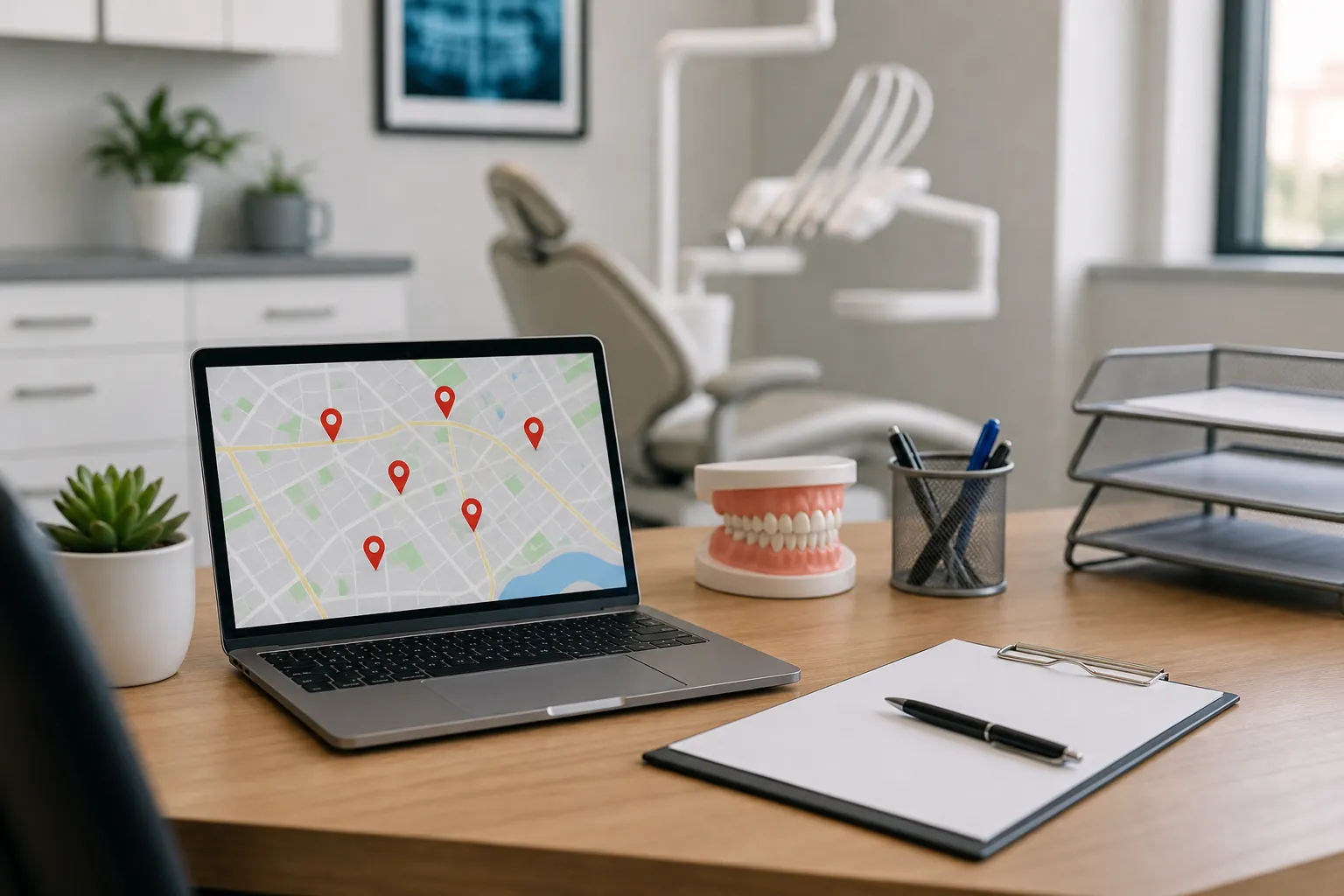
Duplicate Google Business Profiles can leave a dental practice with conflicting addresses, outdated phone numbers, divided reviews, and uncertainty about which listing patients should use. For healthcare marketers, the challenge is not simply removing an extra map result. It is establishing a clear, accurate business identity without disrupting legitimate location or practitioner profiles.
When evaluating an agency for a duplicate Google Business Profiles dental practice project, ask how it distinguishes actual duplicates from permitted listings. A practice profile, an eligible individual dentist profile, and a second staffed office may all be legitimate. Treating them as interchangeable can create unnecessary problems.
This guide explains how to investigate duplicate profiles, document the correct business information, choose an appropriate resolution path, and coordinate local SEO with answer engine optimization and AI search. It also outlines what buyers should expect from a premium, custom, done-for-you agency engagement.
What Counts As A Duplicate Dental Business Profile?
A true duplicate generally represents the same business at the same location without a separate eligible identity. It may have been created by an employee, a former agency, an automated data source, or someone who did not realize a profile already existed. Older versions can remain visible after a relocation or rebrand.
However, similar names or matching addresses are not enough to establish duplication. Google has eligibility guidelines for organizations, individual practitioners, and certain departments. Those guidelines should be checked against the actual operation before requesting a change.
- Two profiles representing the same dental practice at the same office may be duplicates even if their names differ slightly.
- A practice profile and an eligible dentist profile can represent different entities, despite sharing an address.
- Profiles for separate staffed offices may be valid when each location meets Google's requirements.
- A profile using a former practice name may require a rebranding review rather than an automatic deletion request.
- A previous address may indicate a move that needs to be documented, not a second operating location.
In local SEO, this distinction helps keep business information accurate. For AEO and AI search, it supports a more coherent explanation of who the organization is, where it operates, and how its practitioners relate to it. It does not guarantee which sources an answer engine will select.

Start With An Inventory, Not A Removal Request
Before editing anything, create a profile inventory. Search Google Maps and Google Search using the practice name, previous names, phone numbers, street address, and dentist names. Search common spelling variations as well. Record profiles you can manage and profiles you cannot access.
Save each profile's public Maps URL and, where available, its profile identifier. Capture screenshots showing the name, address, phone number, website, categories, status, and review count. Dates matter because business information can change during an investigation.
Then compare the profiles with internal records. The website, office signage, public-facing business name, and current contact details should describe the actual operation. Do not choose a preferred listing solely because it has more reviews or appears more prominently in search.
- Record whether each listing represents the practice, a practitioner, a department, or a former location.
- Identify who currently owns or manages each accessible profile.
- Document verification status and any pending edits or support cases.
- Check whether appointment and website links lead to the correct office.
- Note review activity without copying reviewer details into broadly shared project documents.
This inventory becomes the baseline for an SEO audit. It also gives an agency a defensible starting point for Google Business Profile optimization, rather than a list of unverified assumptions.

Choose The Correct Resolution Path
Different situations require different actions. Google's interfaces and support procedures change, so an agency should verify the current process before submitting requests. The objective is to correct the public representation of the business, not simply reduce the number of profiles.
When two profiles represent the same practice
If both profiles describe the same eligible business at the same location, document the overlap and determine which profile accurately represents the practice. Use the available duplicate-reporting or support process as appropriate. A merge may be possible in some circumstances, but eligibility and handling are determined by Google.
Do not promise that all reviews, photos, responses, or other profile information will transfer. Record the current assets before requesting a resolution and explain the uncertainty to stakeholders. Avoid repeated conflicting submissions while a case is under review.
When ownership is the problem
A profile managed by a former employee or agency is not necessarily a duplicate. The appropriate first step may be an ownership request through Google's current process. Creating another listing because access is inconvenient can increase the cleanup burden.
The practice should maintain ownership through an organization-controlled account, with agency access assigned through suitable permissions. Password sharing should not be the normal access model.
When the practice moved or changed its name
For a relocation, review whether the existing profile should be updated instead of replaced. For a rebrand, assess Google's current name-change and eligibility guidance. A substantial business change may require a different approach from a simple public-facing name update.
Marking a listing permanently closed is not a universal duplicate fix. That status describes an operational condition and can confuse prospective patients if applied to an active business. Removing a profile from an account also does not necessarily remove it from Maps.
Protect Legitimate Dentist And Location Profiles
Practitioner profiles deserve their own review. An individual dentist may qualify for a profile under Google's guidelines, but eligibility depends on the circumstances. Naming conventions can also differ between a practice with multiple practitioners and a single-practitioner organization.
Ask whether the dentist is public-facing, works at the stated location, and can be contacted there as required by the relevant guidelines. Confirm that the profile is not being used merely to create another listing for the same practice services.
Multi-location practices should map each profile to a real office and a corresponding website page. Shared branding does not make separate eligible offices duplicates. Conversely, a virtual address or unstaffed location should not be treated as an office simply to expand geographic coverage.
- Maintain a written relationship map connecting the organization, offices, and eligible practitioners.
- Use accurate public-facing names rather than adding cities or services solely for search visibility.
- Assign website links that help visitors understand the relevant location or practitioner.
- Review departed practitioners individually rather than automatically closing every associated listing.
These distinctions also matter for behavioral health, mental health, med spa, and other healthcare practices. Organizations and practitioners can have overlapping but separate identities. Local SEO, AEO, and GEO work should preserve those distinctions instead of flattening every listing into one entity.
Align The Website And External Business Information
Resolving a Google profile does not automatically correct the rest of the web. Old directory entries, outdated office pages, and inconsistent appointment links can continue to present conflicting information. An agency should define which sources it will review and which corrections fall within scope.
Start with the practice website. Each office page should clearly display its real address, public phone number, current hours, and relevant contact options. Remove or update obsolete location information thoughtfully, including appropriate redirects when a page has a genuine replacement.
Use structured data where appropriate to describe the organization, locations, and their relationships. The markup should match visible content and should not assert unsupported credentials, services, or locations. Structured data helps communicate meaning, but it does not compel Google or an AI platform to use a particular answer.
- Check major directories and healthcare listings for old names, addresses, and phone numbers.
- Verify that internal links point to current location pages rather than retired office URLs.
- Review contact information in headers, footers, appointment pages, and downloadable materials.
- Document intentional differences, such as a central scheduling number versus a location-specific number.
- Prioritize authoritative and frequently encountered sources instead of chasing every obscure directory.
For SEO, this reduces contradictory business information and improves website clarity. For answer engines and AI search systems, consistent public facts provide a stronger foundation for identifying the correct organization. Source selection and update timing remain outside an agency's control.
Connect Cleanup To AEO And AI Search
Google AI Overviews, ChatGPT, Perplexity, and Gemini can present business information through different interfaces and source sets. Their answers may reflect websites, third-party sources, search tools, or information that has not yet been refreshed. A corrected Google Business Profile should not be treated as an immediate update to every AI answer.
A practical AEO and GEO workflow begins with clear questions about business identity. Which office is at this address? Has the practice moved? Is a named dentist part of the organization? What is the current public contact number? Publish accurate answers where they belong on the website.
Use concise location descriptions and factual FAQs when they help visitors. Avoid repetitive pages that merely change a city name. The goal is useful, distinct information, not an artificial volume of content.
For AI SEO and LLM SEO monitoring, keep a small, repeatable set of business-information queries. Record the platform, date, wording, answer, and cited sources when available. If an answer is wrong, investigate the underlying source before assuming another profile edit is needed.
This approach separates controllable work from observed behavior. An agency can improve owned content, correct accessible listings, and investigate source conflicts. It cannot guarantee inclusion in an AI response or eliminate every outdated reference across the internet.
Handle Reviews And Access With Healthcare Awareness
Profile cleanup often brings review management and account permissions into the same project. Both require care in healthcare. Public responses should avoid confirming a reviewer’s relationship with the practice or discussing private appointment details. Establish approved response language and an internal escalation process.
HIPAA considerations, FTC guidance, and applicable state rules should inform general marketing practices where relevant. Specific obligations should be reviewed with qualified compliance or legal advisers. An SEO agency should not frame profile cleanup as legal advice or a certification service.
For organizations operating across dental and other healthcare services, separate public listing evidence from confidential internal records. There is usually no reason to place patient information in a duplicate-profile support submission. Use business documentation relevant to the request and follow the platform's instructions.
- Keep account ownership with the practice and grant only the permissions needed for the work.
- Maintain a change log identifying who submitted each edit and when.
- Use approved public review responses that do not disclose private information.
- Store support records securely and limit access to appropriate team members.
For addiction treatment organizations, compliance-aware marketing may also involve platform-specific requirements and LegitScript considerations. Those requirements are separate from determining whether a business profile is a duplicate and should be evaluated independently.
How To Compare Agencies For Duplicate-Profile Work
Buyers should look beyond a promise to remove duplicates. Ask for a documented investigation process, clear responsibilities, and an explanation of how profile changes connect to technical SEO, local SEO, content strategy, and analytics and reporting.
A credible proposal distinguishes agency deliverables from platform decisions. Inventorying listings, preparing evidence, submitting appropriate requests, correcting website information, and reporting changes can be scoped. Google's response time, merge approval, and treatment of reviews cannot be guaranteed.
- Ask how the agency distinguishes organization profiles from eligible practitioner profiles.
- Request a written plan for ownership conflicts, relocations, and rebrands.
- Confirm which website and directory corrections are included in the engagement.
- Ask how the agency documents unresolved cases and communicates dependencies.
- Require the agency to explain what happens if a requested merge or correction is declined.
- Check whether AEO and AI search reporting identifies sources and limitations rather than claiming guaranteed visibility.
SCALZ.AI provides premium, custom, done-for-you dental SEO for practices that want coordinated work rather than disconnected listing edits. A properly scoped engagement can connect Google Business Profile optimization with local SEO, technical SEO, content strategy, and AI search priorities based on the practice's actual needs.
The same buying discipline applies when evaluating healthcare SEO, behavioral health marketing, mental health practice SEO, or med spa marketing. The agency should understand entity relationships and operational realities before recommending public changes.
Measure Completion And Keep The Record Current
Cleanup is complete only when the agreed actions have been checked, not merely submitted. Revisit the public profiles, test website and appointment links, confirm ownership, and inspect relevant website pages. Document remaining conflicts and whether they require another support request or an external-source correction.
Reporting should separate completed work, pending platform decisions, and observations from search results. Profile interactions, website visits, and inquiries can be monitored where measurement is available and appropriate, but changes should not automatically be attributed to duplicate resolution alone.
Create an ongoing review schedule and repeat the audit after moves, acquisitions, rebrands, phone changes, or practitioner departures. Train internal staff to look for an existing listing before creating a new one. Keep agency access and ownership records current when vendors change.
If your practice needs a structured review of duplicate profiles and the website information supporting them, call SCALZ.AI at 407-954-8800. Discuss the affected locations, known access issues, and your SEO, AEO, and AI search priorities so the scope reflects the problem you actually need to solve.
Call 407-954-8800 to talk through next steps.