

Detox Center Organic Search: A Practical Guide

Detox center organic search improves when each program has a clear, useful page that search engines and answer tools can understand. Build around accurate service details, local information, helpful answers, and a sound technical base. Then track relevant visits and inquiries, review what people need, and update the site as services change.
What Does Detox Center Organic Search Need to Do?
Detox center organic search should help people find accurate information about a center's services and help search systems interpret that information. A useful plan joins page quality, technical access, local details, and clear measurement. Start with the [AEO audit framework]( AEO audit guidance ) and explore [addiction treatment SEO]( addiction treatment SEO ) for the service context.
Organic search includes results that appear without paid placement. Search engines use many signals to find, understand, and present pages. Answer tools may also draw on web content when building a response. No single page change controls what appears, so the work should focus on clarity, accuracy, and access.
Begin by naming the audiences and service lines the site needs to serve. A center may offer detox, residential care, PHP, or IOP. Each program should have accurate information that reflects the center's actual scope. Do not use one broad page to imply that every service is the same.
Set goals that your team can observe. These may include whether key pages are indexed, whether visitors reach useful service information, or whether relevant inquiry paths are working. Those measures help guide work. They do not prove that a search change caused a business result.
A custom, done-for-you SEO plan can cover research, page updates, technical review, and reporting. Before hiring an agency, ask what it will do, what your staff must approve, and how it will show completed work. The [AEO audit framework]( AEO audit framework ) can help structure that review.
- List the programs your center currently offers and verify their names with the right internal team.
- Match each important page to one clear audience need and one main service topic.
- Check that people can find service details, contact choices, and next steps without confusion.
- Record a baseline before making major edits so later reviews have useful context.

How Should You Organize Pages for Detox, PHP, IOP, and Residential Care?
Organize pages around distinct programs and the questions people ask about each one. A page should explain its own scope, key details, and next steps without borrowing claims from another service. Review the [answer-first content approach]( answer-first content guidance ) and connect it to a focused [rehab SEO plan]( rehab SEO planning ).
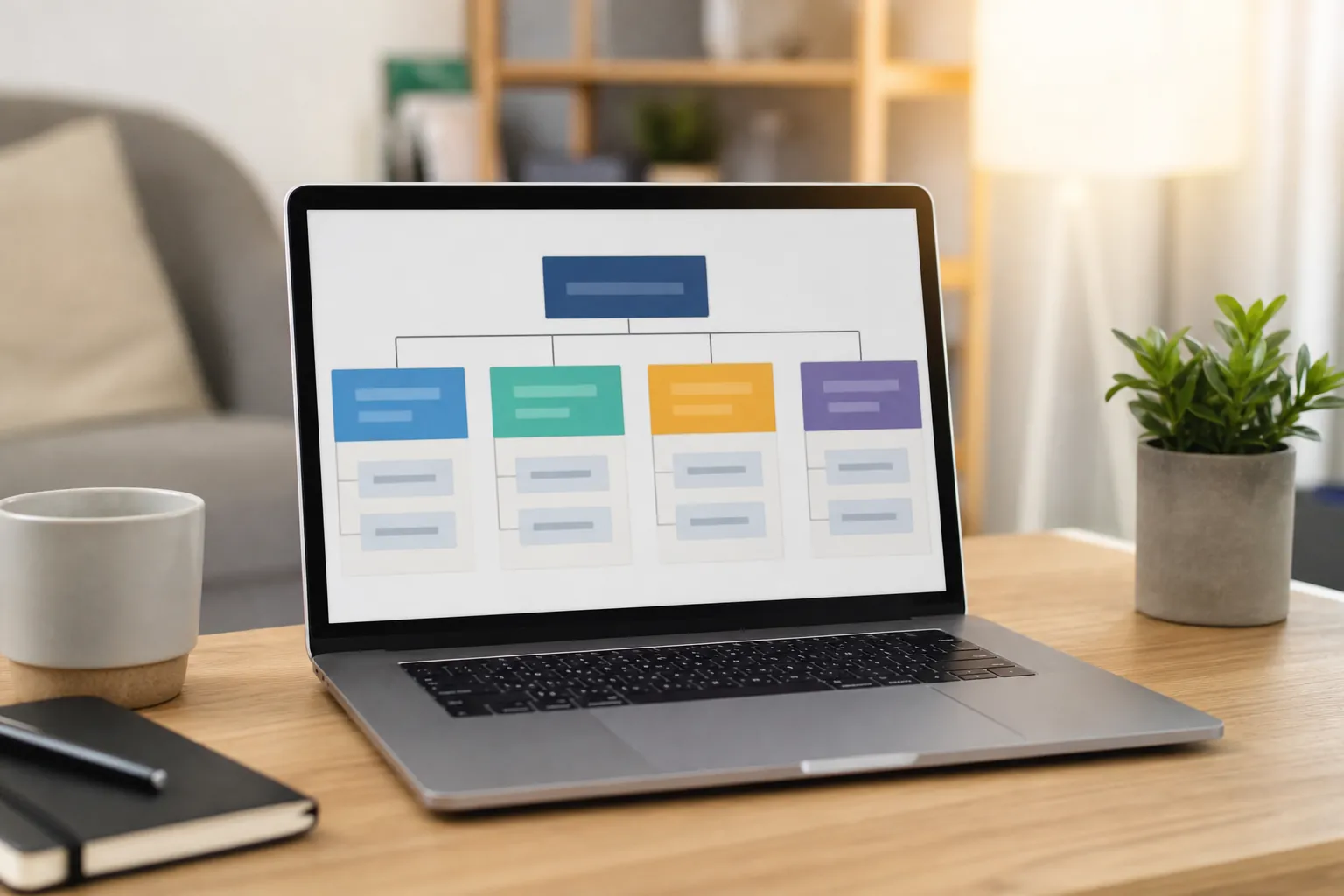
Start with a simple map of the site's main pages. Show how the home page, program pages, location information, and educational content relate. A clear map helps visitors move through the site and gives search systems a better view of page relationships.
Give each core program its own page when the center has distinct information to share. The page should describe the program in plain language, explain who it is meant to serve at a general level, and set out the next step for learning more. Have the center's appropriate staff check service details before publishing.
Avoid making several pages that repeat the same copy with only a program name changed. Similar pages can confuse visitors and make it hard for search systems to see how each page differs. Use a shared structure if helpful, but write specific and accurate details for each service.
A strong page does not need to answer every possible question. It should answer the questions that fit that service and direct readers to related information. For instance, a program page can link to admissions information or a general overview when those pages exist and are relevant.
| Page type | Main purpose | Review focus |
|---|---|---|
| Program page | Explain one service clearly | Confirm scope and current details |
| Location page | Share accurate local information | Check address and service details |
| Educational article | Answer a focused general question | Check clarity and source quality |
| Admissions page | Explain how to make an inquiry | Check contact steps and wording |
Which On-Page Details Help Search Systems Understand a Service?
Clear titles, headings, page text, and internal links help people and search systems understand a page's topic. Keep each element specific to the service and avoid repeating keywords without purpose. Use [AEO content guidance]( answer-first content guidance ) alongside a current [AEO audit]( AEO audit checklist ) to find gaps.
Write a page title that names the service and fits the page's real purpose. The main heading should confirm what visitors will find. Supporting headings can group details, such as program scope, contact steps, or common questions. Do not promise results or add claims that staff have not checked.
Use the words readers use when those words accurately describe the service. A page can mention related terms naturally, but each sentence should add information. Repeating a phrase in every heading makes the page harder to read and does not replace clear content.
Internal links show how pages connect. Link from a general overview to the relevant program page, and from the program page to useful supporting information. Use descriptive link text so readers know what they will find. Avoid vague labels that give no clue about the destination.
Structured page elements can support understanding when they reflect visible, accurate page content. Do not add hidden or misleading details to try to influence a search result. Review the page as a reader would, then confirm that page titles, headings, and links match its content.
- Use one clear main heading that matches the page's actual service and purpose.
- Write section headings that describe useful topics rather than repeat the same keyword.
- Add internal links where they help readers move to a related service or next step.
- Review every factual statement with a person who can confirm the center's current details.
Write answers before adding extra detail
For a question-led section, answer the question in its first few sentences. Add context after the direct answer. This makes the page easier to scan and gives answer tools a clear passage to interpret.
Keep the answer within the center's verified scope. If an answer depends on a person's situation, avoid presenting a general page as a personal assessment. Direct readers to the appropriate center contact or qualified professional for decisions that need individual review.
How Do Technical SEO and Local Search Fit the Plan?
Technical SEO helps search systems reach and process a site's useful pages, while local search helps people assess nearby services. Review both as part of the same plan. The [AEO audit framework]( AEO audit process ) can guide technical checks, and [addiction treatment SEO]( addiction treatment search guidance ) keeps service needs in view.
A technically sound site should let visitors and search crawlers reach important pages. Check for broken links, blocked pages, confusing redirects, and pages that load poorly on common devices. Technical work needs care: a change to site settings can affect pages beyond the one being edited.
Review which pages search tools can access and index. A page that should be public may be blocked by a setting or a site error. A page that should stay private should not be exposed. Ask a qualified web professional to review changes when the impact is unclear.
Local information should reflect the center's real presence and service details. Keep business name, location information, and contact details consistent where the organization controls them. Do not create location pages that imply a staffed office or service where none exists.
A Google Business Profile may be relevant when the organization is eligible and the profile accurately represents it. Keep profile details current and respond to public feedback in a careful, privacy-aware way. Do not disclose personal information in a response. Follow the organization's review process for sensitive issues.
Technical and local work should support useful information, not replace it. A fast page with vague service details still leaves readers without answers. A detailed page that cannot be reached or viewed well also has a problem. Include both types of review in routine site care.
How Can You Create Useful Content for AEO and AI Search?
Useful content for answer engines starts with a real question, a direct answer, and enough context to prevent confusion. Keep claims accurate and easy to check. The [answer-first content approach]( answer-first content strategy ) pairs well with a [content strategy review]( AEO content strategy ) for ongoing planning.
AEO and AI search make clear writing more important, not less. Search features may present summaries or answers, but site owners do not control when or how a page is used. Focus on pages that serve readers even when a special search feature does not appear.
Build an editorial plan around questions that matter to the center's audience. Questions may concern program differences, how to make an inquiry, what information to prepare, or how to understand the site's stated process. Confirm that the center can answer each question before assigning it to a writer.
Use plain language and short sections. Define terms that may be unfamiliar, then explain why they matter to the page. Avoid broad claims about care or outcomes. General educational content should not be framed as a personal clinical recommendation.
Source review matters when a page includes claims about health, rules, or other topics outside marketing. Use trustworthy, current sources and have the right qualified person review sensitive claims. The marketing team should not turn general information into legal or clinical advice.
Refresh content when a program, contact path, or relevant policy changes. Remove details that are no longer true. Keep a record of who checks important pages and when, so updates do not depend on guesswork.
- Choose a reader question that fits a real service or information need.
- Draft a direct answer using only facts the center can confirm.
- Add context, limits, and links that help the reader take a sensible next step.
- Ask the right reviewer to check sensitive or specialized statements before publication.
- Set a review date so the team can revisit content when facts change.
Make AI search readiness part of normal publishing
There is no special format that forces an answer tool to cite a page. Clear writing, useful page structure, and accessible content give tools a better chance to interpret what a page says, but appearance in an answer is not under the site's control.
Google Search Central's guidance on helpful, reliable, people-first content supports a reader-first approach. Its guidance is not a promise of visibility. Treat it as a useful editorial reference, then measure your own site's changes.
How Should You Compare Agencies and Measure Organic Search Work?
Compare agencies by the work they will perform, the access they need, and how they report progress. Ask for clear scopes and review points rather than outcome promises. Use [AEO measurement guidance]( AEO measurement guidance ) and an [AEO audit]( AEO audit for buyers ) to structure the discussion.
A buyer should understand who will do the work and which tasks are included. SEO may involve research, technical review, content planning, page updates, local profile work, or reporting. Ask the agency to explain which tasks fit your site's needs and which depend on your own staff.
A premium, custom, done-for-you service should still have a clear scope. Ask how content gets approved, who can make site changes, how urgent issues are raised, and what happens when the center's priorities change. Confirm that your organization retains suitable control over accounts and content.
Measurement should connect to the work without overstating what the numbers prove. Search impressions, clicks, page engagement, and inquiry activity can each answer different questions. A rise or fall in one measure may have several causes, so review trends and site changes together.
Set a reporting rhythm that gives your team time to review the work. Reports should explain what changed, what was learned, and what the next tasks are. If a report uses unfamiliar terms, ask for a plain-language explanation and the source of each measure.
Keep compliance-aware review in the process. Healthcare organizations may need internal review for privacy, advertising, and other rules that apply to them. Ask the appropriate legal or compliance professional to advise on those decisions. An SEO agency should not stand in for that authority.
| Review area | Useful question | What to clarify |
|---|---|---|
| Scope | Which tasks are included? | Deliverables and exclusions |
| Approvals | Who reviews content? | Staff roles and timing |
| Access | Which accounts are needed? | Ownership and permissions |
| Reporting | How is work reviewed? | Measures and next steps |
| Compliance | Who reviews sensitive claims? | Internal qualified authority |
What Should You Do First to Improve Search Visibility?
Start with a focused review of the pages, services, and search paths that matter most. Fix clear accuracy or access problems before expanding content. Use the [AEO audit framework]( AEO audit framework ) and [AEO measurement guidance]( AEO measurement plan ) to set a practical first cycle.
A large site project can feel hard to begin. A short, documented review creates a more useful starting point. Choose a small group of important pages and check their purpose, accuracy, internal links, and technical access.
Record issues in a shared list. Separate factual fixes from content improvements and technical tasks. Give each item an owner and a review step. This keeps essential details from being lost in a long report that no one has time to use.
When priorities compete, start with the issue that blocks a reader or makes a page misleading. Then plan the work that improves clarity or fills a real information gap. Ask an experienced technical partner to assess changes that could affect site-wide behavior.
After the first changes, review the pages and measures again. Note what was changed and when. Look for useful signs, such as improved access or clearer paths through the site, but avoid assuming that one change caused every movement in traffic or inquiries.
SEO is ongoing work because services, sites, and search systems change. A steady review cycle gives teams a way to catch outdated details and decide what deserves attention next. Keep the plan tied to the center's real services and available staff time.
- Choose a small set of important service pages for the first review.
- Check each page for accurate details, clear headings, working links, and a useful next step.
- List technical issues and ask a qualified site partner to assess risks before changes.
- Assign owners for content checks, approvals, and site updates.
- Review changes and available measures before setting the next round of work.
Questions about next steps? Call SCALZ.AI at 407-954-8800 or review aeo.
Frequently Asked Questions
How long does SEO take for a detox center?
There is no single timeline that fits every site. The starting condition, scope of work, review steps, and search changes can all affect progress. Ask an agency to describe the sequence of tasks and when it will report on them. Treat any timeline as a planning estimate, not a promise of visibility or inquiries.
Should every program have a separate page?
Use a separate page when a program has distinct, useful details that visitors need to understand. Keep related pages connected with clear links. If two pages would say nearly the same thing, review whether one stronger page would serve readers better. Confirm every page reflects services the center currently offers.
Can an agency promise placement in AI answers?
No agency controls which pages an answer tool selects or how it presents them. A sound plan can improve page clarity, access, and helpfulness, then track what can be observed. Ask an agency to explain its methods and limits. Be cautious of claims that a specific placement or citation is assured.
What should a detox center share with an SEO agency?
Share the site's goals, current service information, approved terminology, and the right staff contacts for review. Provide account access only through your organization's normal security process. Agree on who can approve edits and who handles sensitive claims. Avoid sending personal or private information unless your organization has approved that process.
How often should service pages be reviewed?
Review a page when a service, contact path, or other important detail changes. Set a regular check as well, based on your team's capacity and the page's importance. Give each review a clear owner. A review should confirm accuracy, usefulness, and working links, not add edits simply to make the page look new.
Sources
- Creating Helpful, Reliable, People-First Content, Google Search Central
- SEO Starter Guide, Google Search Central
- AI Features and Your Website, Google Search Central
Call 407-954-8800 to talk through next steps.