

A practical guide to dental practice local SEO
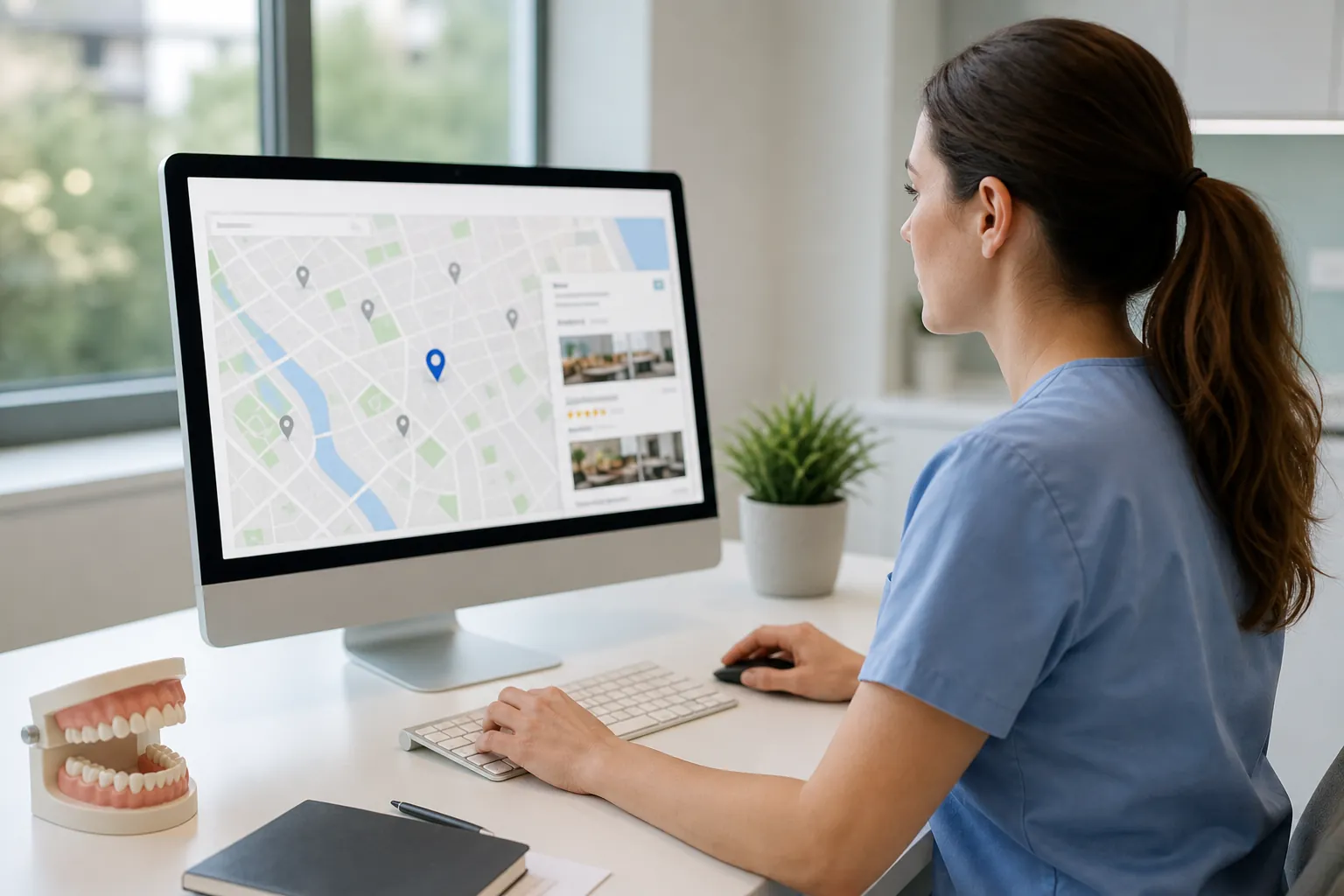
A dental practice can have a polished website and still leave important questions unanswered in local search. Is this the right office? Does it offer the service someone is looking for? Where is the entrance? How can a prospective patient request an appointment?
Dental practice local SEO connects those questions to accurate, accessible information about your business. It includes your website, Google Business Profile, directory listings, reviews, and the technical foundation that lets search systems discover your content.
It also overlaps with answer engine optimization (AEO) and generative engine optimization (GEO). Google AI Overviews, ChatGPT, Perplexity, and Gemini may draw on different sources when answering local questions. They do not all work alike, and no tactic guarantees inclusion. A consistent, well-supported digital presence gives these systems clearer information to interpret.
For healthcare marketers, the goal is practical: make the practice easier to understand, evaluate, and contact without overstating services or making clinical claims. The framework below focuses on dental offices, with lessons that also apply to addiction treatment centers, behavioral and mental health providers, med spas, and other medical practices.
Start With An Accurate Local Business Foundation
Before adding content, establish a reliable source of truth for each location. Record the public-facing practice name, address, main phone number, website URL, office hours, appointment process, and services actually available there. Assign someone to approve changes and keep this record current.
Compare that information with your website, Google Business Profile, and important third-party listings. Small formatting differences are not necessarily a problem. Conflicting phone numbers, closed locations, outdated hours, and duplicate profiles deserve attention because they can confuse visitors and search systems.
For a multi-location group, distinguish the organization from each office. A location should have its own accurate contact details and landing page. Do not imply that a service is available at every office if it is offered at only one.
- Confirm that each listed location is eligible under the platform's current business profile rules.
- Use the real business name rather than adding search keywords or nearby city names.
- Remove outdated information from sources your team can control and request corrections elsewhere.
- Document who updates holiday hours, location changes, and appointment links.
This foundation supports local SEO by reducing ambiguity about business identity. It also helps AEO and AI search distinguish one office from another when sources are consulted. Accuracy matters more than trying to appear in every possible directory.

Make Google Business Profile Useful, Not Just Complete
Google Business Profile optimization should reflect how the office operates. Choose the most appropriate primary category and add relevant secondary categories only when they accurately describe the business. Review available features rather than assuming every category supports the same options.
Keep hours, contact details, service descriptions, and appointment links current. Use concise descriptions that explain the practice without claims about being the best or delivering guaranteed results. Link visitors to the relevant office page instead of sending every location to the homepage.
Photos should help someone recognize and navigate the office. Exterior images, signage, entrances, and reception areas can be useful. Obtain appropriate permission before publishing identifiable people, and avoid exposing private information in the background.
- Check that the map pin points to the correct entrance or building.
- Test the phone number and appointment link from a mobile device.
- Update special hours before holidays or planned closures.
- Review suggested edits and resolve inaccurate information promptly.
- Use tracking parameters on website links when appropriate so analytics can distinguish profile visits.
A complete profile is not a substitute for a useful website. It is one source in a wider local information ecosystem. For AI search, accurate profile information may help establish context, but businesses should not assume every answer engine accesses or displays it in the same way.
Build Location Pages That Answer Real Questions
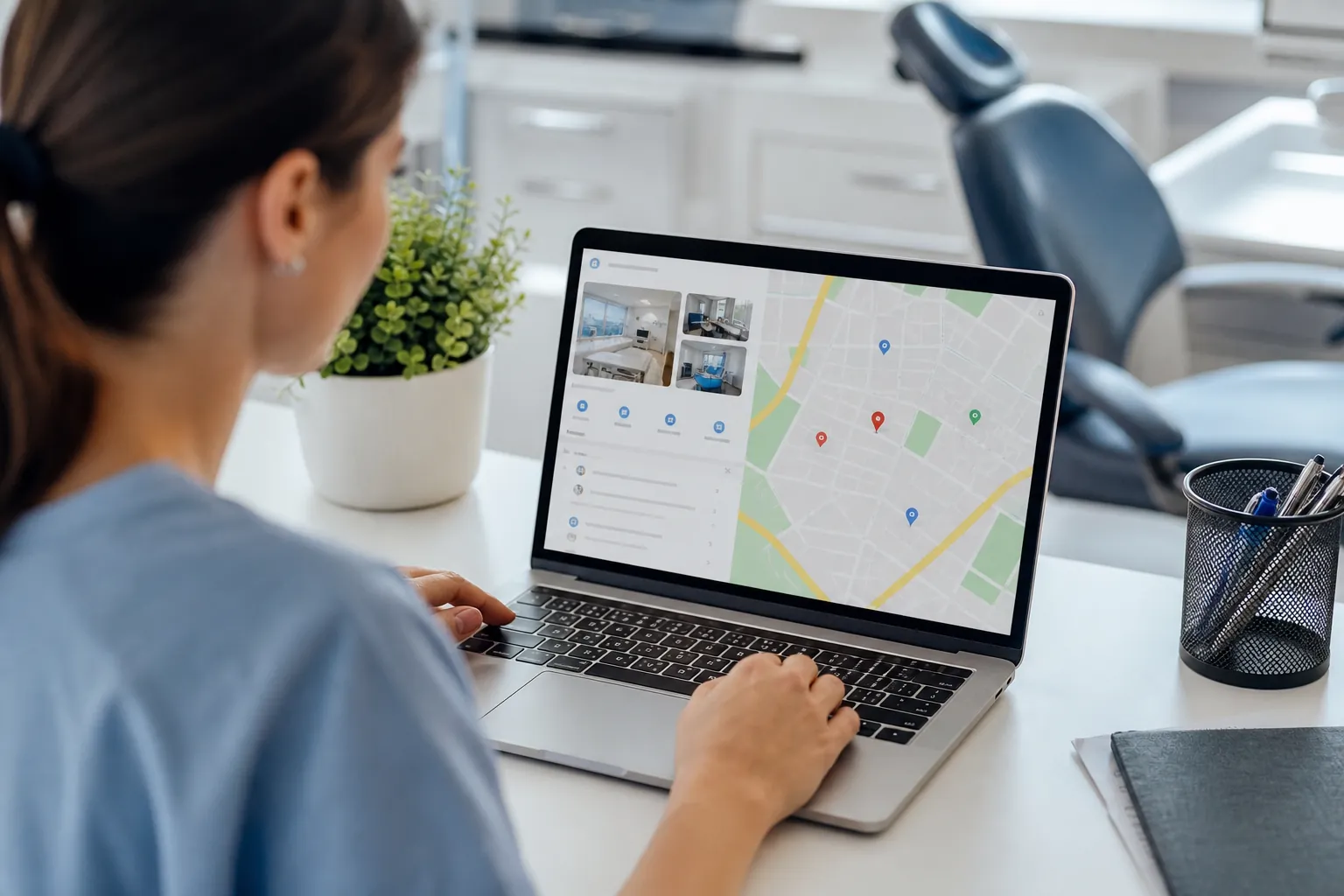
A strong location page is a practical resource, not a city name pasted into a generic template. It should identify the office, explain available services, introduce relevant practitioners, and make the next step easy to find.
Include the full address, main phone number, office hours, and a clear appointment request link. Add verified details about parking, building access, public transportation, or accessibility when they are relevant. Avoid assumptions about accommodations that staff have not confirmed.
Use a descriptive title and heading that identify the practice and location naturally. Mention neighborhoods or nearby landmarks only when they genuinely help visitors understand where the office is. Repeating dozens of surrounding city names does not make a page more useful.
- State which services are offered at this specific office.
- Explain how new visitors can contact the office and what happens after an inquiry.
- Describe payment or insurance processes accurately without implying universal acceptance.
- Link to practitioner profiles and relevant service pages.
- Provide directions in text rather than relying only on an embedded map.
These details support traditional search relevance while supplying concise answers for AEO. They also give AI systems material that can be attributed to a specific location. Avoid creating thin pages for cities where the practice has no office or meaningful local relevance.
Organize Service Content Around Search Intent
People searching for a dental office do not all want the same information. Some are comparing nearby practices. Others want to know whether a location offers a particular service, how scheduling works, or whether they can ask about insurance before booking.
Build content around those distinct needs. A service page can explain availability, the office's administrative process, and how to contact the team for individualized questions. It should not attempt to diagnose readers or promise a clinical outcome.
Separate substantial topics when each deserves its own explanation. At the same time, avoid creating multiple pages that answer essentially the same question with slightly different keywords. A content inventory can reveal overlap before it becomes a maintenance problem.
For dental practice local SEO, connect service pages with relevant location pages through descriptive internal links. A visitor should be able to determine where a service is available without navigating through several unrelated pages.
This same structure helps other healthcare organizations. An addiction treatment center might clarify inquiry procedures and location details. A mental health practice might explain appointment requests and office availability. A med spa might identify which services are offered at each site. In every case, publish verified business information without making treatment or outcome claims.
Write Answers That Humans And Search Systems Can Understand
AEO starts with identifying questions the organization is qualified to answer. Front-desk staff, search query reports, and website inquiries can reveal recurring administrative questions. Use aggregated observations rather than publishing identifiable inquiry details.
Place the direct answer near the relevant heading, then add useful context. For example, an answer about scheduling can state whether visitors should call or submit a request and explain that appointment availability must be confirmed by staff.
- Write headings that match genuine questions rather than awkward keyword variations.
- Keep essential information in visible page text instead of placing it only inside images.
- Define unfamiliar administrative terms in plain language.
- Include qualifications when availability, insurance participation, or office policies vary.
- Update answers when the underlying business process changes.
Clear answers can serve organic search visitors, voice interfaces, and AI-assisted discovery. However, an FAQ page or specific writing style does not guarantee a featured answer, citation, or mention in Google AI Overviews.
For ChatGPT, Perplexity, and Gemini, source selection and browsing behavior vary by product and query. Treat AI SEO and LLM SEO as ongoing work on discoverability, clarity, and source consistency, not as a separate set of magic phrases.
Keep Technical SEO Focused On Access And Clarity
Technical SEO helps search engines access and interpret the pages your team creates. Start by confirming that important location and service pages are crawlable, indexable, and included in a current XML sitemap. Check for accidental blocking, broken links, and incorrect canonical tags.
Review mobile usability carefully. A visitor should be able to read office information, tap the phone number, and complete an appointment request without intrusive overlays or confusing forms. Page speed matters to usability, especially when someone is comparing local options on a phone.
Structured data can describe the organization, locations, and other supported page information. Use accurate properties and validate the implementation. Markup should match visible content and must not introduce services, ratings, or credentials that the page does not support.
- Give each important page a clear title and a useful meta description.
- Ensure essential content remains accessible when scripts fail or load slowly.
- Redirect retired URLs to the closest relevant replacement when appropriate.
- Check that desktop and mobile visitors receive consistent business information.
- Review forms for unnecessary fields and unclear error messages.
Structured data does not guarantee enhanced search features or AI citations. Its role is to clarify information. Technical accessibility, sound page organization, and helpful content should work together rather than becoming disconnected projects.
Manage Reviews And Local Authority Responsibly
Reviews help prospective visitors evaluate a practice, but healthcare organizations need a careful process. Ask for feedback consistently using methods that follow the platform's rules. Avoid incentives, selective review gating, fabricated reviews, or requests that pressure people to disclose personal health information.
Public responses should stay general. Do not confirm that a reviewer is a patient or discuss appointments, diagnoses, billing details, or care. A brief acknowledgment and an invitation to contact the office through an appropriate private channel can be more suitable than a detailed rebuttal.
Reputation management also includes checking for outdated business details and recurring operational questions. Route useful feedback to the appropriate team without turning private experiences into promotional content.
For link building, prioritize genuine relationships and relevant references. Local professional associations, community organizations, and legitimate business directories may provide useful listings when the practice qualifies. Avoid bulk link purchases and networks built primarily to manipulate search visibility.
Third-party sources can give search engines and AI systems additional context about the organization. That does not mean every mention improves visibility. Relevance, accuracy, and editorial legitimacy are better evaluation criteria than a large count of citations.
Apply Healthcare-Specific Content Controls
Healthcare marketing requires more review discipline than ordinary local business content. Establish an approval process for credentials, service descriptions, promotional language, and any information that could be interpreted as a clinical claim.
Use HIPAA, FTC guidance, applicable state rules, and platform policies as general compliance-aware considerations. Where relevant to addiction treatment advertising, review LegitScript requirements with qualified advisers and the platforms involved. These are not interchangeable standards, and SEO work does not replace legal or compliance review.
Do not place sensitive information in page URLs, analytics labels, public responses, or routine marketing reports. Before adding tracking technologies or changing inquiry forms, have the appropriate team evaluate privacy implications and data handling.
- Verify practitioner names, credentials, and location assignments before publication.
- Route potentially sensitive claims through the organization's designated review process.
- Keep marketing consent and image permissions documented where applicable.
- Limit access to inquiry information according to internal policies.
These practices apply across dental, behavioral health, mental health, addiction treatment, and med spa marketing. They protect information quality and reduce avoidable publishing risks. They are general operational considerations, not legal advice.
Measure Local Search With A Practical Reporting Plan
Analytics and reporting should connect visibility with useful actions without confusing a click with a booked appointment. Define what counts as a phone interaction, appointment request, form submission, and confirmed booking before building dashboards.
Use Search Console to examine queries, pages, indexing, and organic clicks. Review available Google Business Profile performance data alongside website analytics. Label the sources clearly because different platforms measure interactions differently.
Separate branded searches from broader discovery queries where possible. Review results by location and service page so a strong office does not hide problems elsewhere. Compare similar periods and note website changes, closures, or seasonal scheduling differences.
AI visibility checks can supplement reporting. Test a documented set of local questions across relevant answer engines and record the date, wording, cited sources, and observations. Answers can vary by session and product, so these checks are directional snapshots rather than stable rankings.
Pair quantitative reports with quality checks. Are phone links working? Are inquiries routed correctly? Are outdated office details appearing in search? Conversion rate optimization should improve clarity and usability, not pressure visitors or collect unnecessary information.
Create A Manageable First-Quarter Roadmap
Start with an SEO audit and a location information inventory. Prioritize incorrect contact information, broken appointment paths, indexing issues, and missing office pages before expanding the content library.
Next, improve the most important location and service pages. Assign owners for business profile updates, content approvals, review responses, and measurement. A documented maintenance process is often more useful than a large one-time publishing push.
Then review search queries and recurring administrative questions to choose the next content updates. Revisit technical issues and reporting definitions as the site evolves. Keep the scope realistic enough that the practice can maintain accuracy.
SCALZ.AI approaches dental SEO through local SEO, Google Business Profile optimization, technical SEO, content strategy, AEO, and AI search considerations. The emphasis is on clear business information, useful pages, and measurable work rather than ranking promises.
If your team wants to discuss where to begin, call SCALZ.AI at 407-954-8800. A focused conversation can help identify which parts of your local search presence deserve attention first.
Call 407-954-8800 to talk through next steps.