

Annotate Reports For AI SEO For Addiction Treatment
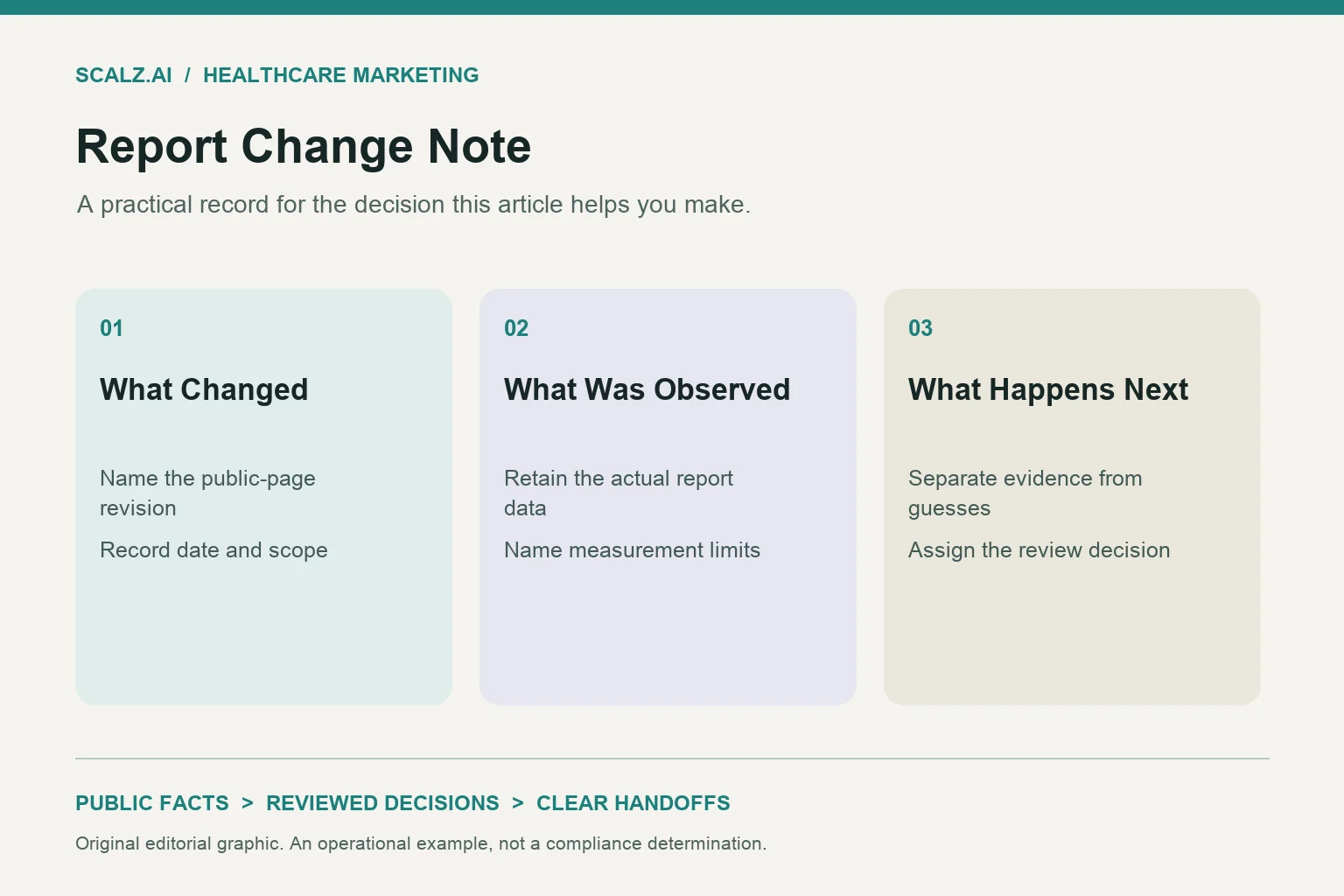
When a page, listing, or service description changes mid-month, add a dated note beside the affected report item. For AI SEO for addiction treatment, that note should identify what changed, where it appeared, which facility record supported it, and what the reporting period cannot establish. End with an owner and a concrete follow-up.
This gives a marketing director enough context to interpret the report without reconstructing an email thread. Within addiction treatment SEO and AI SEO services, annotations should explain the work completed and its timing without assigning credit for later movement.
Choose Which Changes Deserve a Report Note
Include changes that alter the meaning, availability, identity, or reporting context of an asset. Keep routine production details in the work log unless they explain something a report reader would otherwise misunderstand. The separate guide to AI SEO measurement for addiction treatment centers covers measurement definitions; these notes add context to an existing report.
A corrected service label deserves attention because earlier observations may refer to different wording. A spelling correction usually needs no monthly annotation unless it fixes a facility name or another meaningful fact. Apply the same rule to website pages, public business listings, and directory descriptions.
- Annotate a page rewrite when the answer block, service description, title, or linked destination materially changes.
- Annotate a listing update when public facility information changes or the requested edit remains unresolved.
- Annotate a technical change when a redirect, access issue, or reporting interruption affects an item shown in the report.
- Leave minor formatting adjustments in the production log when they do not affect interpretation.
Group related edits when they share one purpose and one verified release window. Separate them when their dates or public statuses differ. A page correction and a pending directory correction should not appear as one completed update.
Use a simple editorial test: would omitting this change make the report misleading? If yes, add the note. If the change only documents effort, retain it in the task history.
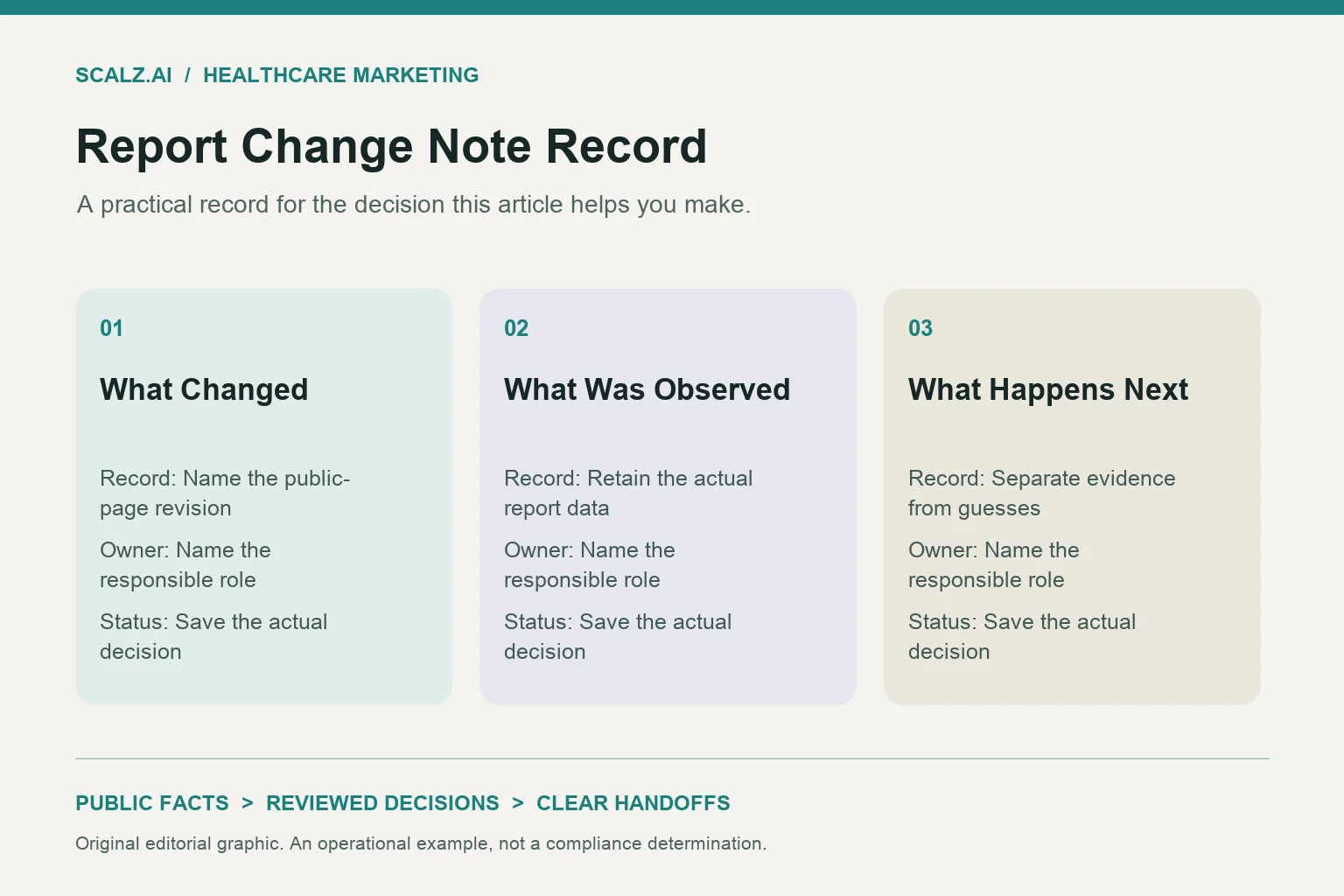
Use One AI SEO for addiction treatment Change-Note Template
A reusable template keeps the annotation short while retaining the details needed for review. Put the readable summary in the report and keep supporting records in the team's existing editorial workspace. The report reader should not need access to that workspace to understand the limitation.
- Identifier and scope: Assign a stable note ID and name the affected page, listing, field, or report item.
- Dates and status: Record approval, publication, and public verification separately, including the time zone when timing matters.
- Exact change: Describe the old and new wording, destination, or state without promotional language.
- Support: Name the approved facility record and its revision, or the technical record supporting a technical change.
- Reporting limit: Explain the timing gap, incomplete exposure, or concurrent change that restricts interpretation.
- Next action: Name the responsible role, due date, and specific check required to close the item.
A proposed record might read: CN-014; service-page description; approved October 14; published October 16; publicly verified October 17. The editor replaced an ambiguous marketing label with wording approved in facility facts record F-06, revision 3. The monthly total includes both page versions, so the note makes no claim about which version influenced observed results.
Its closing instruction could be: The web editor will confirm matching wording on the linked location page by October 22. This assigns a checkable task rather than a vague promise to monitor performance. The record remains useful even if the report shows no change.
These dates and identifiers illustrate a proposed format, not a facility history. Replace them with actual records before using the note in a client report. If a required detail is unavailable, mark it unknown and assign its recovery.
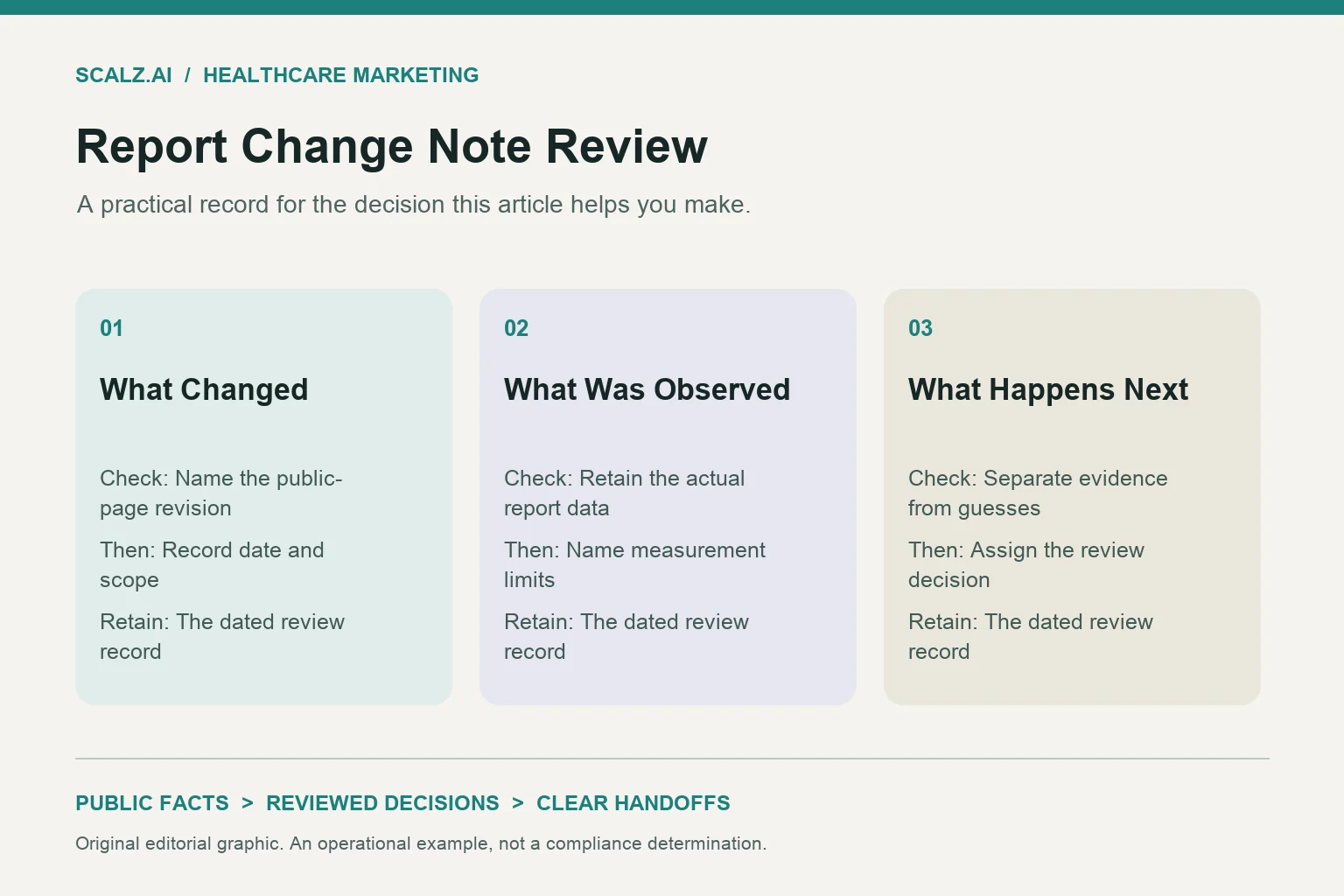
Separate Approval, Publication, and Public Verification
A date labeled simply updated can conceal several different events. Approval means the edit was authorized; publication means someone released or submitted it; verification means the revised content was observed publicly. Preserve those distinctions whenever the events occurred on different days.
For a website page, approval may precede release because related edits are still being reviewed. For a listing, submitting an edit may not immediately change its public display. Neither event establishes when an AI answer surface used the revised information.
- Use the release record for the publication date instead of substituting the approval date.
- Record the first confirmed public display date without treating it as the earliest possible display date.
- State that the publication date is unknown when the available records only establish later verification.
- Retain separate dates for assets released in stages rather than assigning every asset the final completion date.
Consider a proposed listing note: Description edit submitted October 12; revised text first confirmed publicly October 15. The exact public transition time was not captured. Observations between those dates cannot be confidently assigned to either wording version.
That wording identifies the uncertainty without guessing at platform behavior. Avoid backdating public verification to submission merely to make the monthly timeline look cleaner. A neat timeline is less useful than an accurate one.
If publication falls near month-end, carry the note forward when its unresolved status still matters. Keep the same identifier so readers can follow it across reports. Add the new verification date rather than rewriting the original history.
Describe Page Edits at the Level Readers Need
A page annotation should identify the changed component and its practical meaning. Saying optimized the service page leaves readers unable to distinguish a factual correction from a layout adjustment. Name the answer block, title, description, internal link, or other component involved.
Separate substantive content changes from presentation changes. Reordering approved information is different from adding a facility claim. When both occurred, describe each briefly and identify which approved record supports the new claim.
- Record the changed heading or paragraph topic so another editor can locate the affected content.
- State whether the edit corrected a fact, clarified existing wording, or changed page navigation.
- Identify linked pages that require matching edits when the change affects shared descriptions.
- Use exact before-and-after wording for a short disputed phrase instead of attaching an entire page rewrite.
A proposed annotation could say: The editor moved the approved location description above the general introduction and replaced an unclear program heading. The underlying facility facts remained the same. The report period includes observations before and after this presentation change, without isolating its effect.
Existing SEO practices remain relevant to Google AI search features; no special AI markup is required. Describe the actual edit rather than calling it an AI eligibility upgrade.
When a rewrite also changes the title or internal links, retain those details in the supporting record. Bring them into the report annotation only when they affect the item being discussed. This keeps the note focused without losing the underlying history.
Distinguish Listing Requests From Confirmed Public Changes
Listing annotations need a clear status because a requested edit and a visible edit are different records. Name the platform and the exact field affected. Avoid saying listings updated when only one profile has been checked.
Use a small set of explicit editorial statuses: submitted, publicly confirmed, not yet confirmed, or reverted. These labels describe what the team knows, without guessing why a platform accepted or delayed an edit. Keep the submission receipt and public display check together.
- Name each listing separately when its status differs from the others.
- Record the approved facility record supporting a revised business description or location detail.
- Preserve conflicting public wording in the supporting record until the correction is confirmed.
- Describe an unresolved listing discrepancy beside the relevant report item rather than burying it in a task summary.
For example, propose a note stating: The website description now matches approved wording; the directory description still shows the earlier label. The directory request was submitted during the period, but public verification remains open. Any report discussion involving that directory should retain the discrepancy.
Assign the listing editor a specific follow-up date and a field to check. If the revised description later appears, append that confirmation to the same note. If the old text returns, add a dated status change instead of silently marking the task complete again.
Do not turn a corrected listing into a claim of improved local rank or AI visibility. The verified deliverable is the public information change. Any observed visibility belongs in its existing report item with its own limits.
Handle Service Description Changes Without Guessing Facility Facts
A service description change requires a verified facility record before the editor changes public wording. Program terms such as residential, PHP, IOP, and outpatient are marketing labels here. Their use must match the facility's approved descriptions, without implying suitability or recommending care.
Distinguish a wording correction from a genuine change in the facility's offering. Marketing records can show that a description was revised, but they do not independently establish when an operational service change took effect. If that date matters, obtain it from the responsible facility owner.
- Record the approved service label and the specific pages or listings where it should appear.
- Identify whether the edit clarifies an existing offering or reflects a verified operational change.
- Hold unsupported additions out of public copy until the facility supplies approved facts.
- List remaining mismatches so the report does not imply that every description is current.
A proposed annotation might state: The service page adopted the approved program label on October 18; the linked location summary remains under review. The change concerns public wording and does not establish a new service launch. The content owner will reconcile the summary against the same facility record.
When a previously published claim lacks support, record its removal as a correction. Do not recast the removal as expansion, optimization, or improved service coverage. The report should explain what became more accurate.
If the facility cannot verify a disputed description before report delivery, keep the issue visibly open. Name the missing fact and the role responsible for confirming it. That gives leadership a useful decision point without requiring the editor to fill the gap.
Write Measurement Limits Beside the Affected Observation
A change note explains why a report item needs context; it does not establish a new measurement method. Preserve the existing definitions and reporting windows. The guide to building an addiction treatment AI search prompt tracking set handles test-set design separately.
Attach the limitation to the specific observation it qualifies. A report-wide disclaimer can be missed when a chart is copied into a presentation. A short note beside that chart travels with the claim.
- State when a monthly total includes both the earlier and revised page versions.
- Identify observations captured before public verification of a listing change.
- Name concurrent changes that prevent a simple explanation of later movement.
- Say when the next scheduled observation has not yet occurred rather than implying a completed evaluation.
Useful wording is: The page changed October 20; this monthly total includes activity under both versions. The total does not isolate the revised copy's effect. Avoid replacing that statement with the unsupported conclusion that the rewrite drove the monthly increase.
Another proposed note could say: The later capture showed different cited sources after the description edit. A navigation release also occurred during the period, and the available observations do not establish the reason for the difference. Keep the observed sequence separate from its possible explanations.
Do not manufacture a cleaner comparison by excluding inconvenient dates. If the report already includes a dated breakdown, the note can identify the relevant boundary. Otherwise, describe the limitation and leave the aggregate intact.
Carry Open Notes Forward and Correct Released Reports
Before report delivery, one editor should reconcile the notes against release records and public checks. The broader AEO reporting for clients article addresses report presentation; this review ensures that annotations describe the actual state of the work. Completion labels should reflect confirmed status.
Check especially for submitted edits labeled live, completed wording changes described as pending, and missing follow-up owners. These inconsistencies make a report harder to act on even when its numbers are correct. Resolve them before approval whenever the records allow.
- Place each note beside the affected page, listing, observation, or chart.
- Carry unresolved items into the next report using the original note identifier.
- Close an item with a dated confirmation of the required check.
- Issue a visible correction when a released report contains an inaccurate change date or scope.
If a report wrongly states that several listings changed, correct the named scope rather than replacing the entire commentary silently. Preserve the original report and identify the revised version. Tell the recipient exactly which annotation changed and whether its interpretation also changed.
A carried-forward note should add new information, such as public confirmation or a remaining mismatch. Repeating the same paragraph without a status update gives leadership no useful direction. If nothing changed, state that the item remains open and retain the next responsible action.
For help integrating these records into a custom editorial reporting process, contact SCALZ.AI. A useful starting brief identifies the assets involved, the current report format, and the facility role responsible for approving public facts.
Frequently Asked Questions About Report Change Notes
Does Every Copy Edit Need a Monthly Report Annotation?
No. Include edits that affect meaning, public facts, asset availability, or interpretation of a reported observation. Keep ordinary punctuation and formatting changes in the production log unless they correct an important identity detail or explain a visible discrepancy.
What Should the Note Say When the Publication Date Is Missing?
State that the publication date is unknown and give the first confirmed public verification date. For example, the editor can record that revised wording was visible on October 19 while the release record remains unavailable. Assign recovery of that record without treating October 19 as the proven publication date.
Can a Note Credit an Edit for a Later Citation Increase?
A change note alone cannot establish that explanation. It can record that the edit preceded the later observation and identify the assets involved. If someone proposes a cause, label it as an untested explanation and keep it separate from the confirmed change and observed result.
Call 407-954-8800 to talk through next steps.