
Build an AI SEO content refresh strategy that stays useful
Publishing more pages is not always the best way to improve search visibility. Many United States businesses already have useful articles, service pages, and guides that need clearer structure, current information, or stronger alignment with how people search today.
An AI SEO content refresh strategy improves existing assets for traditional search results and AI-generated answers. It combines editorial judgment, search data, technical review, and a practical understanding of how answer engines and large language models interpret information.
For B2B teams, the goal is not to rewrite every page with automated tools. The goal is to identify content worth preserving, correct weaknesses, and make trustworthy information easier for people and machines to find, understand, and cite.
Start With A Focused Content Inventory
A refresh should begin with an inventory rather than a writing prompt. List indexable pages, their intended topics, business purpose, target audience, publication date, and last meaningful update. Add available performance signals such as impressions, clicks, conversions, backlinks, and internal links.
Group pages by role. A service page should explain an offering and support a decision. An educational article should answer questions and guide readers toward a sensible next step. A location page should provide relevant local information without duplicating another market page.
Then flag pages that overlap. Two articles addressing the same intent may compete or divide authority. Depending on their value, the right action may be to consolidate them, narrow their focus, redirect one page, or create clearer internal links between distinct topics.
SCALZ.AI can use an SEO audit to connect this inventory with technical SEO, content strategy, local SEO, and link building considerations. The result should be a prioritized working document, not an unfiltered list of every URL.

Prioritize Pages By Value And Need
Not every declining page needs immediate attention, and not every old page is outdated. Prioritization should consider business relevance, search demand, factual accuracy, audience need, and the effort required to improve the asset.
Pages are often strong refresh candidates when they cover an important service but contain thin explanations, no longer match search intent, lack original expertise, or fail to answer common follow-up questions. Pages with useful backlinks or established visibility may also deserve careful improvement rather than replacement.
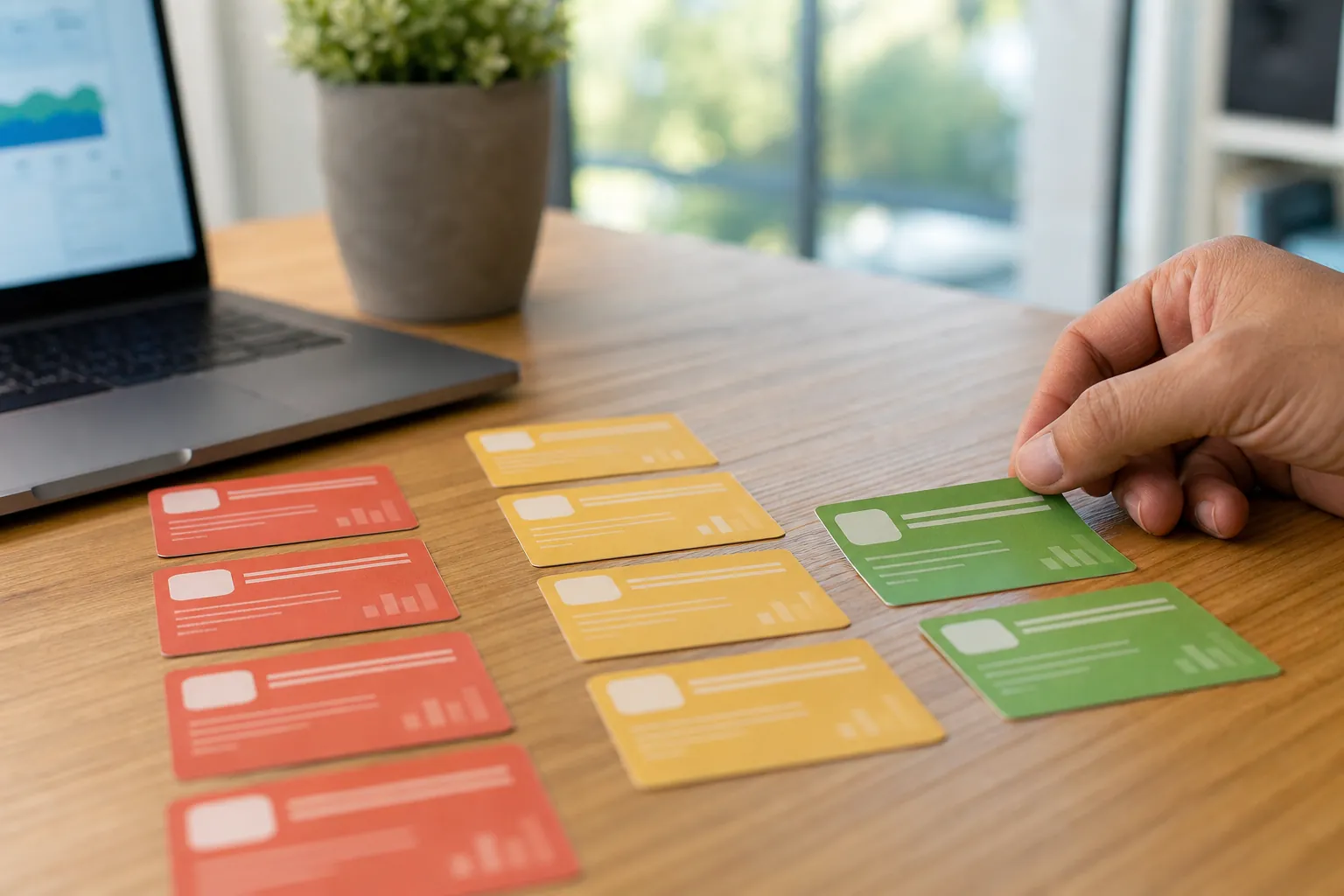
Use a consistent checklist when selecting work:
- Business fit: Does the page support a current service, audience, or market?
- Intent alignment: Does it answer the question implied by the query?
- Accuracy: Are claims, links, processes, and references still current?
- Depth: Does it explain how, when, why, and for whom the topic matters?
- Distinctiveness: Does it contain expert guidance rather than generic summaries?
- Structure: Can readers and retrieval systems identify the main answer quickly?
- Technical health: Is the page indexable, fast, mobile-friendly, and properly canonicalized?
- Conversion path: Is there a relevant, low-pressure next step?
This framework keeps the refresh tied to practical value. It also reduces the temptation to change titles, dates, and wording without making the page substantially better.
Rewrite For Search Engines And Answer Systems
AI SEO, answer engine optimization, generative engine optimization, and LLM SEO share a basic requirement: information must be clear enough to retrieve and reliable enough to use. A page should state its core answer early, then support it with context, steps, definitions, examples, and limitations.
Use descriptive headings that reflect real questions. Keep paragraphs focused on one idea. Define industry terms before relying on acronyms. Where appropriate, use ordered steps, comparison tables, or bullet points so relationships between ideas are explicit.
Avoid adding filler to reach a target length. Answer systems benefit from passages that make sense independently, while human readers benefit from a logical narrative. Both audiences need specific language. Replace vague claims such as “AI changes everything” with a direct explanation of what a business should review or do.
Refresh the page title, H1, meta description, opening, and section headings only when those elements no longer represent the content. Natural keyword use matters, but repetition should not interfere with clarity. Relevant entities, services, locations, and audience terms can provide context without forced phrasing.
Add Evidence, Expertise, And Clear Ownership
Generic content is easy to produce and difficult to trust. A substantive refresh should add knowledge that reflects real work. That can include a decision framework, a process checklist, common implementation mistakes, criteria for choosing an approach, or an explanation of tradeoffs.
Review every factual claim. Link to appropriate primary or authoritative sources when external support is useful. Identify the organization responsible for the content and make service descriptions consistent with what the business actually provides.
For sensitive industries such as behavioral health marketing and rehab marketing, editorial review is especially important. Marketing content should avoid unsupported clinical statements, exaggerated language, and promises. Clear distinctions between marketing guidance and health information help preserve accuracy and reader trust.
Strengthen Technical And Local Signals
Content quality cannot solve every visibility problem. Technical SEO checks should accompany the editorial refresh. Confirm the preferred URL, indexability, canonical tag, status code, structured data where appropriate, image accessibility, page speed, and internal links.
For businesses serving defined markets, local SEO requires more than inserting city names. Align relevant pages with accurate business information and a well-maintained Google Business Profile. Local pages should explain actual services and market relevance rather than reusing nearly identical copy across locations.
Internal links should connect the refreshed asset to related service pages and supporting resources. Use descriptive anchor text that helps readers understand the destination. Link building may support important resources, but outreach should focus on genuine relevance instead of manufactured volume.
Measure Changes And Refresh Responsibly
Record what changed and when. Monitor indexing, impressions, clicks, engagement, qualified inquiries, and visibility for relevant questions. For AEO and GEO, teams can also review whether brand and service information appears accurately across selected answer platforms, while recognizing that outputs can vary.
Do not judge a refresh solely by immediate movement. Search systems need time to crawl and reassess pages, and demand changes by season and market. Use performance data to guide the next review, but keep editorial quality and business relevance at the center.
SCALZ.AI provides AI SEO, AEO, GEO, LLM SEO, technical SEO, local SEO, content strategy, SEO audits, PPC management, web design, and related services for United States businesses. To discuss a measured content refresh plan, call 772-267-1611.
Call 772-267-1611 to talk through next steps.