

How Can Multi-Location Service Businesses Optimize Location Pages for Answer Engines?
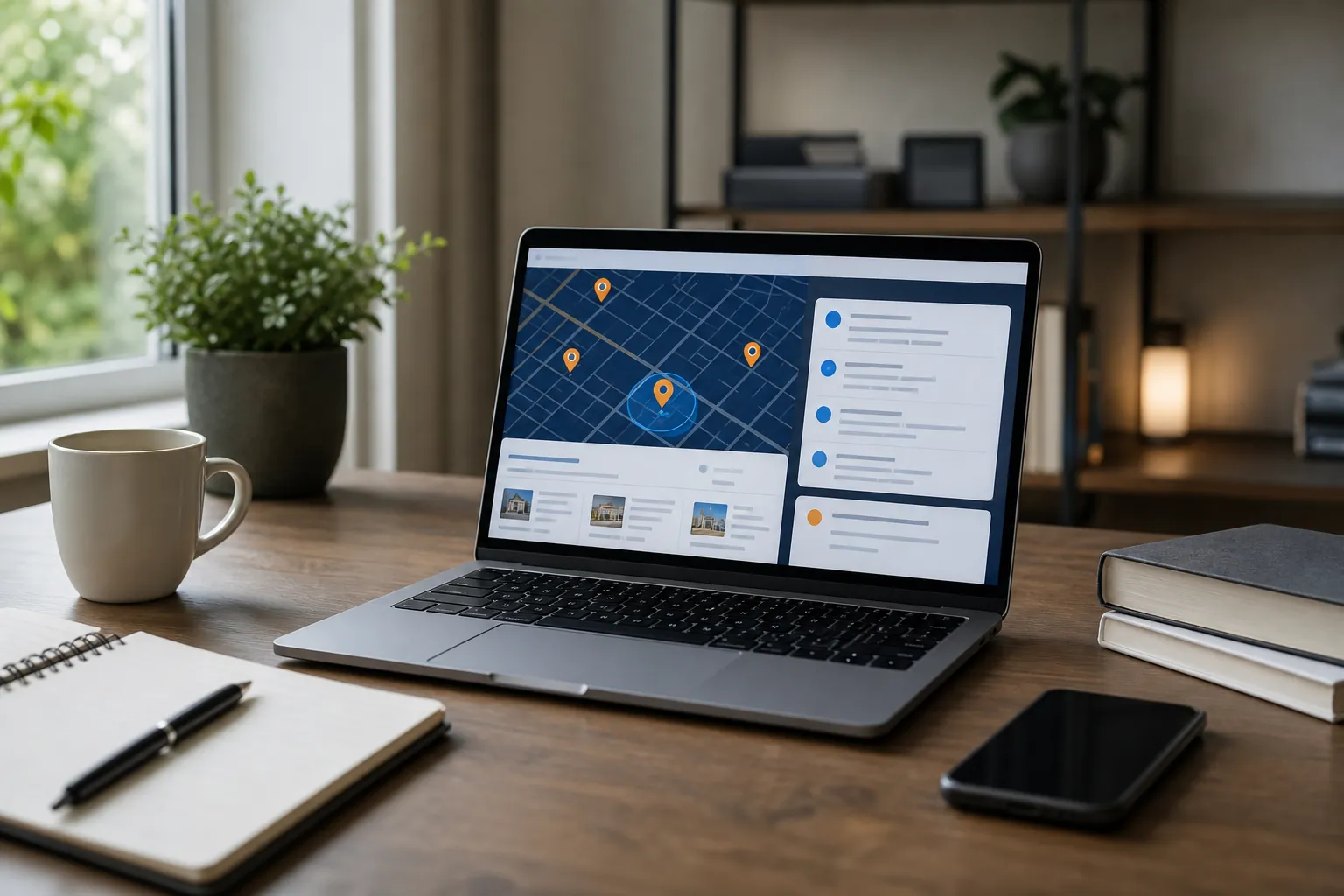
Multi-location service businesses need location pages that do more than swap a city name into a template. Each page should clearly explain where the business operates, what is available there, how that location differs, and what a prospective customer should do next. Answer engine optimization, or AEO, adds another requirement: information must be easy for search engines and AI systems to identify, interpret, and summarize accurately. The following framework helps decision-makers evaluate and improve location pages without relying on vague claims or manufactured local relevance.
Start With Accurate Location Information
Begin with facts that can be verified internally. Confirm the business name used at each location, address, phone number, service area, and other published contact details. Those details should remain consistent across the location page, Google Business Profile, directory listings, and relevant business materials. If a location does not have a public street address, do not invent one or imply that customers can visit.
Next, define what the page represents. It may describe a physical office, a service-area operation, or a regional page covering several communities. State that relationship plainly. Ambiguous wording can confuse potential customers and make it harder for answer engines to distinguish one entity from another.
Create an internal source of truth for every location before revising copy. Assign someone to approve changes and record when details were last checked. This basic governance is especially important when locations open, move, change services, or use different contact processes. Accurate information is the foundation for local SEO, AEO, GEO, and LLM SEO work.
Give Every Page A Distinct Purpose
A strong location page contains information that is genuinely specific to that location. Replacing place names in otherwise identical paragraphs produces pages with little decision-making value. Instead, document the questions a customer would reasonably ask about that office or service area. Address only the details the business can support and keep shared brand language concise.
Build each page around a clear primary intent, such as finding a nearby provider, confirming service availability, or understanding how to make contact. Then map supporting information to that intent. Useful page elements may include:
- A precise description of the location or service area
- Services confirmed as available through that location
- Directions or access information when verified and relevant
- A short explanation of the inquiry or appointment process
- Answers to location-specific questions asked by prospects
- A direct, accurate contact action
Do not add landmarks, neighborhoods, staff details, testimonials, or local claims merely to make a page appear unique. Distinctiveness should come from verified operational facts and useful guidance. If two locations are nearly identical, improve clarity rather than stretching for artificial differences.
Structure Content For Direct Answers
Answer engines work best with clear relationships between questions, entities, services, and locations. Use one descriptive H1, logical H2 headings, short explanatory paragraphs, and labels that match the language customers use. Place the direct answer near the beginning of each relevant section, then add context that helps readers evaluate the information.
Write explicit sentences. For example, identify whether a service is available at a named location rather than surrounding that fact with broad promotional language. Avoid unsupported superlatives and unclear references such as “our area” when several areas are discussed. Pronouns and clever phrasing can make extraction harder when they obscure which location or service a statement concerns.
Page titles, meta descriptions, headings, body copy, links, and calls to action should describe the same page purpose. Internal links should also use meaningful anchor text. Connect location pages to relevant service pages and connect service pages back to appropriate locations. This creates navigable context for people and machines. Where market coverage is incomplete, review behavioral health geo content gaps for a related planning approach.
Support Pages With Technical And Local Signals
Useful copy cannot compensate for a page that is difficult to crawl, render, or maintain. Give each approved location page a stable, indexable URL. Include it in the site architecture and XML sitemap where appropriate. Check canonical tags, redirects, status codes, mobile rendering, page speed, and accidental noindex directives. Confirm that important facts appear as readable page content rather than only inside images or scripts.
Structured data can clarify business and location information, but it must match visible, verified content. Select schema types and properties based on what the business actually is. Do not mark up reviews, ratings, services, addresses, or other facts that are absent or unsupported. Validation is a quality-control step, not proof that a page will be selected as an answer.
Local consistency also matters. Compare each page with its corresponding Google Business Profile and other maintained listings. Link the profile to the most useful eligible page rather than automatically directing every location to the homepage. A technical SEO and local SEO review should identify conflicts, duplicate URLs, broken links, and outdated location references before broader content expansion begins.
Audit Quality Before Publishing At Scale
Optimization should be a repeatable operating process, not a one-time rewrite. Create a page template that defines required fields while leaving room for verified local information. Separate global brand content from location-level facts so teams know what can be reused and what requires individual approval. This reduces inconsistency without forcing every page into duplicate copy.
Before publication, review each page for factual accuracy, search intent, clarity, accessibility, technical indexability, and alignment with the related business profile. Test forms, phone links, maps, navigation, and internal links. Read the page as a customer comparing several locations. The next step should be obvious, and the page should answer practical questions without requiring the reader to infer basic details.
After publication, monitor pages for errors and changing business information. Search performance can inform revisions, but avoid judging pages solely by rankings. Look for signs of mismatched intent, unclear calls to action, duplicated sections, or missing answers. A structured SEO audit can prioritize corrections across many locations. The goal is a dependable information system that supports informed decisions and gives answer engines clear, consistent material to interpret.
Plan Your Location Page Review
SCALZ.AI supports businesses with AI SEO, AEO, GEO, LLM SEO, technical SEO, local SEO, content strategy, and SEO audits. To discuss a practical location-page review, call 407-954-8800.
Call 407-954-8800 to talk through next steps.